
New construction homes around Little Rock often give buyers a sense of confidence. Everything is new, finishes look clean, and systems haven’t had time to age. Because of that, buyers sometimes question whether an inspection is really necessary. In practice, inspections of new construction in Little Rock and nearby communities such as Benton, Bryant, Conway, Maumelle, and North Little Rock routinely uncover issues that aren’t obvious during walkthroughs or final builder tours.
These findings usually aren’t about wear and tear—they’re about installation, coordination between trades, and details that get missed when homes are built on tight schedules.
Fast Build Timelines Leave Room for Oversights
Central Arkansas has seen steady residential growth, and many new homes are built under compressed timelines. Multiple trades move through a property quickly, and final finishes often receive more attention than underlying systems.
Inspectors commonly find:
- Incomplete or inconsistent finish work
- Components installed but not fully secured
- Items marked for correction but never addressed
- Details passed from one trade to the next without final review
These issues are rarely intentional, but they can affect performance if left uncorrected.
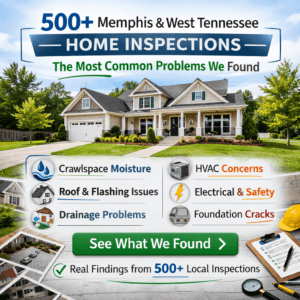
Grading and Drainage Are Frequent Inspection Topics
One of the most common inspection concerns in new Little Rock construction involves exterior grading and water management. Newly developed lots often settle after construction, changing how water moves around the home.
Typical findings include:
- Soil sloping toward the foundation
- Downspouts discharging too close to the structure
- Swales that don’t move water effectively
- Areas where water collects after rainfall
Addressing drainage early helps prevent future crawlspace or foundation moisture issues.
Roofing and Flashing Details Matter From Day One
Roof coverings may be brand new, but installation details still matter. Inspections frequently identify issues that aren’t visible from the ground.
Common observations include:
- Improper flashing at roof penetrations
- Sealants applied inconsistently
- Nail placement issues
- Missing or poorly integrated roof components
These details may not cause immediate leaks, but they can shorten roof life if not corrected.
HVAC Design and Airflow Balance
New homes often include modern HVAC equipment, but comfort issues can still arise when systems aren’t balanced properly.
Inspectors regularly note:
- Uneven temperatures between rooms
- Limited return air pathways
- Ductwork that is poorly supported or sealed
- Condensation concerns during humid months
These issues are related more to design and installation than to equipment quality.
Electrical Safety Items Still Get Missed
Even in new construction, electrical oversights are common enough to warrant inspection.
Inspectors often find:
- Missing GFCI or AFCI protection where required
- Improperly terminated wiring
- Incomplete labeling at panels
- Exterior outlets or fixtures not adequately protected
These items are usually straightforward to correct but important to identify early.
Attic and Insulation Gaps
Attics in new homes often reveal inconsistencies that aren’t obvious from living spaces.
Common inspection findings include:
- Insulation gaps or compression
- Missing or misaligned baffles
- Air sealing details that were skipped
- Mechanical systems crowding insulation
These conditions affect energy efficiency and moisture control long-term.
Crawlspaces and Slabs Still Deserve Attention
Whether a new home is built over a crawlspace or slab, inspectors still evaluate moisture control, support systems, and installation quality.
Typical observations include:
- Crawlspace access issues
- Vapor barriers that are incomplete or poorly secured
- Slab penetrations that aren’t sealed properly
- Early signs of moisture movement around foundations
New does not mean immune to moisture-related concerns.
Warranty Periods Make Early Inspections Valuable
One of the biggest advantages of inspecting new construction is timing. Identifying issues early allows buyers to address them while builder warranties are still in effect.
Inspections help buyers:
- Document concerns objectively
- Request corrections before move-in
- Establish a baseline condition for the home
- Avoid discovering issues after warranties expire
What New Construction Inspections Really Provide
A new construction inspection isn’t about expecting problems—it’s about verifying that systems were installed correctly and that the home performs as intended. In Little Rock, inspections consistently show that even well-built new homes benefit from an independent, detailed evaluation.
That added layer of review gives buyers clarity and leverage while corrections are still easy to make.