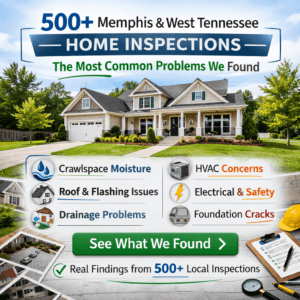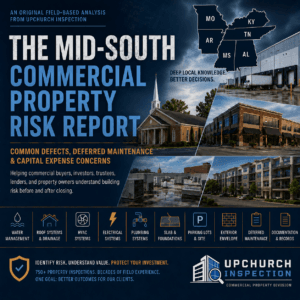
Crawlspace construction is common throughout West Tennessee, particularly in and around Memphis, Jackson, Brownsville, Dyersburg, and surrounding rural areas. While crawlspaces can perform well when properly designed and maintained, inspections in this region consistently reveal a set of recurring issues tied to soil conditions, moisture patterns, and older construction practices.
Many of these conditions are not immediately visible to homeowners, which is why crawlspaces often become a focal point during inspections.
Elevated Moisture Levels Beneath the Home
Moisture is the most common crawlspace concern in West Tennessee. The combination of clay-heavy soils, seasonal rainfall, and high humidity creates an environment where moisture accumulation is difficult to avoid without proper controls.
Inspectors frequently observe:
- Damp soil or standing water after rain
- Elevated humidity levels
- Condensation on framing or mechanical components
- Musty odors migrating into the living space
Even when moisture hasn’t caused visible damage yet, prolonged exposure increases the risk of deterioration over time.
Incomplete or Deteriorated Vapor Barriers
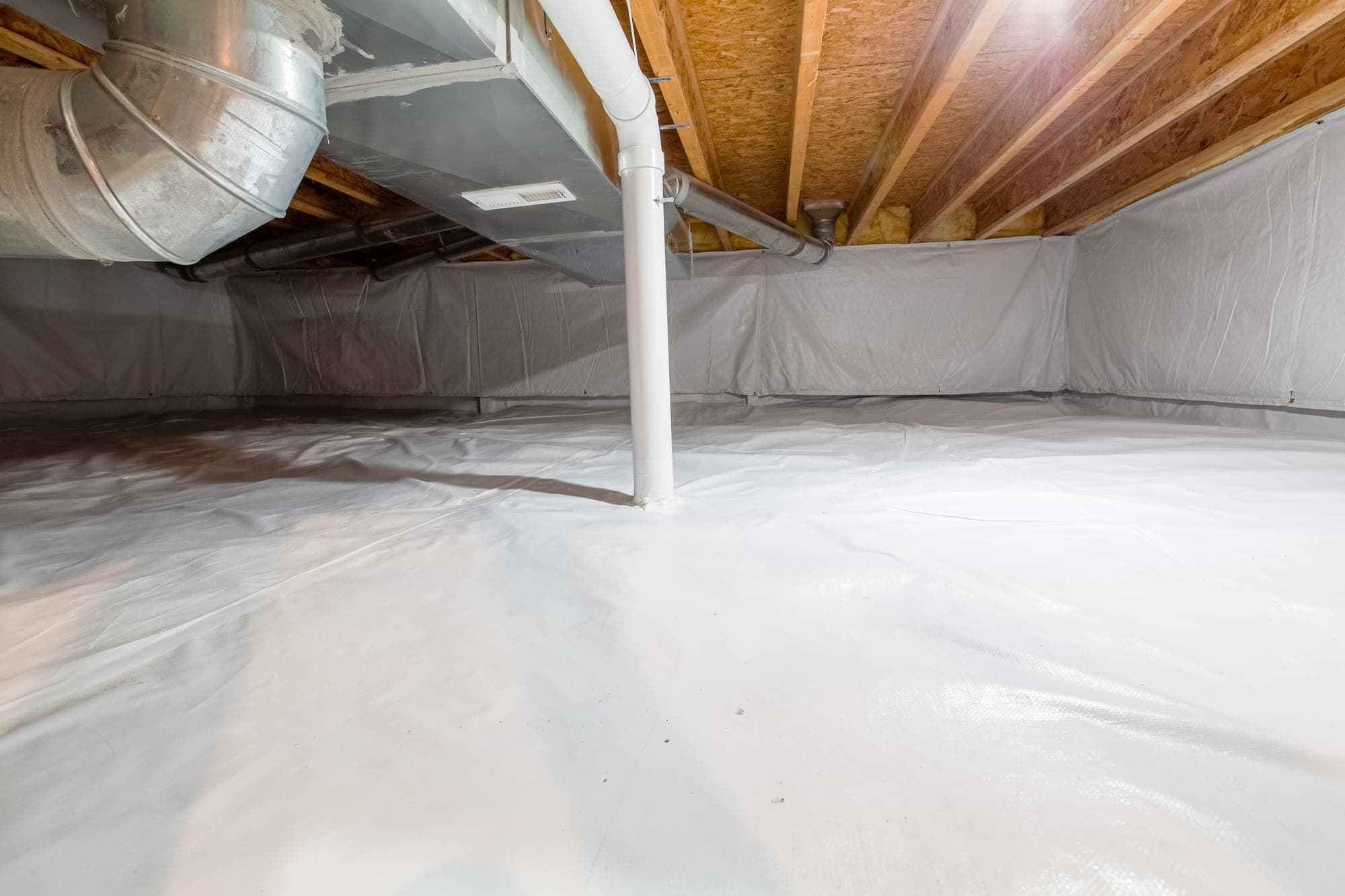
Many crawlspaces either lack vapor barriers entirely or have barriers that were poorly installed or have deteriorated over time.
Common issues include:
- Thin plastic that has torn or shifted
- Incomplete coverage leaving exposed soil
- Barriers installed without sealing seams
- Older materials that no longer perform effectively
Without proper ground coverage, moisture vapor readily enters the crawlspace and affects framing and indoor air quality.
Wood Rot and Early Fungal Growth
Where moisture persists, wood components are often affected. Inspectors regularly find early-stage deterioration in crawlspace framing, especially in older homes.
Typical findings include:
- Soft or deteriorated sill plates
- Joists showing early signs of rot
- Fungal growth on wood surfaces
- Damage concentrated near vents or low areas
These conditions often develop slowly and may go unnoticed for years without inspection.
Insulation Problems and Falling Batts
Crawlspace insulation is another frequent issue. Older installations and moisture exposure often cause insulation to sag, fall, or lose effectiveness.
Inspectors commonly note:
- Insulation batts hanging loose
- Wet or compressed insulation
- Gaps in coverage between joists
- Insulation installed without proper support
Poor insulation affects comfort, energy efficiency, and moisture control within the home.
Ventilation That No Longer Matches Modern Practices
Many West Tennessee crawlspaces were built with traditional venting strategies that don’t always perform well in humid climates.
Common observations include:
- Open vents allowing humid air inside
- Vents blocked by debris or soil
- Vent placement that promotes uneven airflow
- Crawlspaces that would benefit from alternative moisture control strategies
While venting was once standard, modern building science has shown that it can introduce moisture rather than remove it in certain climates.
Drainage and Grading Influencing Crawlspace Conditions
Exterior drainage plays a major role in crawlspace performance. Even a well-built crawlspace can struggle if water is directed toward the foundation.
Inspectors frequently identify:
- Negative grading toward the home
- Downspouts discharging near crawlspace walls
- Settled soil along the perimeter
- Limited drainage paths during heavy rainfall
Correcting exterior water management often improves crawlspace conditions significantly.
Structural Supports Showing Signs of Adjustment
In some crawlspaces, inspectors observe added supports or shimming intended to address settlement or floor movement.
Typical findings include:
- Supplemental piers added after construction
- Wood shims stacked beneath supports
- Piers that are out of plumb or settling
- Adjustments made without documentation
These modifications don’t always indicate a problem, but they do warrant closer evaluation to understand why they were needed.
Why Crawlspaces Deserve Close Attention in West Tennessee
Homes throughout West Tennessee share many of the same environmental challenges. Crawlspaces in this region tend to reflect moisture behavior more clearly than other parts of the home.
Inspectors familiar with local conditions are better equipped to distinguish between normal aging, deferred maintenance, and conditions that could lead to more significant issues if left unaddressed.