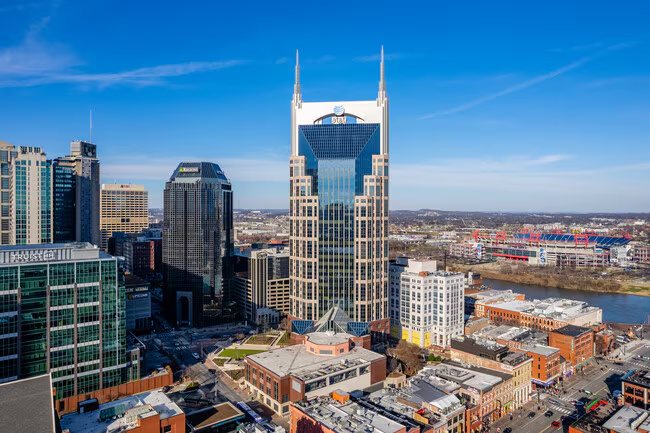
Nashville’s commercial growth has been fast, visible, and widely celebrated. New construction, adaptive reuse, and constant tenant turnover have reshaped much of Middle Tennessee’s commercial landscape. From the outside, many properties look modern, refreshed, and highly functional. From an inspection standpoint, that pace of growth creates a different kind of risk.
At Upchurch Inspection, commercial inspections across Middle Tennessee, particularly in and around Nashville, consistently show that the biggest issues aren’t tied to age alone. They’re tied to systems being pushed harder, longer, and more frequently than they were originally designed to handle.
Growth Creates Strain Before It Creates Failure
Nashville’s commercial buildings often operate at or near peak utilization. High occupancy, extended operating hours, and dense tenant use mean systems don’t get much rest.
Inspectors frequently observe:
- HVAC systems running near continuous duty cycles
- Electrical systems expanded incrementally to meet tenant demand
- Plumbing systems experiencing sustained peak use
- Roofs absorbing frequent foot traffic and added equipment
- Parking and site drainage stressed by increased intensity
None of these conditions are failures. They are indicators of system fatigue developing earlier than buyers expect.
Adaptive Reuse Carries Hidden Assumptions
A large portion of Nashville’s commercial inventory involves adaptive reuse—older buildings converted to offices, hospitality, medical, or mixed-use spaces.
Inspectors look closely at:
- Structural systems asked to carry new types of loads
- Mechanical distribution reused without full redesign
- Electrical capacity stretched to support modern technology
- Fire and life-safety systems adapted piecemeal
- Original construction details working outside their original purpose
Adaptive reuse can be successful, but only when buyers understand which systems were upgraded fully—and which were merely adapted enough to function.
Mechanical Systems Show the Pressure First
In Middle Tennessee’s climate, HVAC systems carry both thermal and moisture loads. When buildings operate at high density, mechanical systems often become the limiting factor.
Inspectors evaluate:
- Equipment sizing relative to real occupancy
- Evidence of short-cycling or constant run-time
- Humidity control issues masked by cooling performance
- Maintenance access constraints in renovated spaces
- Controls that struggle to balance competing zones
In Nashville, inspectors frequently see buildings where comfort complaints are early warning signs—not isolated tenant issues.
Electrical Capacity Limits Growth Quietly
Electrical systems in Nashville commercial properties often reflect years of incremental expansion rather than one coordinated upgrade.
Inspectors observe:
- Panels filled with little remaining headroom
- Subpanels added without service recalculation
- Temporary solutions made permanent during tenant fit-outs
- Demand growth outpacing original service assumptions
Electrical systems rarely fail dramatically. They constrain flexibility instead—blocking new tenants, equipment, or operating hours when buyers least expect it.
Roof Systems Absorb Expansion Stress
Rooftops in Nashville are busy places. Equipment additions, retrofits, and access needs increase as buildings evolve.
Inspectors pay attention to:
- Penetrations added over time without cohesive detailing
- Drainage patterns altered by new equipment
- Maintenance paths creating wear patterns
- Repairs that address leaks without restoring system integrity
A roof that “has been repaired” may actually be carrying a higher long-term maintenance burden.
Plumbing and Sewer Systems Reflect Usage Density
Higher occupancy means plumbing systems work harder, more often.
Inspectors evaluate:
- Fixture performance under sustained use
- Drainage systems handling peak demand
- Evidence of recurring leaks or backups
- Hot water systems sized for past, not current, use
In dense commercial environments, plumbing issues tend to surface gradually—then escalate once demand crosses a threshold.
Why Buyers Are Often Surprised After Closing
Buyers entering the Nashville market often assume that newer finishes or recent renovations equate to system readiness. In reality, many buildings are operating close to their limits.
Common post-closing surprises include:
- Mechanical replacements needed sooner than projected
- Electrical upgrades required for tenant improvements
- Roof repairs accelerating due to access and load
- Moisture issues tied to continuous operation
- Maintenance costs exceeding pro forma expectations
These aren’t defects—they’re consequences of growth pressure.
How Experienced Buyers Approach Middle Tennessee Properties
Seasoned buyers in the Nashville market focus less on appearance and more on operational margin.
They want to understand:
- How hard systems are already working
- Where capacity has been consumed quietly
- Which upgrades unlock flexibility
- How growth patterns affect longevity
- What ongoing strain will cost over time
Inspection findings become a stress test, not a checklist.
The Practical Reality
Middle Tennessee’s commercial buildings don’t struggle because they’re poorly built. They struggle when growth outpaces coordinated system upgrades.
Inspectors who understand the Nashville market don’t just document deficiencies. They evaluate how density, operating hours, and expansion pressure interact to shape long-term performance.
That perspective helps buyers decide whether a property is positioned to grow—or already running on borrowed time.