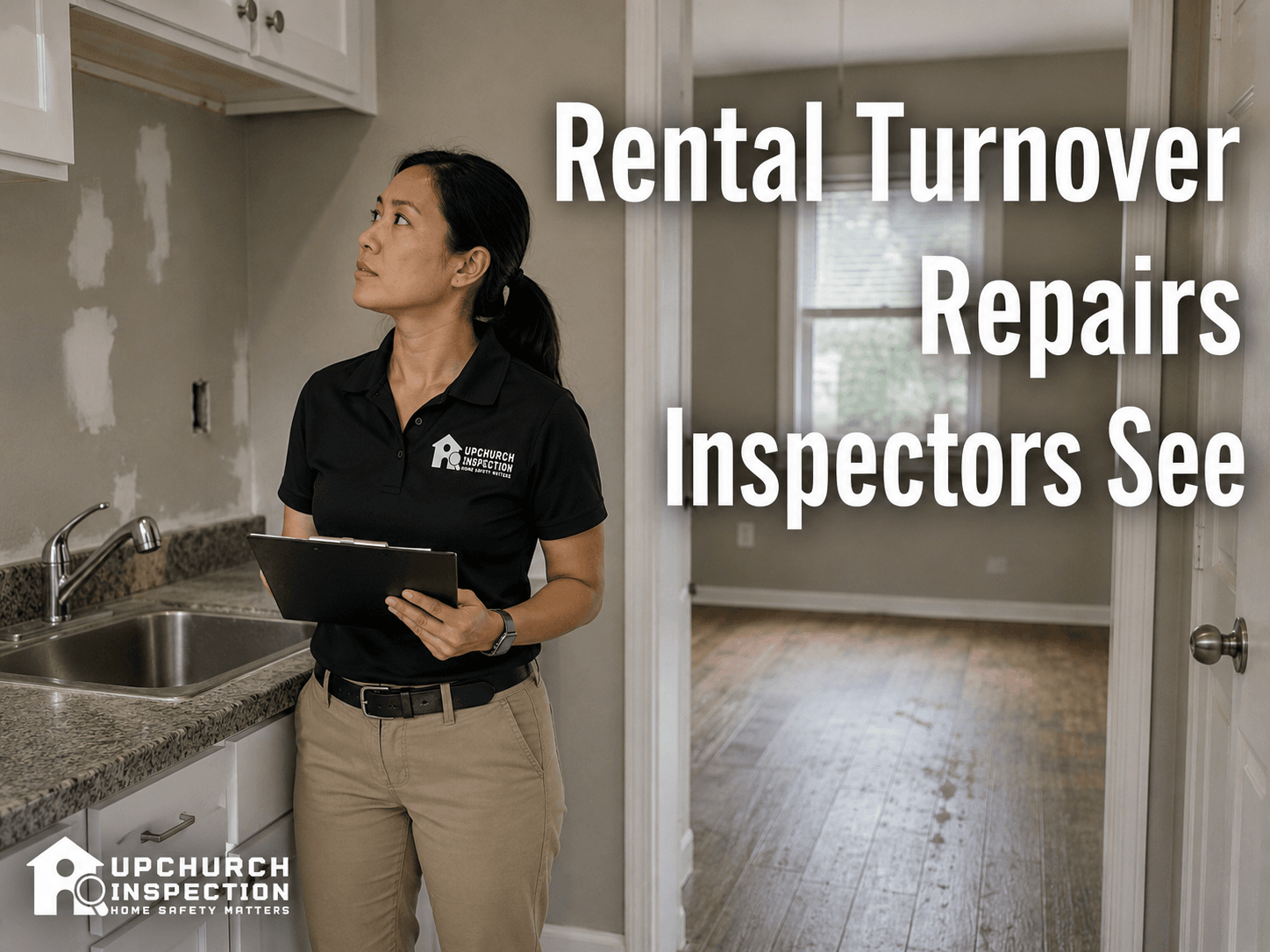
Homes that have spent time as rentals carry a distinct kind of history. Not worse, not better—just different. Inspectors learn to recognize it quickly, often before a single defect is written down. The clues aren’t dramatic. They’re practical, repetitive, and rooted in how rental properties are typically maintained between tenants.
At Upchurch Inspection, rental turnover patterns show up consistently across Memphis, Jackson, Little Rock, Jonesboro, and Cape Girardeau. These aren’t horror stories. They’re predictable outcomes of a system designed to restore function quickly, not necessarily longevity.
Turnover Repairs Are About Speed, Not Permanence
Most rental turnover work is done under time pressure. The goal is simple: get the unit rentable again as fast as possible. That priority shapes the type of repairs inspectors see.
Leaking fixtures get tightened or replaced, not re-piped. Doors that don’t latch get adjusted, not rehung. Flooring is patched, not re-leveled. Paint covers wear instead of addressing why it occurred.
None of this is inherently careless. It’s economical. But it does mean many repairs are designed to restore usability, not reset the system.
Inspectors read turnover repairs as maintenance decisions made under constraints, not as evidence of neglect.
Plumbing Repairs Are Often Localized and Repetitive
Plumbing is one of the most common systems affected by rental turnover.
In Memphis and Jackson, inspectors frequently see multiple spot repairs along the same plumbing runs—individual fixtures replaced, small leaks fixed, sections patched. The system works, but it’s been managed reactively rather than holistically.
Over time, that creates plumbing systems with mixed materials, uneven support, and varying ages. Everything may function on inspection day, but the pattern suggests future maintenance will be ongoing rather than occasional.
Inspectors pay attention not to whether the water flows, but to how often it’s been intervened with.
Electrical Work That Keeps the Lights On—Barely
Rental electrical repairs often prioritize restoring power quickly.
Outlets replaced when they fail. Fixtures swapped when they stop working. Breakers reset or changed when nuisance trips occur. In older rentals around Little Rock or Cape Girardeau, inspectors often see modern usage layered onto systems that were never upgraded comprehensively.
The result is electrical systems that function but operate close to their limits. They’re not unsafe by default—but they’re often underdesigned for long-term owner-occupancy expectations.
That difference matters to buyers who assume “working” means “ready for anything.”
Doors, Trim, and Finishes Tell a Use Pattern Story
Inspectors can often identify rental history by how finishes have been treated.
Repeated patching around door hardware. Trim repairs that don’t quite align. Flooring transitions that were replaced piecemeal. These repairs don’t indicate abuse—they indicate volume.
Rental properties experience more frequent turnover, more varied occupants, and more accelerated wear. The house adapts through repeated small fixes rather than periodic comprehensive updates.
Inspectors notice this because it changes how the home will continue to age.
HVAC Repairs Focus on Operation, Not Optimization
In rental properties, HVAC systems are usually repaired to restore heat or cooling—not to improve performance.
Inspectors commonly see:
- Systems operating with marginal airflow
- Filters replaced inconsistently
- Duct repairs done locally rather than redesigned
- Thermostats upgraded without recalibrating system balance
In regions like Northeast Arkansas and West Tennessee, where summers are demanding, these systems may appear adequate during inspection but struggle under sustained load.
The repair history explains why.
Paint Can Hide a Lot—but It Also Reveals a Pattern
Fresh paint is one of the most common turnover repairs. It’s also one of the most informative.
Inspectors notice when paint is used to reset appearance without addressing recurring issues—stains that reappear, patched areas that repeat, surfaces that require frequent repainting. These patterns suggest ongoing conditions rather than isolated events.
Again, this isn’t deception. It’s practicality. Paint is fast, effective, and expected in rental turnover.
Inspectors simply read it differently than buyers do.
Regional Conditions Amplify Turnover Effects
Rental turnover repairs behave differently depending on environment.
In Memphis and Jackson, moisture and soil movement compound small deferred items. In Jonesboro, flat lots mean drainage shortcuts accumulate impact. In Little Rock, rapid growth has created many former rentals transitioning to owner-occupied homes without system realignment. In Cape Girardeau, weather exposure accelerates exterior wear repaired repeatedly rather than comprehensively.
Inspectors with regional experience recognize which turnover repairs are routine—and which ones suggest a need for closer attention.
Rental History Isn’t a Negative—It’s a Context
A former rental isn’t a bad house. Many are solid, well-managed, and affordable.
What matters is understanding how maintenance decisions were made. Rental repairs prioritize continuity and compliance. Owner-occupied homes often prioritize longevity and customization.
Neither approach is wrong. They’re just different.
The inspection bridges that difference by translating repair patterns into ownership expectations.
What Buyers Should Pay Attention To
Instead of asking whether a home was a rental, buyers benefit more from asking:
- Are repairs localized or system-wide?
- Do fixes repeat in the same areas?
- Are systems aging evenly or unevenly?
- Does the maintenance pattern match my expectations as an owner?
Those questions help buyers understand the future of the house, not just its past.
The Practical Reality
Rental turnover repairs are designed to keep homes functioning between occupants. Inspections are designed to help buyers understand what that approach means going forward.
A good inspection doesn’t penalize a home for its rental history. It interprets it.
And when buyers understand the difference between a house that was maintained to remain rentable and one maintained for long-term ownership, they make better decisions—especially in the regions we serve, where environment and usage shape outcomes just as much as materials do.