
INSPECTION FINDINGS · FROM OUR INSPECTION RECORDS
The lower corner of a door frame is a small part of a building, but it can give us an important view of its condition. In this collection, the damage ranges from deteriorated jamb material at a walking surface to a window assembly with an opening through the wood. We also documented a boarded entry where the underlying door assembly was still deteriorating. Covering an opening and repairing an opening are different jobs.
These are examples from separate inspections. The photographs show why I want to see the base of a frame, its connection to the wall and the nearby finishes. A wide photograph records the setting; a close view records the material that has actually failed. Neither view by itself tells us the full condition inside a closed wall.
Photographs and documented observations
Rot at the bottom of a door frame
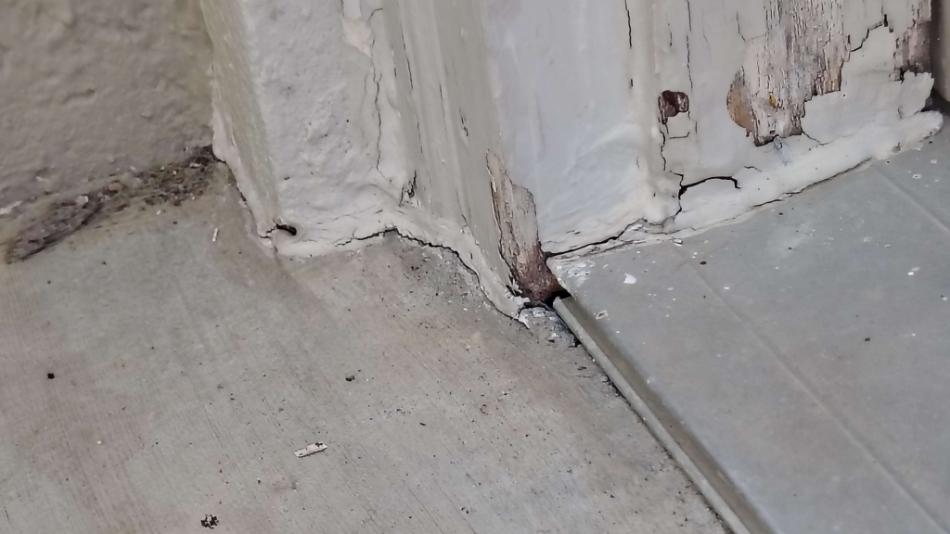
The lower door jamb showed peeling paint and deteriorated wood. The damage was concentrated where the trim met the walking surface. We flagged the area for repair and a closer look at how it was getting wet.
Water damage below a window
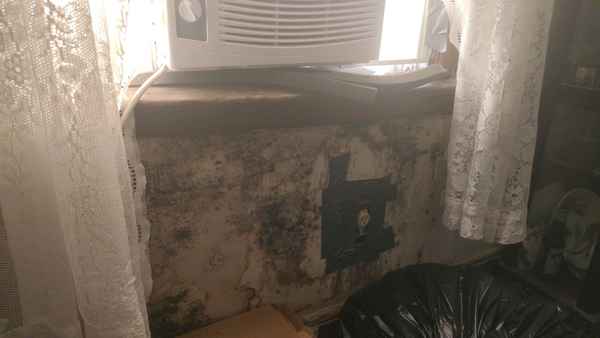
We found extensive deterioration at the wall below a window. The visible damage warranted tracing where water entered and checking how far it had spread.
A probe pushed into rotten wood by the door
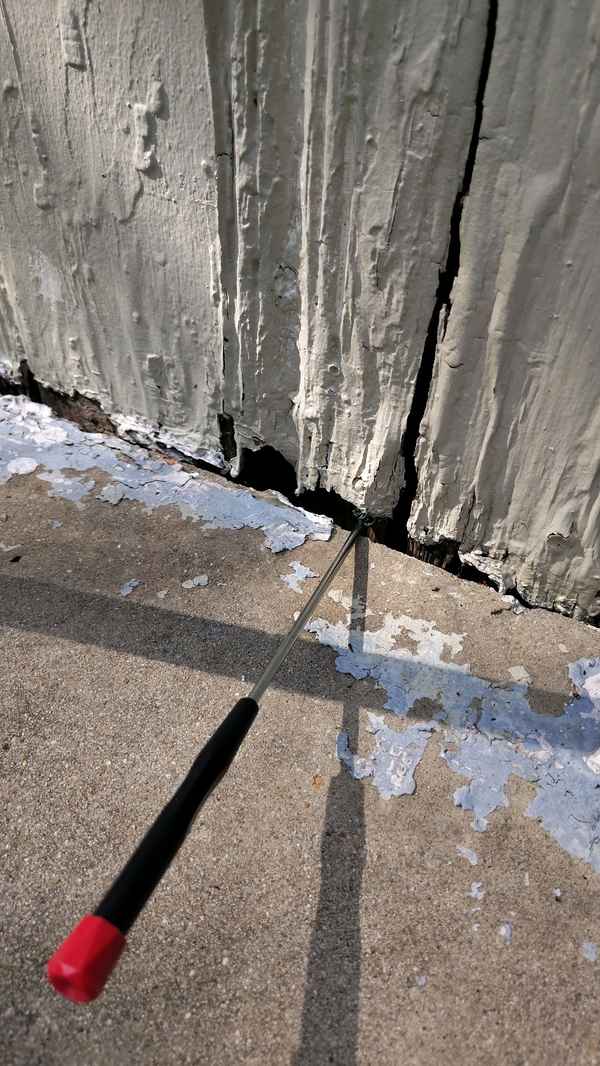
We found rotted cladding near the base of the door. The photo shows the probe entering the deteriorated wood. We flagged the area for a siding contractor to check the extent and repair the damaged material.
Severe rot opened a hole at the window
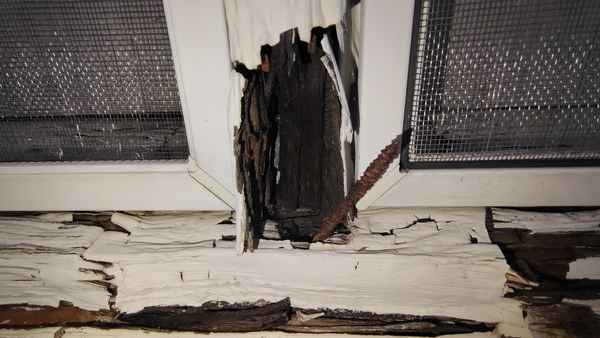
At a commercial office, we found advanced rot in exterior window components. The lower frame showed splitting and visible material loss. The report recommended replacing deteriorated wood and checking the surrounding assembly.
A boarded entry hid a deteriorated door assembly
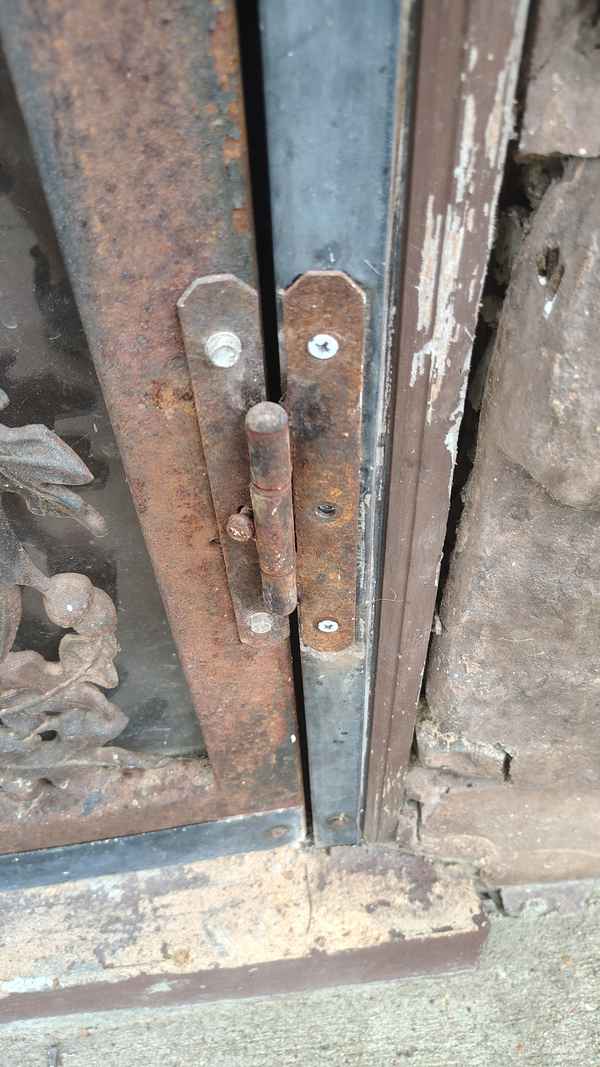
At the front entry, temporary boarding covered part of an assembly with corroded metal, deteriorated wood, and damaged or missing latch hardware. The report called for replacing the damaged assembly and checking the framing.
Where the visible damage led the inspection
At the probed doorway, the condition of the wood was more informative than the paint. At the window with extensive deterioration, the missing material made the defect plain without needing a dramatic description. The reports called for evaluation and repair of the affected assemblies, with attention to possible concealed damage and the way water was reaching the opening.
Define the repair beyond the trim
The useful contractor question is how far the deterioration extends and what needs to change at the opening to keep replacement material from being exposed to the same conditions. That may require access beyond the visible trim. An inspection photograph can establish why that investigation is warranted, but it cannot provide a complete replacement specification for materials we could not see.
Related inspection insights
For related context, read Window Flashing: Why the “Tape” Behind Your Siding Is Your Only Defense and Soffit and Fascia Rot in Memphis Homes: What It Means and What to Do.
Learn more about our home inspection services and the way we document building conditions for buyers and property owners.
By Wesley Upchurch. This article draws on documented inspection observations and photographs. Images show conditions at the time of inspection; later repairs are not established unless stated. Property addresses and client details are omitted.