
INSPECTION FINDINGS · FROM OUR INSPECTION RECORDS
A painted exterior can look reasonably maintained from the driveway and tell a different story at arm's length. In the inspections shown here, we documented split boards, missing siding and material that gave way when probed. One photograph shows a screwdriver entering the siding; another shows deteriorated boards beneath their finish. Those are useful details because a fresh-looking surface does not tell a buyer how much sound material remains underneath.
The photographs include more than one property, and the two views of the painted horizontal siding belong to the same inspection. I would not describe every weathered board as structural damage. What matters is the condition of the material, where it sits in the wall assembly and whether the opening exposes something behind it. The report needs to separate those questions instead of assigning the same meaning to every peeling surface.
Photographs and documented observations
Multiple views from the same inspection
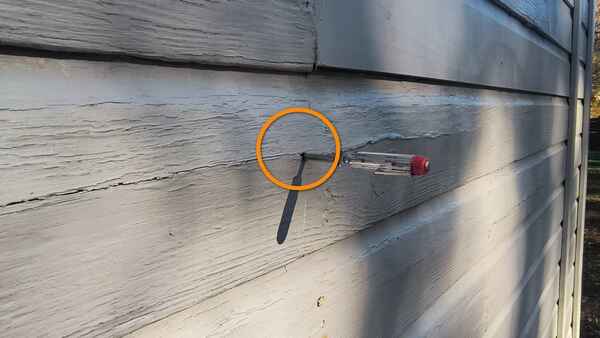
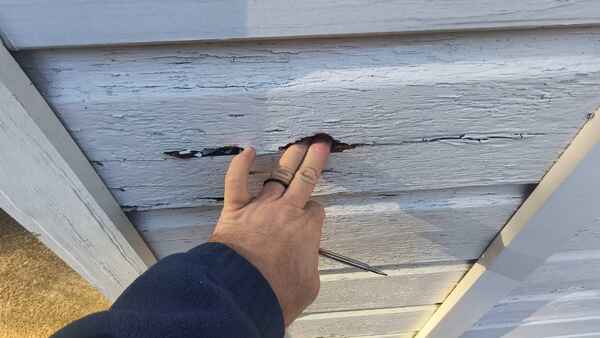
With only gentle pressure, the screwdriver penetrated the painted wood siding. Nearby boards on the same extension also crumbled when pressed. We recommended replacing the affected siding and having a contractor check how far the rot extended. Several painted wood siding boards were split or broken. The finish made it harder to see how far deterioration extended. We recommended having a contractor evaluate and repair the affected siding.
Paint covered siding that was rotting away
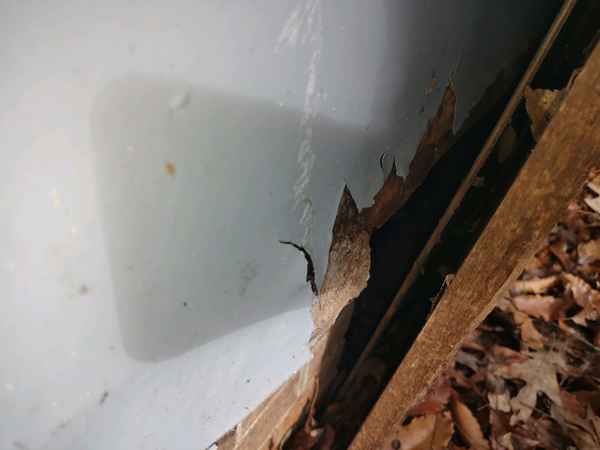
The painted surface remained in places while the wood beneath it had deteriorated and opened up. We documented rot at multiple locations and recommended a siding contractor evaluate and repair the affected cladding.
A missing piece of siding
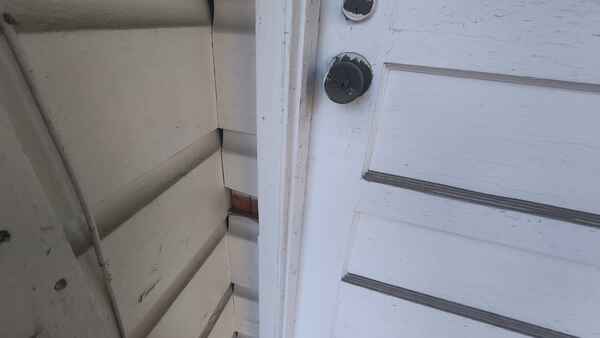
A section of wood siding was missing next to an exterior door. That left part of the wall assembly exposed. We recommended replacing the missing siding and checking the area behind it.
What the finish could not tell us
These examples justified a closer evaluation of the affected siding and the wall behind it. A probe entering a board establishes local deterioration; it does not measure every concealed component or prove that an entire wall needs replacement. That distinction matters when a contractor develops the repair scope. The visible opening is the starting point for the work, not a reliable boundary for the damage.
What a useful repair should address
The original recommendations called for repairing or replacing the affected siding and evaluating the conditions that allowed it to deteriorate. A coating over the same failed material would leave the central question unanswered. Before accepting a repair as complete, a buyer should have documentation of what was removed, what was found behind it and how the affected wall was restored.
Related inspection insights
For related context, read Fiber Cement Siding: Why the Gap at the Bottom Matters for Rot and Window Flashing: Why the “Tape” Behind Your Siding Is Your Only Defense.
Learn more about our home inspection services and the way we document building conditions for buyers and property owners.
By Wesley Upchurch. This article draws on documented inspection observations and photographs. Images show conditions at the time of inspection; later repairs are not established unless stated. Property addresses and client details are omitted.