INSPECTION FINDINGS · CASE STUDY
The steel supporting this commercial cooling tower showed heavy rust scaling, coating failure and apparent section loss. Several locations had substantial flaking and deterioration near bearing surfaces and connections. The report distinguished those conditions from superficial surface oxidation and recommended prompt structural-engineering evaluation. A photograph of the tower casing alone would have missed the main concern beneath the equipment.
The gallery includes close views of the support steel, a wider equipment-bearing view, leakage marks at the tower access panel and moisture exposure around the support area. These are views from the same inspection. Together they explain why the report considered the support assembly, the equipment leakage and nearby roof drainage as related work that needed coordination.
Photographs and documented observations
Support steel and equipment bearing
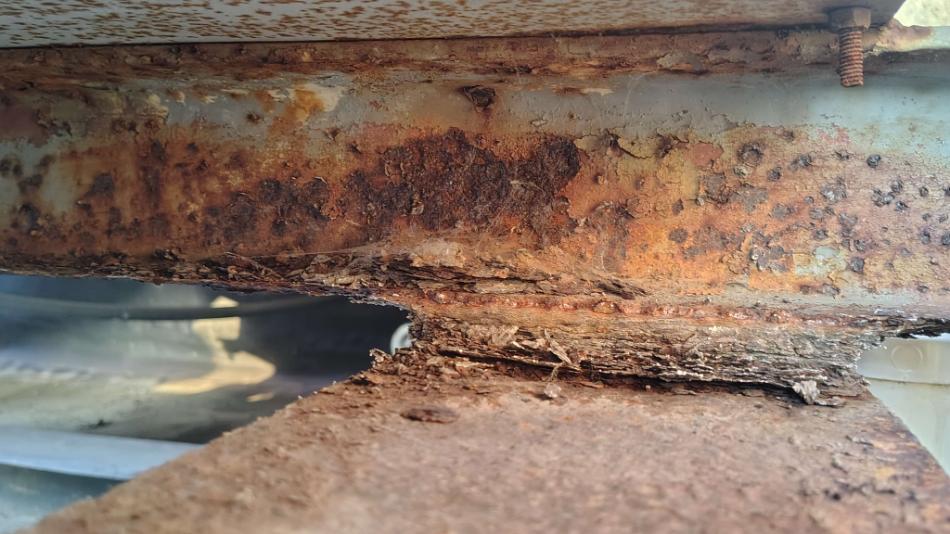
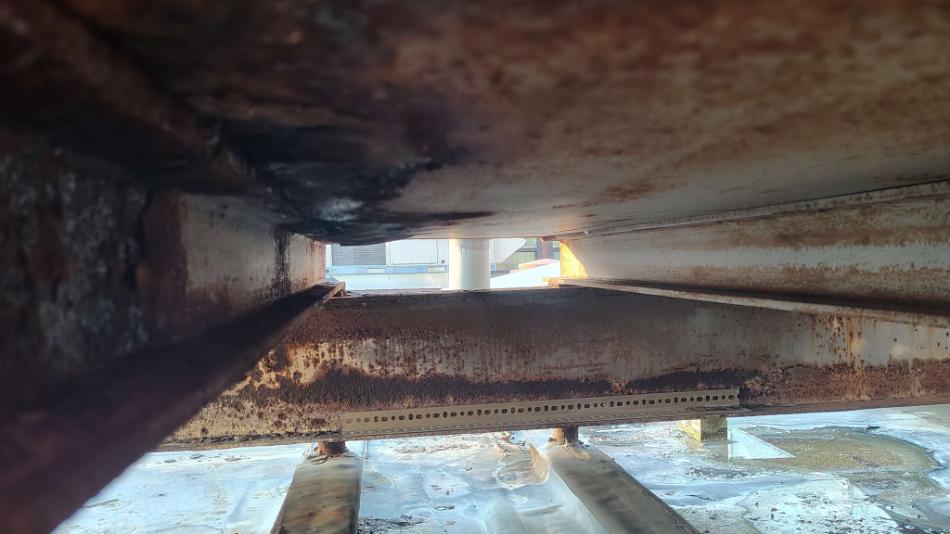
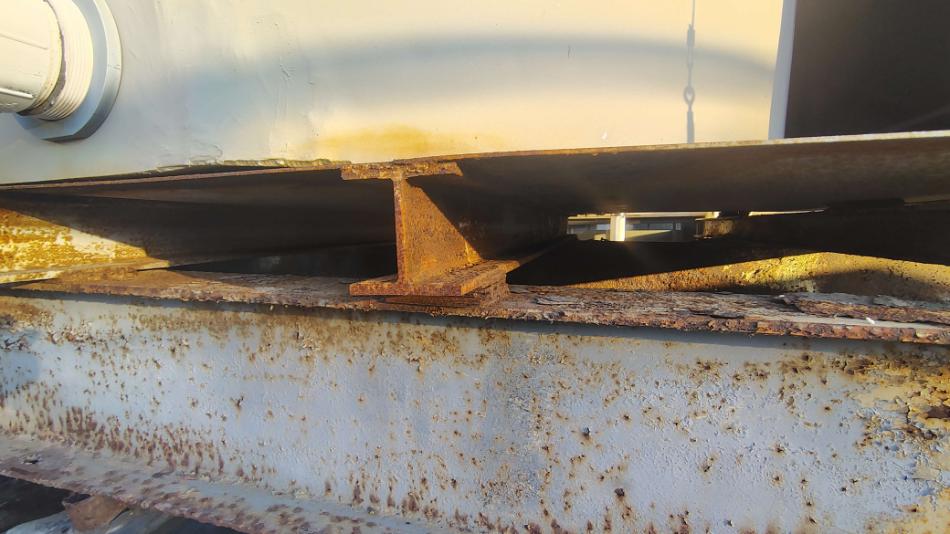
The cooling tower support steel showed heavy rust scaling, flaking, and apparent section loss. The report specifically distinguished this from surface rust and recommended prompt engineering evaluation, including thickness measurements and assessment of the connections. Another view beneath the cooling tower recorded deterioration extending along the support steel. The report called for evaluation of the complete assembly, including connections and concealed bearing interfaces. The equipment-bearing area was photographed along with the supporting steel. Appearance alone could not establish remaining thickness or capacity, so engineering evaluation was recommended.
Leakage and moisture around the support area
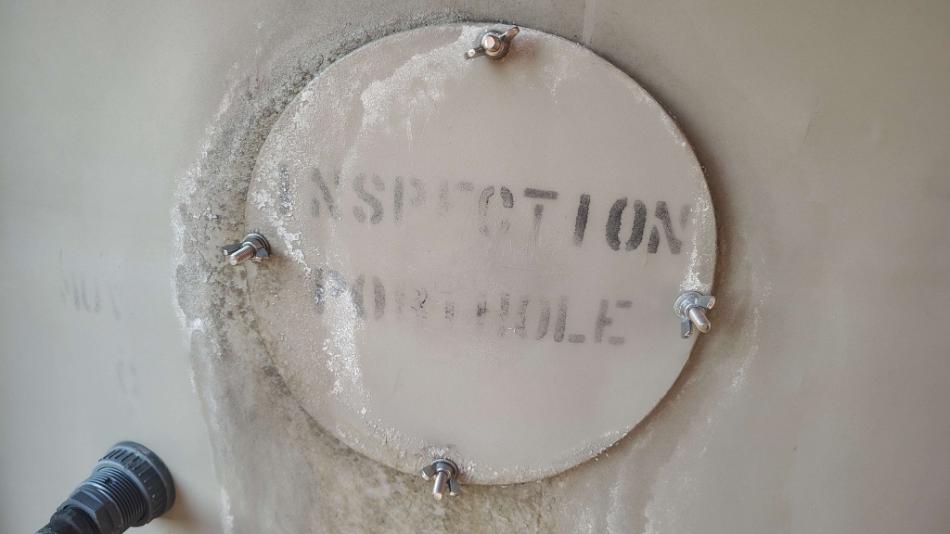
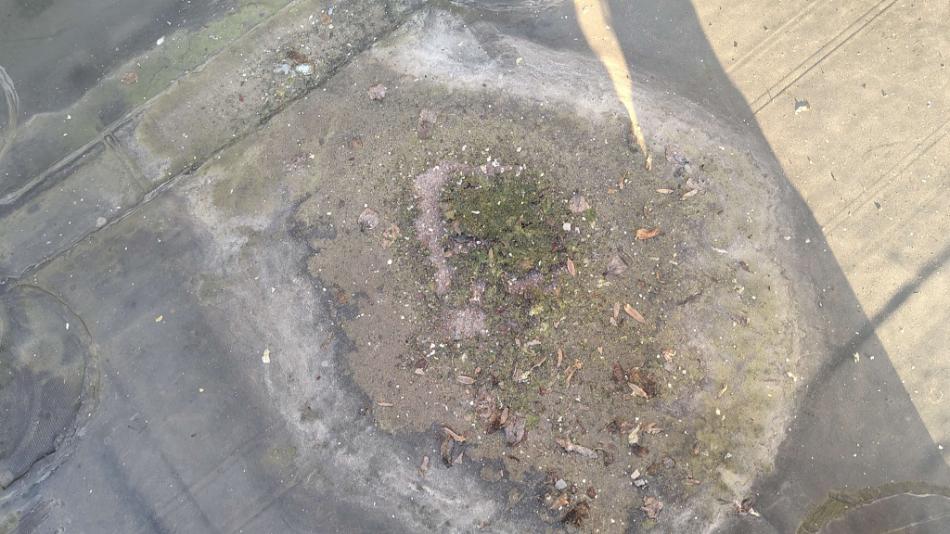
Mineral deposits and runoff marks surrounded the inspection cover. The report documented recurring leakage at the panel and recommended contractor inspection of the cover, gasket and mating surfaces. Moisture staining and deteriorated roof-surface conditions were documented around the support area. Roofing and drainage repairs needed coordination with the steel work.
Appearance could not establish remaining capacity
The inspection did not measure remaining steel thickness or calculate load-carrying capacity. The report explicitly identified that limitation and recommended representative ultrasonic thickness measurements and examination of beams, plates, welds, anchors and concealed bearing interfaces. Apparent section loss was a reason for that evaluation, not a measurement invented from the photograph.
Coordinate the steel, leakage and roofing work
Recurring leakage, splash and roof moisture were identified as possible contributors, with their relative effects not conclusively established. The recommended response included engineering-directed steel repair, reinforcement or replacement as appropriate, correction of the access-panel leakage and roofing or drainage work around the supports. Coating restoration was to follow the structural repairs. The file does not document the completed work, and this case does not imply that repainting the visible rust would have resolved the underlying evaluation need.
Related inspection insights
For related context, read Deferred Maintenance vs. Active Failure: Why the Difference Matters More Than You Think and Office Building Inspections: Systems That Matter More Than Square Footage.
Learn more about our commercial inspection services and the way we document building conditions for buyers and property owners.
By Wesley Upchurch. This article draws on documented inspection observations and photographs. Images show conditions at the time of inspection; later repairs are not established unless stated. Property addresses and client details are omitted.