
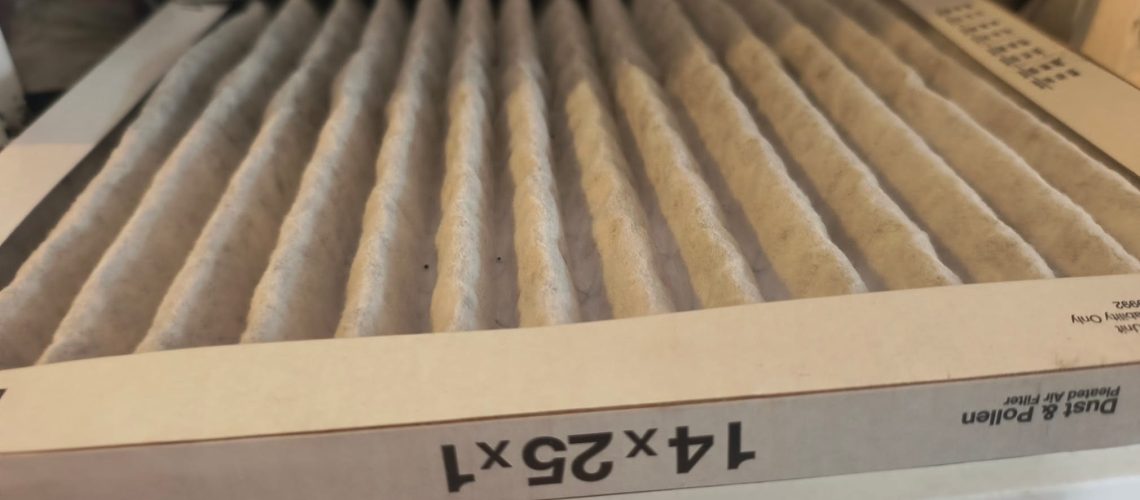
Before I open panels, before I pull out meters, before I start talking about compressors or heat exchangers, I check the furnace filter.
Every time.
Not because it’s exciting — but because that one cheap, forgotten component causes more downstream damage than almost anything else in an HVAC system.
The Filter Tells a Story Immediately
You can learn a lot about a system in five seconds just by looking at the filter.
When I pull one out and it’s:
- Bowed inward
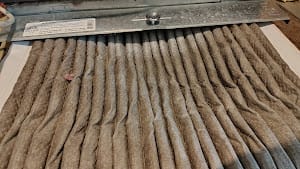
- Caked with dust
- Dark gray instead of white
- Installed backwards
- Or missing entirely
…I already know the rest of the inspection is going to be interesting.
A Real Inspection Where the Filter Was the Smoking Gun
I inspected a home in Cordova where the buyer complained the AC “never felt right.” System was only seven years old. On paper, it should’ve been fine.
Pulled the filter and it was so clogged it had collapsed inward and partially torn. Zero airflow.
Checked the evaporator coil next — dirty, starting to ice, restricted across most of the surface. Blower motor was pulling higher amperage than it should.
That system wasn’t failing because it was old. It was failing because it couldn’t breathe.
Why Dirty Filters Cause Big Problems
When airflow is restricted, everything else suffers.
A neglected filter can lead to:
- Frozen evaporator coils
- Cracked heat exchangers
- Overheated blower motors
- Short-cycling
- Fried control boards
- Poor humidity control
I’ve seen systems die years early over a $10 filter that never got changed.
The “But It Still Runs” Myth
This is where homeowners get fooled.
Yes — the system often keeps running with a dirty filter. That doesn’t mean it’s okay.
I’ve inspected homes in Southaven where the furnace ran hot enough to discolor the heat exchanger housing. The only root cause? Airflow restriction from filter neglect.
Wrong Filters Are Almost as Bad as Dirty Ones
The system survived — until it didn’t.
I also see a lot of:
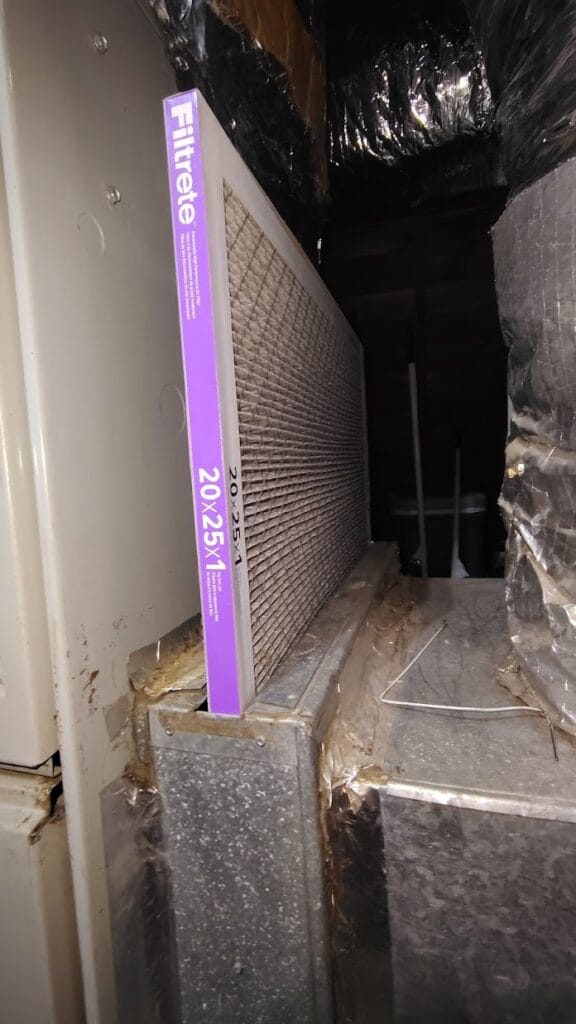
- Filters that are too restrictive
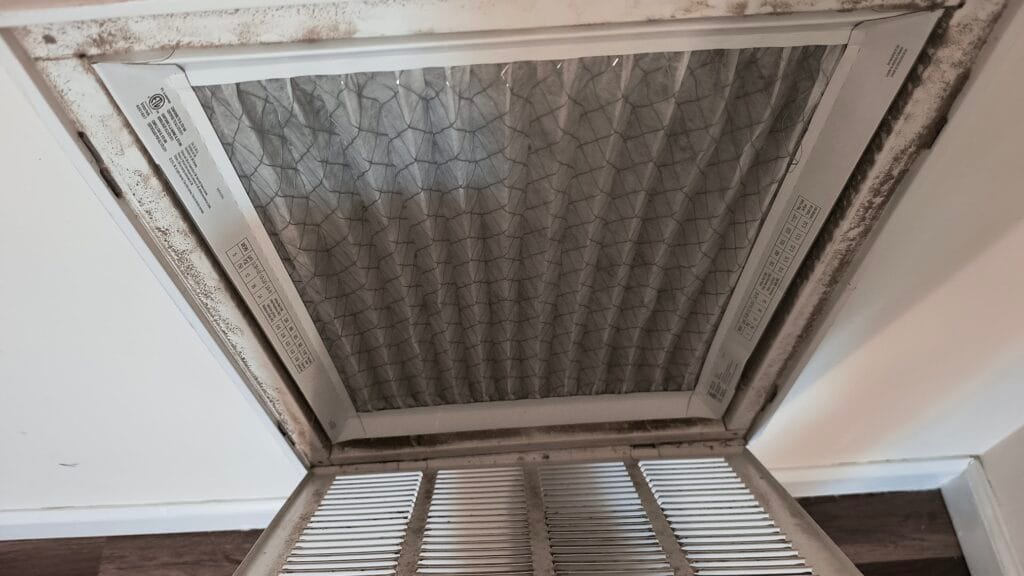
- High-MERV filters installed on systems not designed for them
- Filters jammed in crooked
- Filters doubled up “for extra protection”
More filtering isn’t always better. Airflow matters.
In Germantown, I inspected a system with a premium allergy filter installed in a setup that couldn’t support it. Delta-T was off, static pressure was high, and the blower sounded strained.
Good intentions. Bad outcome.
Why I Always Document Filter Conditions
Filter condition tells me:
- How the system has been maintained
- Whether airflow issues are likely
- If other components have been stressed
- Whether further evaluation is warranted
It also gives buyers context. A neglected filter doesn’t automatically mean the system is shot — but it does mean it’s been working harder than it should.
The Ripple Effect Buyers Don’t See
Most buyers focus on the big-ticket items. Filters don’t feel important.
But that small oversight can ripple out into:
- Higher energy bills
- Reduced comfort
- Premature equipment replacement
- Expensive repairs that could’ve been avoided
I’ve seen it too many times to ignore it.
The Inspector’s Bottom Line
The furnace filter is the canary in the coal mine.
If it’s clean, installed correctly, and appropriate for the system, that’s a good sign. If it’s neglected, everything downstream is suspect until proven otherwise.
That’s why I check it first — because small problems always show up there before they show up everywhere else.