

So, what really happens during a home inspection? Think of it less like a test and more like a doctor's check-up for the house you're about to buy. It’s a non-invasive, top-to-bottom visual examination of the property’s major systems, designed to give you a crystal-clear picture of its condition before you sign on the dotted line.
A home inspection isn't about getting a "pass" or "fail" grade. It's an objective deep-dive that gives you a detailed snapshot of the home's health on that specific day. The whole point is to uncover significant issues, potential safety hazards, and future expenses that might be lurking out of sight. It’s about replacing that "what if" anxiety with genuine confidence in your investment.
This process gives you the knowledge you need to make smart, informed decisions. A great inspection is far more than a simple checklist; it’s your roadmap to truly understanding the property’s strengths and weaknesses, from the foundation right up to the roof.
Your Guide to the Home Inspection Process
The entire journey can be broken down into three simple stages. Each step has a specific job, turning you from an interested buyer into a well-informed one. Getting a handle on this flow helps take the mystery out of what can feel like a complicated part of the deal.
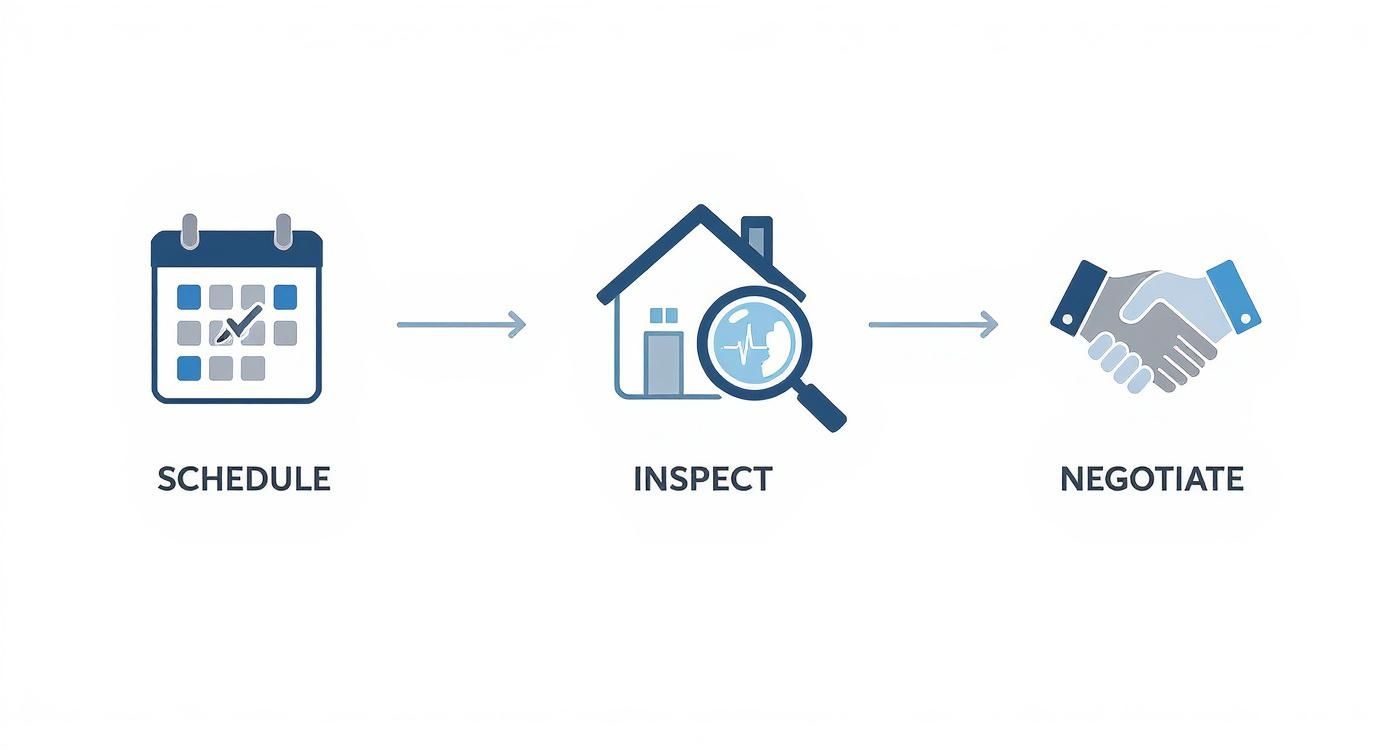
Ultimately, following these steps ensures that any negotiations you have are grounded in a factual, shared understanding of the home’s actual condition.
The Home Inspection Journey at a Glance
To make it even clearer, let's break down the inspection journey into its core components. This table summarizes what happens at each stage, from the moment you book the inspection to the final negotiations.
| Phase | What Happens | Typical Timeline |
|---|---|---|
| Phase 1: Scheduling & Prep | You find and hire a qualified inspector. The appointment is set, and both buyer and seller prepare the property for access. | 1-3 days after going under contract. |
| Phase 2: The On-Site Inspection | The inspector performs a thorough visual examination of the home's major systems and components. This usually takes 2-4 hours. | Within your option period (typically 7-10 days). |
| Phase 3: Report & Negotiation | You receive a detailed report with photos and findings. You review it with your agent and decide on next steps, such as negotiating repairs. | Report delivered within 24 hours. Negotiations follow. |
Seeing the process laid out like this helps you anticipate what's next and stay in control of the timeline.
Why Inspections Are Still a Non-Negotiable for Buyers
No matter what the market is doing, a home inspection is your single most important tool for consumer protection. Even when bidding wars get fierce, smart buyers know that skipping this step is a gamble they can't afford to take. The demand for qualified inspectors is actually growing, which tells you that home buying is becoming more cautious and educated.
A home inspection is all about making sure the home is safe. Inspectors are looking for things that are significantly deficient, unsafe, near the end of their service life, or just not working the way they should.
This laser focus on safety and major mechanicals is exactly why the practice is so vital. Even during the crazy market of 2022, recent data showed that only 14% of buyers waived their right to an inspection. With the home inspection market projected to hit $25 billion by 2029, it's clear its importance is only growing. You can review more details about current real estate trends to see why this step is more critical than ever. This demand proves that when it comes to one of the biggest financial decisions of their lives, buyers value a professional's expert opinion.
What the Inspector Actually Does On-Site
On inspection day, the property you’re looking to buy becomes a temporary classroom, with the home inspector acting as your personal instructor. Think of them as a doctor giving the house a full physical. Their job isn’t to comment on the paint colors or dated countertops, but to methodically check the home’s vitals and spot any underlying health conditions.
It’s important to know that this is a non-invasive, visual examination. This is a key detail. Your inspector won’t be knocking down walls, drilling into studs, or ripping up the flooring. They’re trained to diagnose potential problems by spotting the symptoms—using their expertise, experience, and a few specialized tools—much like a physician can identify an illness without immediately resorting to surgery.
The Systematic Health Check-Up
A professional inspector follows a proven, methodical routine. They might start on the roof and work their way down, or begin with the exterior and move inside. The point is, they move through the property system by system, making sure nothing gets missed. For an average-sized home, you can expect this focused process to take anywhere from two to four hours.
This systematic approach is what allows them to build a comprehensive picture of the home’s overall health. If you want to get into the nitty-gritty of every component they check, you can learn more about what home inspectors look for in our detailed guide. Every step of their process feeds into the final report, which will become your go-to guide for the property.
You can break down their on-site process into a few key areas of focus:
- The Exterior and Grounds: The inspection starts outside, looking at siding, trim, windows, and how the ground slopes. They’re checking to see if water is properly channeled away from the foundation.
- The Roof and Attic: Up on the roof, they’re looking for damaged shingles and proper flashing. In the attic, they’re checking for adequate insulation and ventilation to prevent moisture issues.
- The Foundation and Structure: Down below, they’ll be searching for cracks or other signs of shifting in the foundation and assessing the home’s overall structural integrity.
- Major Interior Systems: This is where they spend a lot of time, digging into the home's primary operational components.
Examining the Home’s Core Systems
Think of the house as a human body. The inspector is zeroing in on its most vital organs to make sure they’re working safely and as expected.
The electrical system is the heart of the home. The inspector will open the main electrical panel to check for proper wiring, grounding, and any red flags like overloaded circuits or old, unsafe components. They’ll also test a representative number of outlets and switches to confirm they’re functioning correctly.
Next up is the plumbing system, which acts as the home’s circulatory system. This involves running faucets and flushing toilets to check for solid water pressure and proper drainage. They’ll be on the lookout for active leaks under sinks and around toilets and will identify the type of pipes used throughout the house.
The HVAC system—heating, ventilation, and air conditioning—is like the home’s respiratory system. Your inspector will run the furnace and A/C (weather permitting), note the age of the units, and inspect any accessible ductwork and filters.
An inspector’s main job is to flag defects that are significantly deficient, unsafe, near the end of their service life, or just not working right. Their focus is squarely on health, safety, and major mechanical issues.
Why Your Attendance Is So Important
While you don't have to be there, showing up for the inspection is one of the smartest things you can do. It's your one chance to see the property through an expert's eyes. When you walk the property with the inspector, you get to see what they see, which provides far more context than a photo in a report ever could.
This is your time to ask questions and get a real feel for the home’s future maintenance needs. Seeing a minor issue in person is often a lot less scary than reading a formal description of it later. This direct interaction turns the inspection from a simple pass/fail test into a personalized orientation for your potential new home.
Common Issues Found During a Home Inspection
Getting your home inspection report back can feel a lot like getting a big test graded—your eyes immediately jump to all the red marks. But here’s something to remember: no house is perfect. Not even the brand-new ones. The whole point of an inspection isn’t to find a flawless property, but to get a crystal-clear picture of its true condition. This helps you tell the difference between routine upkeep and genuine red flags.
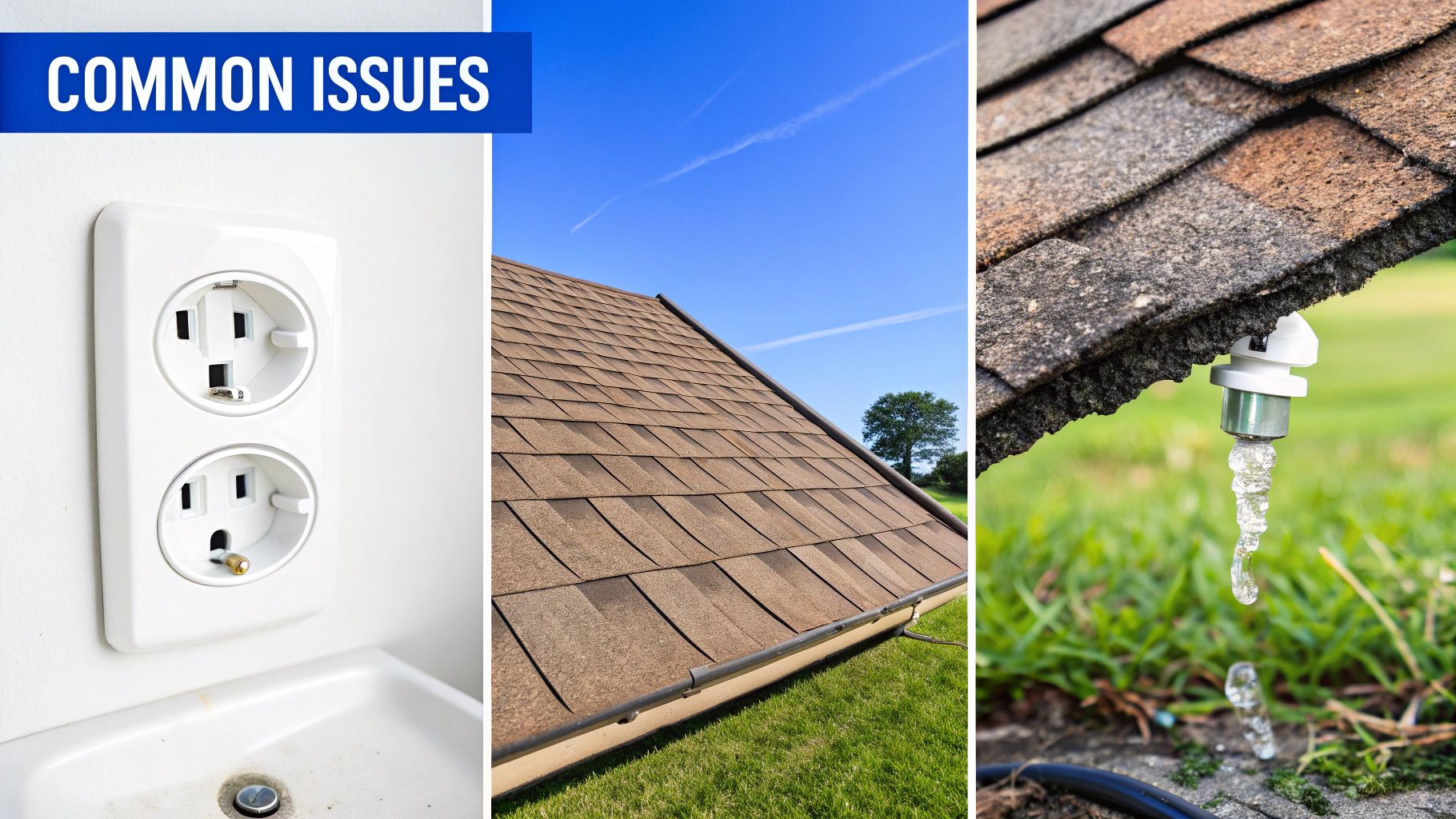
I find it helpful to think of the findings in three buckets: minor fixes, moderate repairs, and major defects. This approach keeps that long list of issues from feeling overwhelming and helps you focus on what really matters for your negotiations and future plans.
Minor Fixes and Routine Maintenance
This first bucket is filled with the small, inexpensive issues that pop up in nearly every home. Think of this less as a list of problems and more as your future weekend to-do list. Seeing these on a report is completely normal and rarely a reason for concern.
A few common examples include:
- Loose fixtures: A doorknob that jiggles a bit or a faucet that drips and just needs a new washer.
- Missing safety covers: Outlet or switch plate covers that are cracked, painted over, or just plain missing.
- Caulking and sealing: Small gaps around windows, tubs, or sinks that could use a fresh bead of caulk.
- Dirty filters: An HVAC filter that’s due for a change—a classic home maintenance task.
These are the kinds of things you can often tackle yourself or with a quick call to a handyman. They're almost never worth bringing up at the negotiating table, but they're great to know about for your own maintenance schedule.
Moderate Repairs Requiring Attention
Moving up a notch, we have issues that need a bit more than a quick fix. These are problems that can impact how the home functions or could get worse if you ignore them. They usually require a professional and might become part of your repair negotiations with the seller.
These types of issues often involve the home's core systems:
- Plumbing Problems: You might see slow drains, small leaks under a sink, or a water heater that’s getting close to the end of its 10-12 year average lifespan.
- Electrical Concerns: Things like old two-prong outlets without proper grounding or a lack of GFCI (ground-fault circuit interrupter) outlets in wet areas like kitchens and bathrooms are common finds. GFCIs are a modern safety standard.
- HVAC Inefficiencies: An older furnace or air conditioner might still be working, but it could be inefficient or nearing the end of its road.
These findings are significant, but they aren't necessarily deal-breakers. They just represent a future cost you'll need to plan for, making them solid candidates for repair requests or seller credits.
Major Defects and Potential Red Flags
Okay, this is the category that requires your full attention. Major defects are the big-ticket items—significant structural, safety, or mechanical problems that are often expensive to fix and can affect the home's livability.
An inspector’s primary role is to identify issues that are significantly deficient, unsafe, or near the end of their service life. This is where the real value of an inspection lies—in uncovering the problems a casual walkthrough would never reveal.
These are the kinds of red flags that can pause a deal or lead to some serious negotiations:
Roofing Issues: This is one of the most common major findings we see. An inspector is looking for things like curling or missing shingles, signs of active leaks up in the attic, or a roof that's simply hit the end of its 20-30 year lifespan. If your report flags major roof problems, it's helpful to understand the 8 Critical Signs You Need a New Roof to give you more context for your next steps.
Foundation and Structural Problems: Big cracks in the foundation, basement walls that are bowing inward, or floors that sag are all signs of potentially massive repair bills. Any hint of a structural issue should be looked at more closely by a specialized engineer.
Widespread Water Intrusion or Drainage Issues: Poor grading that slopes water back toward the house is a recipe for foundation damage and basement flooding. Any signs of moisture, water stains, or active leaks are serious warnings that need immediate attention.
Finding these issues is what protects your investment. Discovering a major defect doesn't automatically mean you have to walk away, but it absolutely means you need to slow down, get professional repair quotes, and negotiate with all the facts in hand.
Specialized Inspections Beyond the Basics
A standard home inspection gives you an excellent, wide-angle view of a property's health. Think of it as a general physical for the house. But just like in medicine, sometimes you need a specialist with more advanced diagnostic tools to uncover hidden conditions.
These specialized, add-on inspections are your magnifying glass for specific, high-stakes risks that a visual-only inspection might not catch. They look deeper into systems and environmental factors, giving you a complete picture of what you’re buying. Deciding which ones you need really depends on the home's age, location, and unique features.
Knowing when to order these extra evaluations is a key part of an inspection process that truly protects your investment. It’s all about tailoring the examination to fit the specific property in front of you.
Uncovering Invisible Dangers: Radon and Mold Testing
Some of the most significant threats in a home are the ones you can't see, smell, or touch. Radon and mold fall squarely into this category, making specialized testing a crucial consideration for your family's health and safety.
Radon is a naturally occurring radioactive gas that can seep into a home through tiny cracks in the foundation. Because it's colorless and odorless, the only way to know if it's present at dangerous levels is to test for it. The EPA recommends that all homes be tested, as long-term exposure is a leading cause of lung cancer in the United States.
Mold inspections, on the other hand, are typically recommended if there are signs of past water damage, a persistent musty smell, or if anyone in the household has severe allergies. An inspector will take air and surface samples to identify the type and concentration of mold spores, which can cause respiratory issues and other health problems.
To learn more about the specifics of these add-ons, you can explore a full list of our specialized inspections available in the Memphis area.
Seeing Inside the Unseen: Sewer Scopes and Thermal Imaging
Just as an MRI allows doctors to see inside the body without surgery, certain inspection tools let us see inside a home's hidden systems. A sewer scope and thermal imaging are two powerful examples that reveal critical information a standard inspection simply can't access.
A sewer scope involves sending a small, high-resolution camera down the home's main sewer line. This is the only way to check for:
- Cracks or breaks in the pipe
- Blockages from invasive tree roots or debris
- Misaligned or collapsed sections
Repairing a main sewer line can easily cost thousands of dollars, making this a smart investment—especially for older homes with mature trees in the yard.
Thermal imaging uses a special infrared camera to detect temperature differences inside walls and ceilings. It's an incredible tool that can reveal hidden moisture from a slow plumbing leak, areas of missing insulation that cause energy loss, or even dangerous electrical hotspots behind an outlet. These advanced tools give buyers unprecedented insight into a home's condition.
When to Consider Add-On Inspections
So, how do you decide if you need these extra services? While every property is different, certain situations make specialized inspections a very wise choice. It’s all about matching the level of scrutiny to the potential level of risk.
Consider ordering add-on tests if the property:
- Is an older home: Properties built decades ago are much more likely to have issues with cast-iron sewer lines, outdated wiring, and materials that may contain asbestos or lead.
- Shows signs of water damage: If you or the inspector see water stains, smell musty odors, or notice soft spots in floors, a mold test is the logical next step.
- Is in a high-radon area: Some geographic locations, including parts of the Mid-South, have higher natural concentrations of radon in the soil.
- Has a well or septic system: These require their own specialized inspections to ensure water quality and proper system function, which fall outside the scope of a standard inspection.
Ultimately, discussing these options with your inspector and real estate agent is the best way to make an informed decision and ensure no stone is left unturned.
How to Decode Your Home Inspection Report
Getting the home inspection report can feel like someone just dropped a textbook in your lap. They’re often long, loaded with technical jargon, and packed with dozens, sometimes hundreds, of photos. But don't let it intimidate you. This document is your single best tool for making a confident, informed decision about the property.
Think of the report less as a list of everything wrong and more like the home's official biography. It tells the story of its current condition, highlights its strengths, and points out the areas that will need your attention down the road. Learning how to read it is the key to unlocking its real value.
Most modern reports are built for clarity, usually starting with a summary before diving into the details with plenty of visual aids. Your first stop should always be the summary page. This is the high-level overview where the inspector flags the most significant findings—the potential deal-breakers and safety hazards that demand immediate attention.
Breaking Down the Report Structure
Once you’ve reviewed the summary, you can dig into the main body of the report. It's almost always organized by the home's major systems, which makes it pretty easy to navigate. You’ll find dedicated sections for everything the inspector checked out.
Common sections usually include:
- Roof and Attic: This covers shingle condition, flashing, ventilation, and insulation levels.
- Exterior: Here you'll find notes on the siding, windows, drainage, and the grading of the land around the house.
- Foundation and Structure: Information on the visible parts of the foundation, walls, and flooring system.
- Electrical System: Findings on the main panel, wiring, outlets, and safety features like GFCIs.
- Plumbing System: A rundown of pipes, fixtures, water pressure, and the water heater.
- HVAC System: Details on the condition and age of the furnace and air conditioning units.
Each section will have detailed observations, and they're almost always paired with high-resolution photos. Good inspectors will use arrows or circles to point out the exact issue, which is crucial for understanding the context of each finding.
Major Defects vs. Minor Maintenance
This is probably the most critical skill to develop when reading your report: learning to separate the big problems from the small stuff. An inspector's job is to be thorough, so the report will list everything, from a loose doorknob to a crack in the foundation. Your job is to prioritize what matters.
A professional inspector’s primary focus is to identify items that are significantly deficient, unsafe, near the end of their service life, or not functioning as intended. Cosmetic issues are rarely the focus.
To help you cut through the noise, it's smart to categorize the findings into two main buckets.
Material Defects: These are the big-ticket items. We're talking about structural problems, a roof that's on its last legs, an outdated electrical system, or active plumbing leaks. These are the issues that will likely be expensive to fix and often form the basis for any post-inspection negotiations.
Maintenance Recommendations: This category covers all the smaller fixes and future upkeep tasks. Things like recaulking windows, swapping out a dirty furnace filter, or trimming a tree branch that's too close to the siding fall in here. These aren't typically negotiation points, but they create the perfect foundation for your future home maintenance checklist.
By focusing on the material defects first, you can address the most pressing concerns with the seller. The rest of the report then becomes an invaluable, long-term owner's manual for your new home. For a deeper look into this process, you can learn more about how inspectors communicate their findings to home buyers and what to expect from their communication style.
Your Next Steps After the Inspection
Once the home inspection report lands in your hands, you’re shifting gears from discovery to decision-making. Think of this document as more than just a list of the home’s flaws; it’s your roadmap and your most powerful negotiation tool. With all the findings laid out, you and your real estate agent can sit down and strategize, making sure your final decision is one you can feel confident about.

This is the moment where your investment is truly protected. The insights from the report give you the leverage to ensure you're getting a fair deal or to walk away if the risks are just too high. In essence, you have three primary paths forward, each with its own strategic angle.
Evaluating Your Three Main Options
After you've carefully gone through the report, it's time to huddle with your agent and any other experts you've brought in. Your next move will really depend on how severe the findings are, what your budget for repairs looks like, and your overall comfort level with the property’s current condition.
Generally, your options boil down to these three choices:
- Accept the Home As-Is: If the report only turns up minor, manageable stuff, you might decide to move forward without making any requests. This happens a lot in really competitive markets or when a home is already in fantastic shape.
- Request Repairs from the Seller: For bigger problems, especially anything related to safety or major systems, you can formally ask the seller to fix specific items before closing. This is usually done with an addendum to your purchase agreement.
- Negotiate for Credits or a Price Reduction: Instead of trusting the seller to manage repairs, you can ask for a credit at closing or a lower sale price. This puts you in the driver's seat, letting you control the quality of the work and choose your own contractor after you own the home.
The U.S. building inspection industry, valued at around $5.0 billion, is a vital part of real estate for a reason. The roughly 30,620 inspection businesses across the country provide the objective data buyers like you need to navigate these exact negotiations.
The Art of Negotiation
Negotiating after an inspection is a bit of a delicate dance. Your goal isn't to get the seller to hand over a perfect, brand-new house. Instead, you want to focus on the issues that genuinely affect the home's safety, structural integrity, and basic function.
It's crucial to distinguish between a "want" and a "need." A cracked light switch cover is a minor cosmetic issue, while a faulty electrical panel is a legitimate safety hazard. Focus your negotiations on the latter.
When you're deciding what to bring to the table, make sure to prioritize these kinds of problems:
- Safety Hazards: Things like exposed wiring, smoke detectors that don't work, or missing GFCI outlets where they're required.
- Structural Defects: Significant foundation cracks or clear signs of water getting in where it shouldn't.
- Major System Failures: An HVAC unit on its last legs or a roof that's at the end of its life.
For anything complex, getting a second professional opinion is always a good idea. Beyond the home inspection itself, if you're thinking about major renovations or just want a specialist's take, you might also consider getting a contractor to assess a property's potential before you finalize your requests.
Knowing When to Walk Away
Finally, you have to be ready for the possibility that the inspection uncovers some real deal-breakers. This is exactly why your purchase offer needs an inspection contingency. That little clause is your legal escape hatch, allowing you to back out of the deal without losing your earnest money if the inspection reveals problems you’re just not willing to take on.
If the issues are too widespread, the repair costs are astronomical, or you and the seller just can't see eye to eye, walking away is often the smartest financial move you can make. It might feel like a letdown, but it’s far better than getting locked into a home with overwhelming and expensive problems.
Frequently Asked Home Inspection Questions
Even after going through the whole process, a few key questions always seem to come up. Let's tackle the most common ones we hear from both buyers and sellers so you have quick, straightforward answers right when you need them.
How Much Does a Home Inspection Cost?
You can generally expect a standard home inspection to cost somewhere between $300 and $500. However, that number isn't set in stone. The final price really depends on the home's size, its age, and where you're located.
A sprawling historic home will naturally take more time and effort to inspect than a small, newer condo, and the price will reflect that. Also, keep in mind that any extra services you tack on—like a radon test or a sewer scope—are priced separately.
How Long Does a Home Inspection Take?
For a typical single-family home, we're usually on-site for about two to four hours. That gives a professional inspector enough time to be thorough and methodical, checking every major system without feeling rushed.
Of course, this can shift. A small condo might only take 90 minutes, while a large, complex property with a lot of history could easily take up the better part of a day. Your inspector will give you a more precise time estimate when you book the appointment.
A key takeaway is that a home inspection is not a pass-or-fail test. Instead, it is an objective, professional assessment of a property's condition on the day of the inspection, designed to inform the buyer.
Can a House Fail an Inspection?
Absolutely not. This is probably the biggest myth in the home inspection world. A house can't "fail" an inspection because inspectors don't hand out grades. Our job is simply to report on the home's current condition.
The final report will highlight what's working correctly, what might need some routine maintenance, and any systems that are deficient or unsafe. From there, it's entirely up to you—the buyer—to decide how to use that information and move forward.
At Upchurch Inspection, we provide the clarity and expertise you need to navigate your real estate transaction with confidence. Schedule your comprehensive home inspection in the Greater Memphis area today.