
Ever heard the phrase "building on solid ground"? Well, sometimes that ground isn't as solid as we think. Imagine your house is a boat floating on a sea of soil. If the "sea level" of that soil changes, your home can start to sink or tilt. In simple terms, that's foundation settlement.
It’s the completely natural process of a house sinking as the soil underneath it compresses from the sheer weight pressing down on it.
Unpacking Foundation Settlement
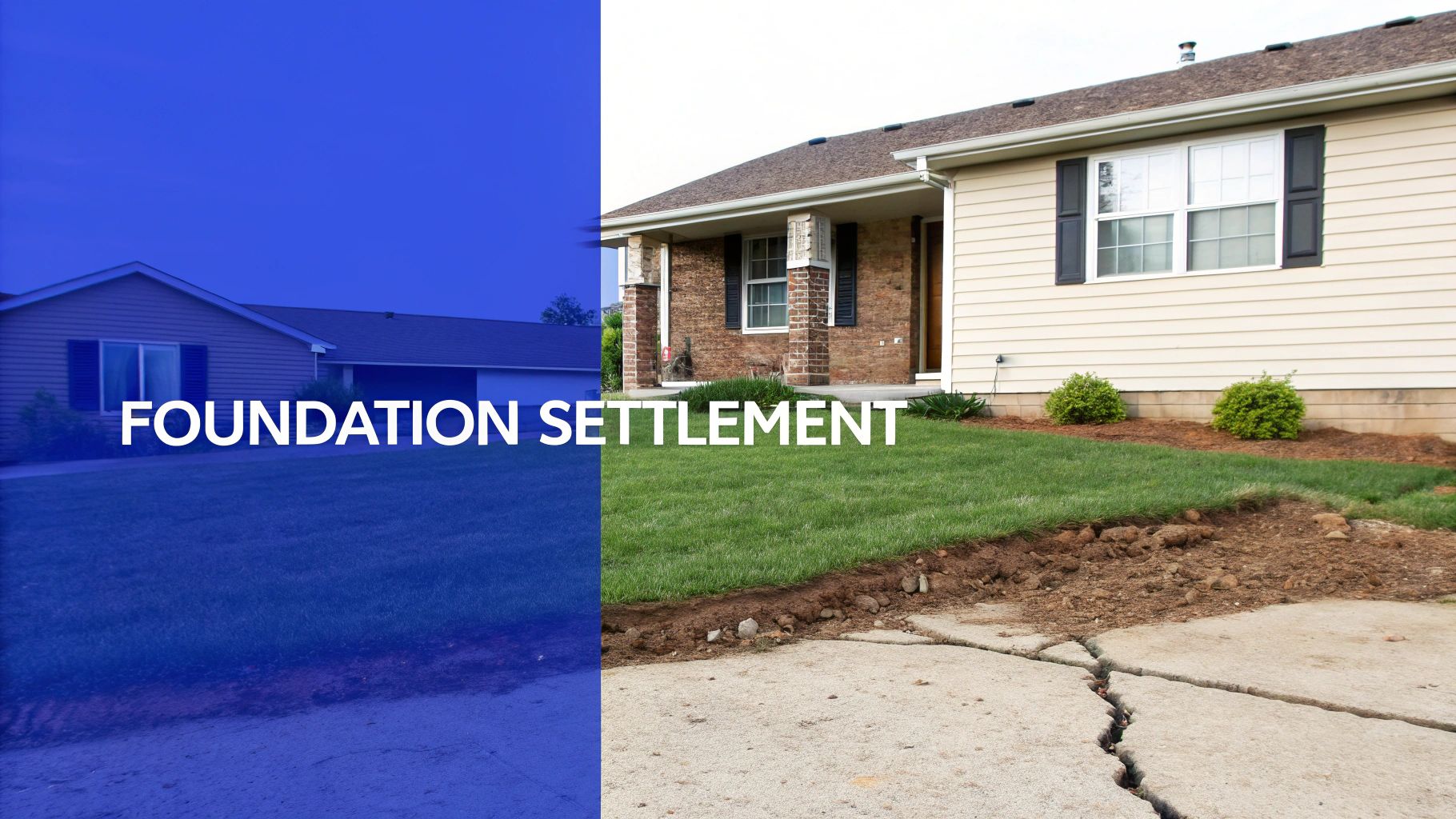
At its core, foundation settlement is just the downward movement of your home's foundation. This happens when the soil beneath it shifts or compacts, which can eventually lead to structural damage. It's a surprisingly common issue—in fact, settlement repair makes up about 36% of the entire foundation repair market. That market is huge and projected to hit USD 4.4 billion by 2035.
Think of the soil under your home like a new sponge. When you put something heavy on it, the sponge squishes down a bit. Over time, that compression becomes permanent. The soil under your house does the same thing, just on a much larger and slower scale, compacting under thousands of pounds of pressure.
But here’s the thing: not all settlement is a five-alarm fire. The real key is understanding the type of settlement your home is experiencing.
The Two Faces of Settlement
Foundation settlement comes in two main flavors, and one is far more destructive than the other. Knowing the difference is the first step toward figuring out if you have a real problem on your hands. For a deeper look at this, check out our guide on what every homebuyer needs to know about foundation problems.
- Uniform Settlement: This is when the entire house sinks evenly. Because the movement is consistent across the whole foundation, it rarely causes serious structural damage. Think of it as the whole "boat" lowering gently in the water together.
- Differential Settlement: Now, this is the real troublemaker. It happens when one part of the foundation sinks faster or farther than another. This uneven movement creates tremendous stress that can crack walls, warp door frames, and seriously compromise your home’s structural integrity.
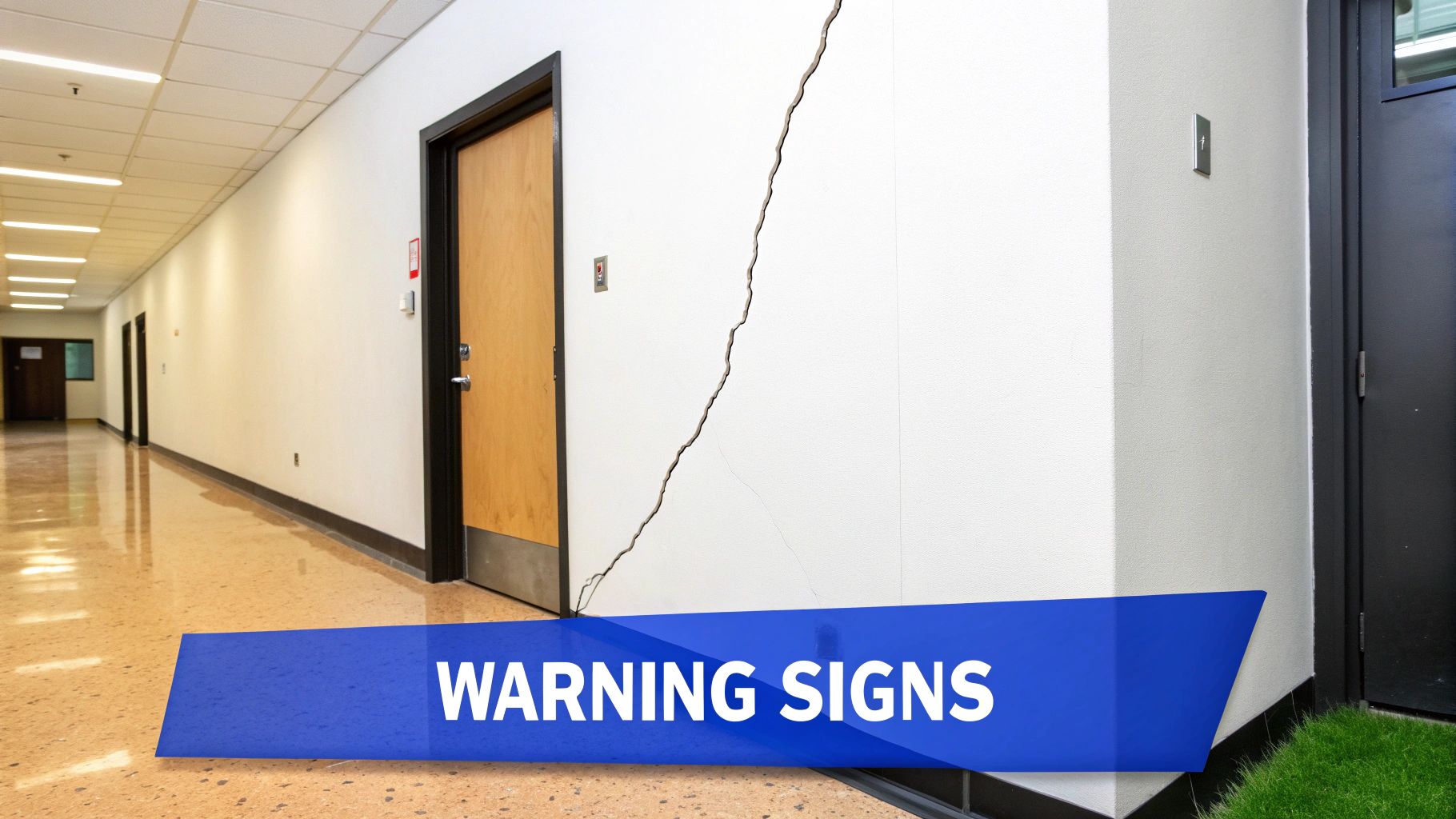
Key Takeaway: The danger isn't that your house is settling; it's how it's settling. Uneven, or differential, settlement is what leads to the classic warning signs like sticking doors and diagonal wall cracks.
To make this crystal clear, here’s a quick comparison of the two types.
Types of Foundation Settlement at a Glance
This table breaks down the two primary types of foundation settlement to help you quickly understand what might be happening with your home.
| Settlement Type | Description | Level of Concern |
|---|---|---|
| Uniform Settlement | The entire foundation sinks at roughly the same rate, keeping the structure level and stable. | Low |
| Differential Settlement | One section of the foundation drops lower than the others, causing twisting and stress on the frame. | High |
Recognizing which type of settlement might be affecting your home is crucial. One is a normal part of a house aging, while the other is a call to action.
The Hidden Culprits Behind a Sinking Foundation
Foundation settlement doesn't just happen out of the blue. It’s the result of powerful, unseen forces working beneath your home, and understanding what causes the ground to shift is the first step in protecting your property.
When it comes to a sinking foundation, three main culprits are almost always at play: problematic soil, fluctuating water levels, and human error during construction.
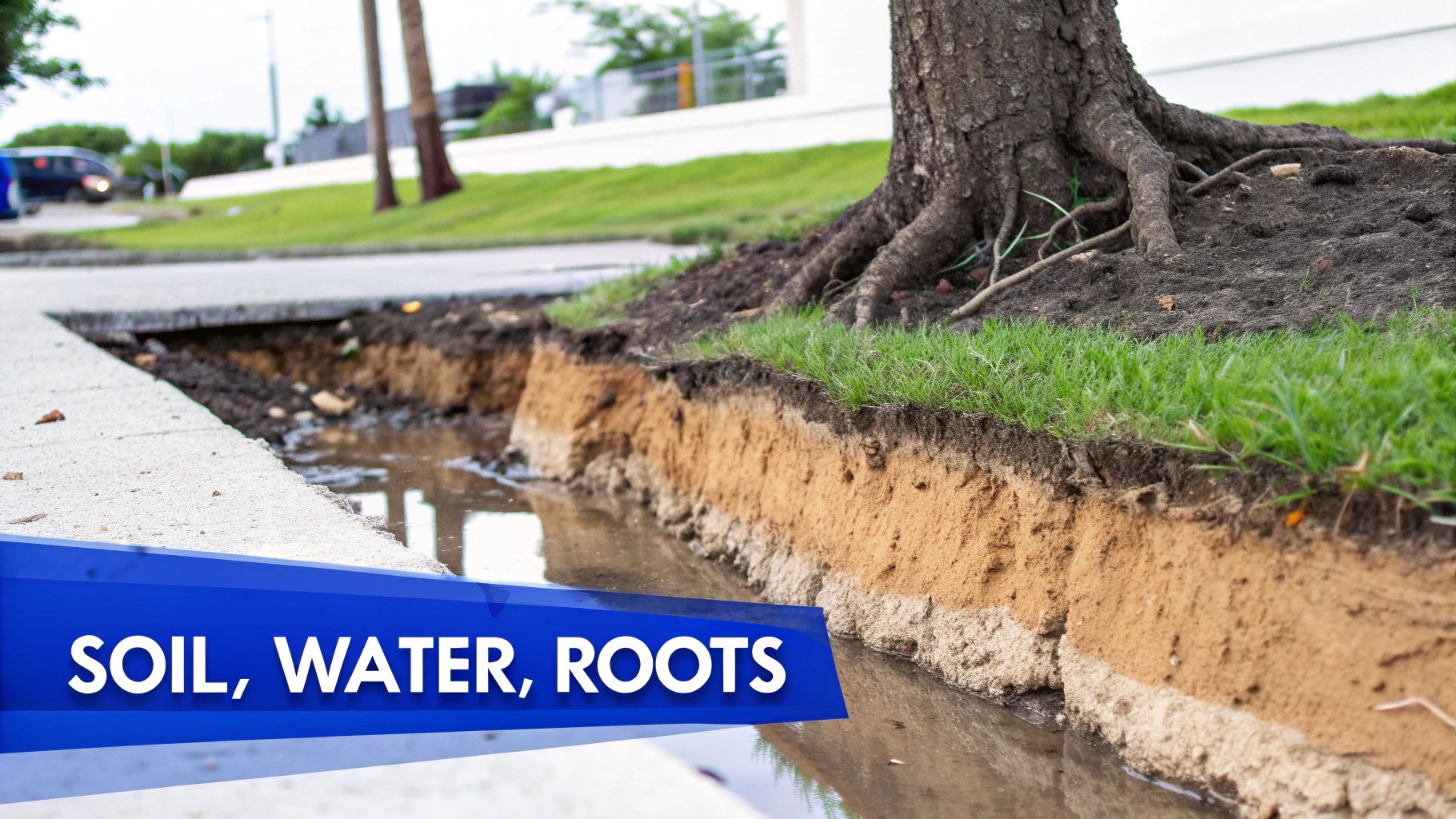
Each one of these factors can destabilize the very ground your house relies on, leading to the kind of dangerous differential settlement that causes real structural damage. Pinpointing the specific cause is absolutely key to finding the right solution.
Unstable Soil: The Ground Beneath Your Feet
The type of soil your home is built on is easily the single most important factor in foundation stability. While sandy and loamy soils drain well and provide a solid base, many homes—especially here in West Tennessee—sit on expansive clay soil.
Think of clay soil like a kitchen sponge. When it gets soaked, it swells up and expands. But during a drought or just a dry spell, it shrinks, cracks, and literally pulls away from your foundation. This constant cycle of expansion and contraction can lift and drop sections of your home, putting immense stress on the entire structure.
Water: The Driving Force of Soil Movement
Water is what activates soil problems. Whether it's too much or too little, moisture can turn stable ground into an unpredictable force that wrecks foundations. The real goal is to keep the moisture level around your home as consistent as possible all year long.
Unfortunately, several common issues love to disrupt this balance:
- Poor Drainage: Clogged gutters, downspouts that dump water right next to the house, or improper yard grading can pour thousands of gallons directly into the soil at your foundation's edge. This oversaturation turns clay soil into a mushy, unstable mess.
- Plumbing Leaks: A slow, hidden leak from a sewer line or water supply pipe under your slab can silently wash away the soil, creating an empty space. Sooner or later, the foundation above this void will collapse into it, causing sudden and severe settlement.
- Large Tree Roots: Those beautiful, mature trees near your home are thirsty. Their vast root systems can pull hundreds of gallons of water from the soil every single day, aggressively drying out the ground and causing it to shrink away from the foundation.
Proper water management is the most effective preventative measure a homeowner can take. Ensuring water flows away from your foundation is non-negotiable for long-term structural health.
Getting water control right is essential. For more specific advice, you can find some valuable foundation drainage and grading tips for Tennessee homeowners that tackle our region's unique challenges.
Construction and Site Preparation Issues
Sometimes, the problem starts long before the first brick is ever laid. Shortcuts or simple mistakes made during the construction process can create a ticking time bomb for foundation settlement, even decades down the road.
The most common issue we see is improperly compacted fill dirt. When a building lot is graded, low spots are often filled in with loose soil. If this new soil isn't packed down tightly in thin layers with heavy machinery, it will slowly compress under the massive weight of the house.
This causes that section of the foundation to sink over time, creating a classic case of differential settlement that was basically built-in from day one.
How to Spot the Warning Signs of Foundation Settlement
Your house has its own way of telling you when something’s wrong. It rarely shouts; instead, it whispers through subtle clues that are easy to dismiss as just "old house quirks." Learning to interpret these signals is the first and most important step in catching foundation settlement before it spirals into a major repair.
The problems often pop up far from the foundation itself. A sticky door or a new crack in the drywall might seem minor, but they can be early warnings from your home's structure. The most obvious signs are cracks, but not all cracks spell disaster. It's the pattern, size, and location that really tell the story.
Interior Warning Signs
Let's start your tour inside. When one part of the foundation sinks, it pulls the rest of the house with it, creating stress that travels straight up through the frame. This is where you'll often see the first signs of trouble.
- Cracks in Drywall: Be on the lookout for diagonal cracks that run from the corners of your door and window frames. These "stair-step" patterns are a classic sign of uneven foundation movement.
- Sticking Doors and Windows: If a door that used to close smoothly now sticks at the top, or a window suddenly requires extra muscle to open, take note. A shifting foundation can warp and twist the frames, causing them to bind.
- Sloping Floors: Grab a marble or a small ball. Does it roll to one side of the room on its own? A noticeable slope is a huge red flag that one part of your foundation has dropped lower than the rest. Keep an eye out for other unusual issues, too—even signs like a sinking toilet or soft spots underfoot can point to deeper structural problems.
Exterior Red Flags
Now, head outside and take a slow walk around your property. The evidence of foundation settlement is often clearer and more direct on the exterior of a home.
Here’s what to look for:
- Foundation Cracks: Get a close look at the visible concrete or brick foundation. While tiny vertical cracks can be normal, horizontal cracks or wide, stair-step cracks in brickwork are serious warnings. They indicate intense pressure on your foundation walls.
- Leaning Chimney: A chimney that's tilting away from the house is a textbook example of differential settlement. Its heavy footing has likely settled on its own, separate from the main foundation.
- Gaps Around Windows and Trim: Look for new gaps opening up between your window frames and the exterior brick or siding. This is a clear sign that the wall is being pulled away as the foundation moves.
A single hairline crack might be nothing to worry about. But when you see a combination of sticking doors, diagonal wall cracks, and a separating chimney, it paints a pretty clear picture of active foundation settlement that needs a professional eye.
Gauging the Severity of the Signs
Not every crack means your home is in immediate peril. The key is to understand the severity and watch for changes over time.
Use this table to assess the severity of the signs you observe around your property and determine when to seek professional help.
Foundation Settlement Warning Signs by Severity Level
| Severity Level | Common Signs | Recommended Action |
|---|---|---|
| Low | A few hairline cracks (less than 1/8 inch) in drywall or the concrete slab; no other symptoms. | Monitor: Mark the ends of the cracks with a pencil and date them. Check back every few months to see if they are growing. |
| Moderate | Doors and windows start to stick; existing cracks are getting wider or new ones are appearing. | Consult: This is the time to get a professional opinion. Schedule a foundation inspection to find the root cause. |
| High | Large, jagged cracks (wider than 1/4 inch); a leaning chimney; visible bowing in foundation walls. | Act Immediately: These signs point to significant structural movement. Contact a certified foundation inspector right away. |
Ultimately, recognizing these patterns early gives you the power to act before small issues become big, expensive problems.
What to Expect During a Professional Foundation Inspection
So, you've spotted a few potential warning signs of foundation settlement. Now what? The next step—calling in a professional—can feel a little intimidating, but knowing what the process involves helps take the uncertainty out of it. Think of a professional inspection as a fact-finding mission, a systematic deep dive to figure out exactly what’s going on under your home.
An expert inspector isn't going to just eyeball a crack and offer a vague guess. They come equipped with specialized tools and a methodical process to gather hard data. A key part of this is taking floor elevation measurements across your entire home. This creates a topographical map of your foundation, showing precisely which areas have sunk and by how much.
This data-driven approach is what separates a professional diagnosis from mere speculation. It turns guesswork into a clear, measurable assessment of your home's true condition.
The Inspection and Evaluation Process
A thorough foundation inspection goes way beyond just taking measurements. The specialist will conduct a detailed visual examination of your property—both inside and out—to connect the symptoms you’re seeing with the root cause.
Here’s a look at what a typical evaluation covers:
- Crack Analysis: The inspector will carefully examine the location, direction, and width of every visible crack in your drywall, brickwork, and the foundation itself. Different types of cracks tell different stories.
- Operational Checks: They’ll go through the house testing doors and windows, looking for patterns of sticking or misalignment that point to specific areas of movement.
- Exterior Assessment: Around the outside of your home, the inspector will check for things like a leaning chimney, gaps appearing around trim, and any signs of soil erosion or poor drainage that could be contributing to the problem.
And while our focus here is on existing homes, it's worth noting that a good new home construction inspection checklist can help prevent these issues from the start. An expert eye can spot potential problems that an untrained person would easily miss, giving you a complete picture of your home’s structural health.
Engineer vs. Repair Company Estimate
When you’re looking for a professional opinion, you generally have two paths: a free estimate from a foundation repair company or a paid assessment from an independent structural engineer. It’s absolutely vital to understand the difference between the two.
A repair company’s primary objective is to sell you their repair services. While many are reputable, their evaluation is naturally part of a sales process.
An independent structural engineer, on the other hand, has no financial stake in the repairs. Their one and only job is to give you an unbiased, expert analysis of the problem and recommend the most appropriate solution—or tell you if no repair is needed at all.
For manufactured homes, the requirements can be even more specific, often needing a specialized certification. You can learn more about what’s involved with HUD foundation inspection certifications to ensure everything is compliant. Ultimately, an engineer's report provides the impartial, authoritative diagnosis you need to make a confident and fully informed decision about your home.
Understanding Foundation Repair Methods and Costs
Getting the news that your foundation has settled can be unsettling, to say the least. But the good news is that modern engineering has some incredibly reliable solutions to stabilize your home and give you back your peace of mind.
Most homeowners immediately jump to two questions: How are you going to fix this, and what’s it going to cost me? Let's walk through the primary repair methods, which will help answer both.
The right fix always depends on the root cause and the specific type of settlement your home is experiencing. When you’re dealing with significant differential settlement, the main goal is to shift your home’s massive weight off the unstable surface soil and onto solid, stable ground much deeper down.
Underpinning With Piers
Underpinning is the gold standard for permanently fixing settlement caused by bad soil. Think of it like giving your house its own set of stilts that reach deep into the earth, completely bypassing the shifting, unreliable soil near the surface.
The process involves driving steel piers hydraulically through the unstable soil layers until they hit bedrock or a solid, load-bearing stratum. Once these piers are firmly anchored, special brackets are attached to your foundation, and your home's weight is carefully transferred onto them. This not only stops the sinking in its tracks but can also be used to lift the settled parts of your foundation back toward their original position. It's a permanent solution designed to last the lifetime of your home.
Polyurethane Foam Injection
For less severe problems, like a sunken concrete slab in your garage or on your patio, polyurethane foam injection (often called polyjacking) offers a much less invasive approach. The technique is pretty clever: small holes are drilled into the sunken slab, and a high-density, two-part foam is injected beneath it.
This foam expands rapidly, filling any empty pockets in the soil and lifting the concrete back into place with surprising force. It’s a fast, clean, and highly effective way to level slabs without bringing in heavy excavation equipment.
The flowchart below shows the structured approach a professional inspector uses, starting with a thorough inspection and ending with a clear, specific recommendation for repair.
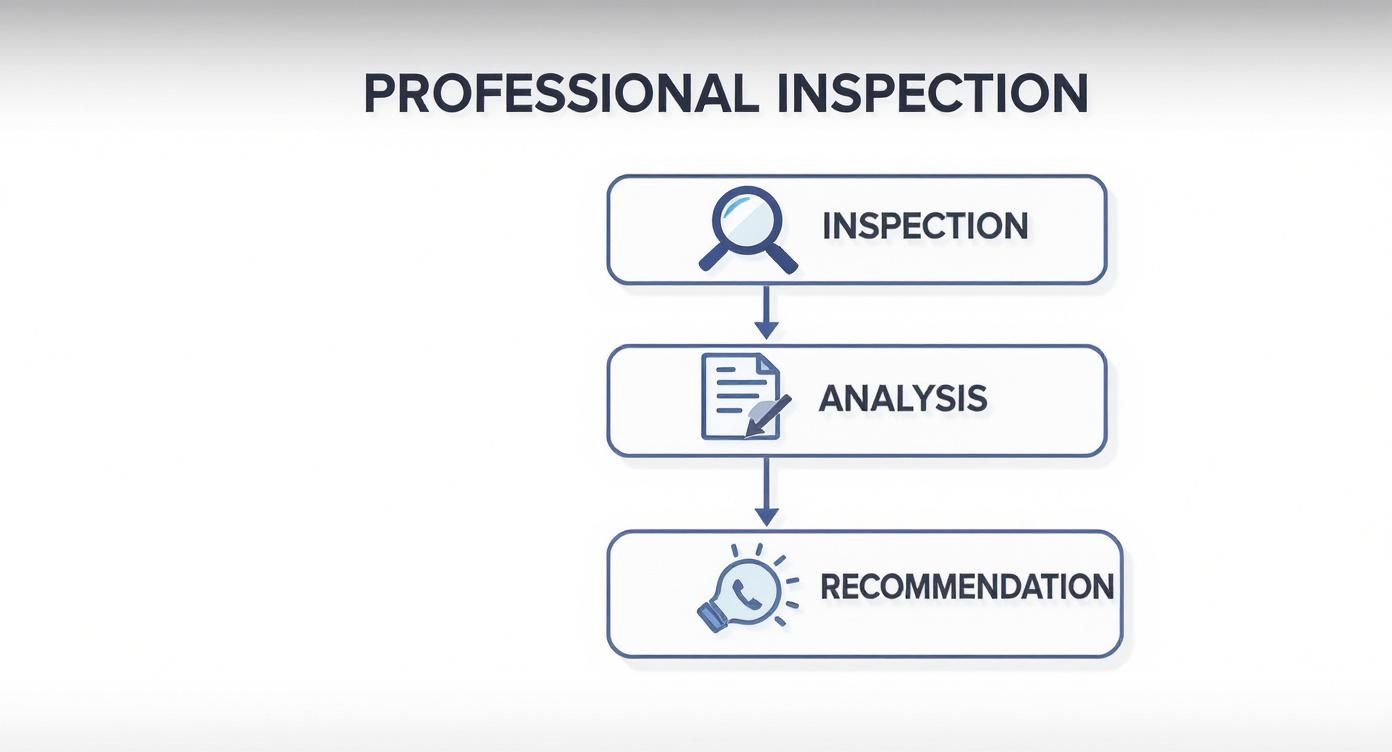
This step-by-step process is crucial. It ensures the recommended repair method, whether it's piering or polyjacking, is the right one for the job because it directly addresses the diagnosed problem.
Navigating Repair Costs
Let's be upfront: foundation repair is a major investment. The costs can vary dramatically depending on how extensive the damage is and which repair method is used. There's a reason it's a huge industry.
The global foundation repair market was valued at a staggering USD 2.72 billion in 2023 and is projected to climb to USD 3.39 billion by 2032. This growth is driven by more homeowners becoming aware of what foundation settlement is and the serious consequences of ignoring it. You can dig deeper into these market trends in the full foundation repair services report.
To help you get a sense of what to expect, here are some general cost ranges:
- Steel Piers: The cost here is usually calculated per pier. You can expect to pay between $1,500 and $3,500 for each one. A typical home might need 8-10 piers, which puts the total anywhere from $12,000 to $35,000, and sometimes more.
- Polyjacking: This method is generally more affordable and is often priced by the square foot. Costs typically run from $2,000 to $10,000, depending on how large of an area needs lifting.
Important Note: These are just ballpark figures. The only way to get a truly accurate price for your specific situation is to have a reputable foundation specialist conduct a detailed, on-site evaluation and provide a formal quote.
Frequently Asked Questions About Foundation Settlement
Even after you get a handle on the basics of foundation settlement, a few specific questions always seem to pop up. Think of this as your quick-reference guide to tackle those lingering uncertainties homeowners often have, from whether you can prevent it to who foots the bill for repairs.
Can I Prevent Foundation Settlement?
While you can't magically change the soil your house was built on, you can absolutely take proactive steps to manage the risks. The single most effective thing you can do is control the water around your foundation. Get that right, and you've won half the battle.
Here’s what that looks like in practice:
- Keep Your Gutters Clean: Make sure they are clear of leaves and debris. Clogged gutters are a primary culprit for dumping water right next to your foundation.
- Extend Your Downspouts: Your downspouts should carry water at least 5-10 feet away from the house. This simple step prevents thousands of gallons of water from oversaturating the soil right where it matters most.
- Check Your Yard's Slope: The ground should grade away from your house, not create a bowl for water to collect in. A negative grade is an open invitation for trouble.
- Landscape Wisely: Be careful about planting large trees too close to your home. As they mature, their massive root systems can drink up huge amounts of moisture from the soil, causing it to shrink and settle unevenly.
Does Homeowners Insurance Cover Foundation Repairs?
This is a big one, and the answer is usually no. Standard homeowners insurance policies do not cover foundation settlement. Insurance is designed to cover sudden, accidental events, but settlement is almost always seen as a gradual process caused by soil movement or long-term construction issues—things that are standard exclusions in most policies.
There are, of course, rare exceptions. If the settlement was the direct result of a covered event—say, a main water line bursting and completely eroding the soil under a corner of your house—you might have a valid claim. The bottom line is to read your policy carefully and talk to your agent.
Key Insight: Don't just assume you're covered for foundation issues. You almost certainly aren't. Always verify the specifics of your policy, because coverage for settlement is rare and highly dependent on the root cause of the damage.
How Long Do Foundation Repairs Last?
The longevity of a foundation repair comes down to two things: the method used and the quality of the work.
- Permanent Solutions: High-quality methods like underpinning with steel piers are designed to be a permanent fix. These piers are driven deep into the ground until they hit bedrock or stable, load-bearing soil, effectively bypassing the problematic soil near the surface. Reputable companies will often back these solutions with a transferable lifetime warranty.
- Temporary Fixes: Other methods, like mudjacking or poly-leveling, can be more of a temporary lift. While effective for certain situations (like leveling a concrete slab), they don't always address the underlying soil problem, meaning you might find yourself needing to do it all over again in a few years.
When you're getting quotes, always ask the contractor about the design life and warranty of any repair they propose. You want a solution, not a band-aid.
Navigating the complexities of foundation settlement requires an expert eye. If you have questions or see signs that make you uneasy, don't wait for a small problem to become a big, expensive one. The certified professionals at Upchurch Inspection provide thorough, unbiased evaluations to give you a clear, honest picture of your home's structural health.
Schedule your detailed inspection today by visiting us at upchurchinspection.com.