

A sewer scope inspection is a non-invasive video exam of your home’s main sewer line, plain and simple. Using a flexible, high-resolution camera, an inspector can travel the entire length of the pipe—from your home all the way to the municipal sewer connection—to get a real-time look at its interior condition. It's one of the most important diagnostic tools you can have to spot hidden problems before they turn into catastrophic, wallet-draining failures.
Your Home's Hidden Plumbing Highway Revealed
Think of your sewer line as the main highway for every drop of wastewater leaving your home. Every sink, shower, and toilet depends on this single underground pipe to do its job. But because it’s buried and out of sight, homeowners usually have no clue that a problem is brewing until it’s way too late. That's when you get sewage backups, flooded basements, and shockingly expensive, disruptive repairs.
A sewer scope inspection is like sending a tiny remote-controlled vehicle with a camera down that highway to check for traffic jams, potholes, and structural damage. It reveals the true health of a system you can't otherwise see. An inspector feeds a flexible rod with a camera on its tip into your sewer cleanout access point. As the camera snakes through the pipe, it records a live video, letting the inspector pinpoint issues like tree root intrusion, cracks, collapsed sections, or major blockages.
Before modern camera technology became widely available, diagnosing these kinds of issues was mostly guesswork. For homeowners today, getting a sewer scope during a real estate transaction is absolutely critical, as it can uncover problems affecting 20-30% of older properties. Finding these issues early can literally save you from $10,000 to $50,000 in surprise repairs. You can see more on the latest sewer inspection camera trends and how the tools used by plumbing professionals provide immense value.
Key Takeaway: A sewer scope inspection isn't just about finding problems; it's about gaining leverage and peace of mind. It transforms an unknown liability into a known condition, giving you the power to negotiate repairs or walk away from a potential money pit.
Sewer Scope Inspection at a Glance
For a quick overview, this table breaks down the essential elements of a sewer scope inspection.
| Aspect | Description |
|---|---|
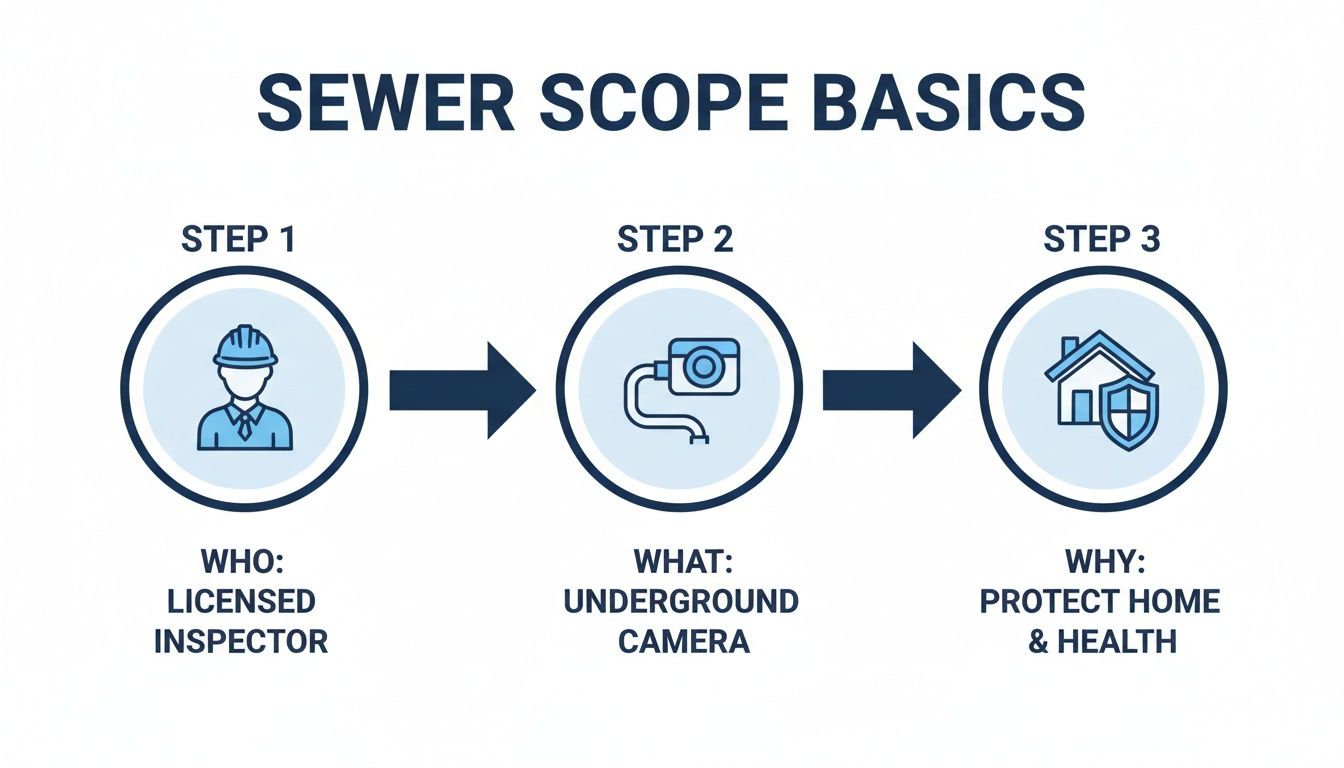
| Who | A certified home inspector or licensed plumber trained in sewer scope diagnostics. |
| What | A video inspection of the main sewer lateral from the house to the city tap. |
| When | During a home purchase, if you have recurring clogs, or own a home over 20 years old. |
| Why | To identify costly hidden defects like root intrusion, cracks, or collapsed pipes. |
It's a straightforward process that provides an incredible amount of information about a critical, yet invisible, part of your home.
A Step-By-Step Journey Through Your Sewer Line
Think of a sewer scope inspection as sending a miniature submarine on an exploratory mission through your home's most critical, and completely hidden, plumbing artery. The process is methodical and precise, designed to give you a clear visual tour of your sewer line's health from the house all the way to the street.
The whole journey begins when the certified inspector arrives. Their first task is to find the main sewer line cleanout, which is the primary access point for the camera. You can usually find this capped pipe in the basement, a crawlspace, or just outside near the foundation. Once it's located, they get their specialized camera gear ready for the mission ahead.
This process is a fantastic blend of a trained professional's eye and advanced technology, all working to protect one of your biggest investments.
The Camera Enters the Pipe
With the cleanout cap removed, the inspector carefully feeds a flexible fiber-optic cable down into the pipe. On the very tip of this cable is a high-resolution, waterproof video camera surrounded by a powerful LED light that cuts through the darkness.
As the camera snakes its way toward the municipal sewer connection under the street, the inspector is glued to a live video feed on a monitor. They aren't just looking for a big clog; they're piecing together the story of your sewer line.
They pay close attention to details like:
- Pipe Material: Is it old clay tile, cast iron, or modern PVC? The material itself tells us a lot about potential age-related problems to watch for.
- Flow and Water Level: If water is pooling where it shouldn't, it could signal a "belly" or sag in the line—a perfect spot for waste to collect and cause future blockages.
- Joints and Connections: Every connection between pipe sections is a potential failure point. The inspector is checking them for gaps, offsets, or the tell-tale signs of root intrusion.
Inspector's Insight: An experienced inspector isn't just looking for the obvious disaster. They’re trained to spot the subtle stuff—like hairline fractures or minor root tendrils just starting to creep in—that are early warning signs of much bigger, more expensive problems on the horizon.
Documenting the Findings
Throughout the entire trip down the line, the inspector is meticulously documenting everything. They’ll often pause the camera to snap high-resolution photos of any trouble spots. They can also use a locator device from above ground to pinpoint the exact physical location and depth of a problem. This is absolutely crucial for planning any repairs without tearing up your whole yard.
Once the camera reaches the city main or hits a blockage it can't pass, the job is only halfway done. The inspector slowly retracts the camera, which is just as important as the trip in. This provides a second look at the entire line from the opposite angle. The whole video is recorded, giving you a permanent, time-stamped record of your sewer line’s condition.
Uncovering Common Problems Hiding Underground
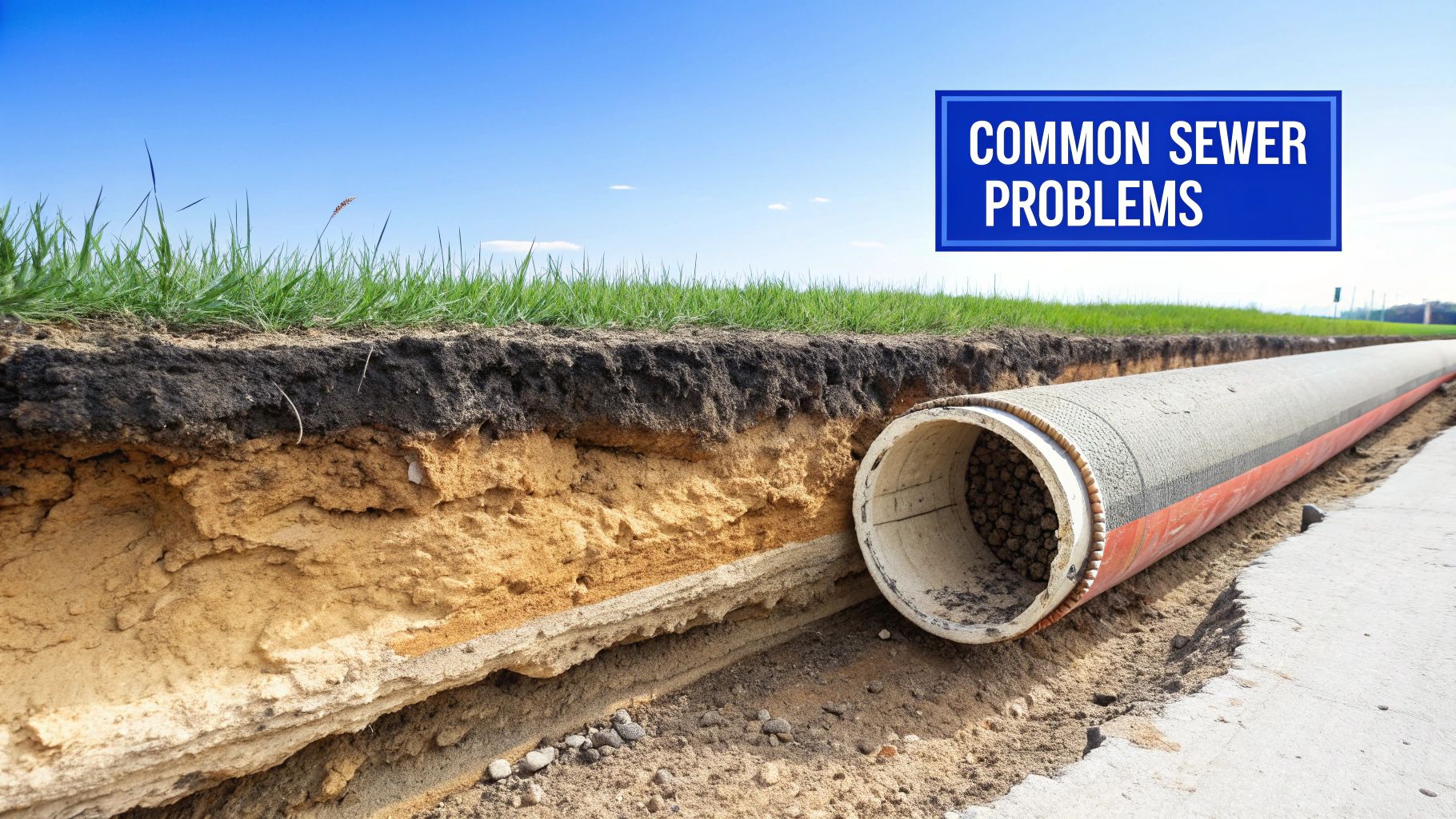
So, once the camera is snaking its way through your sewer line, what is the inspector really looking for? We're on the hunt for a whole range of specific—and often costly—defects that can hide just a few feet beneath your lawn. Knowing what these common culprits are is the first step to making sense of your inspection report and protecting your investment.
These issues can creep up over decades, showing no obvious signs until a catastrophic failure dumps sewage into your yard or basement. This is precisely why a proactive sewer scope is so important. Historically, finding these problems was more guesswork than science.
Before the year 2000, older inspection techniques actually failed to spot an estimated 60% of hidden sewer line defects. Today’s high-resolution sewer cameras give us a 95% accuracy rate, drastically cutting your risk of an unexpected disaster.
Intrusive Tree Roots
One of the most frequent and destructive problems we find is tree root intrusion. It’s simple biology—tree roots are naturally drawn to the constant source of moisture and nutrients inside your sewer line. They can work their way into the tiniest cracks or pipe joints, starting as harmless, web-like tendrils before growing into thick, pipe-crushing masses.
- Initial Stage: Hairline roots slip through small openings, often at the seams where pipe sections connect.
- Growth Stage: Over time, these roots expand and act like a wedge, forcing joints apart and creating even larger cracks in the pipe wall.
- Blockage Stage: Eventually, the root ball becomes dense enough to snag toilet paper and solid waste, leading to slow drains and, ultimately, a full-blown backup.
Structural Pipe Damage
Beyond just roots, the camera is looking for any signs that the pipe itself is failing. The type of damage we see often depends on the pipe's material, its age, and the soil conditions around it.
A bellied pipe, for instance, is a section of the line that has sagged down because of shifting soil. This dip creates a low spot where water and debris collect, forming a permanent, sludge-filled blockage. Other common issues we spot are fractures, separated joints where pipe sections have pulled apart, or even a complete collapse of the pipe. Exploring these common plumbing pitfalls unveiled by home inspectors can provide even more context on what can go wrong underground.
A sewer scope inspection turns abstract risks into tangible evidence. Seeing a thick root bundle or a significant crack in your pipe provides undeniable proof of a problem that needs to be addressed, giving you critical negotiating power in a real estate transaction.
Blockages And Buildup
Finally, the inspection looks for severe blockages that are choking off the flow of waste. While some clogs are temporary annoyances, others point to much bigger problems.
A significant grease buildup, for example, can solidify over time and coat the inside of the pipe, narrowing its diameter until it’s almost completely sealed off. This is especially common in lines connected to homes or restaurants with heavy kitchen use. The camera helps us tell the difference between a simple clog that a plumber can clear and a structural defect causing the clog—a far more serious issue that might require excavation and repair.
To give you a clearer picture, here’s a breakdown of the typical issues we find, their causes, and what it usually takes to fix them.
Common Sewer Line Defects and Their Implications
| Defect | Common Cause | Severity Level | Typical Solution |
|---|---|---|---|
| Tree Root Intrusion | Roots seeking moisture enter through pipe joints or cracks. | Moderate to Severe | Hydro-jetting to clear roots; pipe lining or replacement may be needed. |
| Belly (Sagging Pipe) | Poor soil compaction, soil settlement, or improper installation. | Moderate | Spot repair or excavation and re-grading of the affected pipe section. |
| Pipe Cracks/Fractures | Soil shifting, heavy loads above ground, or aging materials. | Moderate to Severe | Pipe lining for minor cracks; excavation and replacement for severe fractures. |
| Separated Joints | Ground movement, poor installation, or material degradation. | Severe | Excavation and replacement of the separated pipe sections. |
| Grease Buildup | Pouring fats, oils, and grease down drains. | Minor to Moderate | Hydro-jetting to scour the pipe clean and restore proper flow. |
| Pipe Collapse | Extreme root damage, severe fractures, or aging pipes. | Critical | Full excavation and replacement of the collapsed section. |
This table illustrates why a "simple" clog can sometimes be the tip of the iceberg. Having a professional look inside the pipe is the only way to know for sure what you're dealing with and avoid a small problem turning into a major, expensive headache.
When a Sewer Inspection Is Absolutely Necessary
Knowing when to pull the trigger on a sewer scope inspection can mean the difference between a minor preventative cost and a catastrophic five-figure repair. While it's a smart move anytime, some situations make this inspection absolutely non-negotiable. Think of it as your first line of defense against hidden, underground threats to your property and your wallet.
The single most critical time to get a sewer inspection is during a real estate transaction. When you buy a house, you're buying everything that comes with it—including the underground sewer lateral. Any unseen disaster lurking in that pipe becomes your financial headache the moment you sign the closing papers. You wouldn't buy a car without looking under the hood, so why would you buy a home without looking down its main drain?
For a small investment, usually somewhere between $300 and $600, you get a crystal-clear view of a system that could easily cost $15,000 or more to replace. That knowledge is powerful, giving you the leverage to negotiate repairs with the seller or, if necessary, to walk away from a potential money pit.
Key Triggers for an Inspection
Beyond a home purchase, a few other red flags should have you calling an inspector right away. If you're dealing with plumbing issues that just won't quit, it’s a strong signal that the problem runs deeper than a simple clog under the sink.
It’s probably time for a sewer scope if you're noticing:
- Recurring Slow Drains: If drains all over the house are sluggish, or the same one keeps backing up no matter what you do, the culprit is likely in the main sewer line.
- Frequent Backups: Any time sewage backs up into your home—especially in the lowest drains like a basement floor drain—it's a massive warning sign demanding immediate investigation.
- Gurgling Toilets: Hearing strange gurgling noises from the toilet when you run the sink or shower? That's often a sign of air being trapped in the line by a blockage downstream.
Proactive Protection: A sewer scope isn't just for emergencies or real estate deals. It's a savvy, proactive maintenance step for any homeowner who wants to truly understand their property's condition and head off disasters before they even start.
Property Age and Environmental Factors
Your home's age and its surroundings also play a huge role. Properties built more than 20 years ago are prime candidates for an inspection. Older pipe materials like cast iron and clay are simply more prone to cracking, collapsing, and general deterioration over time.
This isn't just a local problem; it's a national one. The United States has over 800,000 miles of public sewers, many installed before 1950 and now living on borrowed time. You can dig deeper into how this aging infrastructure affects homeowners with detailed sewer inspection camera market research.
Finally, just take a look out your window. Do you have big, beautiful, mature trees in your yard? Their roots are naturally drawn to the constant source of water and nutrients inside your sewer line, making them a leading cause of crushed, clogged, and broken pipes. If your property has lovely old trees, a sewer inspection every few years is a wise investment in your home’s long-term health.
How to Read Your Sewer Inspection Report

After the camera has made its trip down the line, you’ll get a detailed report that might look a little intimidating at first. Don’t worry—making sense of it is easier than it seems. The whole point is to turn the inspector's technical findings into a clear action plan so you can make smart decisions about the property.
Your report will have a few key parts. The first thing to look for is the summary of findings. This is the inspector's high-level take on the sewer line's overall health. Any big-ticket items like root intrusion, collapsed sections, or major blockages will be flagged right here at the top.
To get a feel for what these reports look like, you can check out a sample home inspection report and get comfortable with the layout and language ahead of time. Modern tech is also making this process much faster; new camera systems can cut inspection time by as much as 50%, which means you get more accurate reports, faster.
Interpreting Inspector Terminology
Next, you'll get to the evidence: the video footage and still photos. The video gives you a real-time tour of the pipe, while the photos will highlight specific problem areas. As you go through them, you’ll probably come across some common industry terms.
Here’s a quick rundown of what they actually mean:
- Offset Joint: This is where two sections of pipe no longer line up perfectly. It creates a small lip that can easily snag toilet paper and waste, leading to clogs.
- Belly or Sag: A section of the pipe has dipped down, creating a low spot. Instead of flowing downhill, water and solid waste pool in this "belly," causing backups.
- Channeling: This happens in older cast iron pipes when the bottom literally rots or erodes away. What’s left is an open channel where wastewater leaks out directly into the surrounding soil.
- Root Intrusion: This can look like fine, web-like tendrils or thick, powerful roots that have forced their way into the line, usually through the joints between pipe sections.
Key Insight: The video footage is your best friend. If possible, watch it with the inspector. Ask them to talk you through what you're seeing and point out the exact distance (in feet) of any problems they found.
Crucial Questions for Your Inspector
Your chat with the inspector after you’ve reviewed the report is absolutely vital. This is your opportunity to understand just how serious any issues are. Show up prepared with a few questions to make sure you get all the information you need.
A great starting point includes:
- What’s the most urgent problem that needs to be fixed?
- Based on what you saw, can you give me a rough idea of the pipe's remaining lifespan?
- Did you see any minor issues that could turn into major headaches down the road?
- Do you recommend a follow-up cleaning, like hydro-jetting, or should I have a plumber take a closer look?
Getting answers to these questions turns the report from a simple list of defects into a practical roadmap for negotiations and future maintenance.
Sewer Line Insights for Memphis and West Tennessee
Knowing what a sewer scope inspection is is a great start, but understanding the specific risks we face here in Memphis and West Tennessee gives you a serious leg up. Our local geology and environment cook up a unique recipe of challenges for underground plumbing—problems homeowners in other parts of the country might never encounter. This local knowledge is absolutely key to protecting your investment.
One of the biggest culprits hiding right under our feet is expansive clay soil. When things get dry, this soil shrinks up and pulls away from the pipes, yanking away their support. Then, when the heavy rains come, it swells back up with incredible force. I’m talking enough force to shift, crack, or even completely crush older sewer lines. This constant back-and-forth puts a tremendous amount of stress on the pipe joints.
Local Risks to Your Sewer Line
On top of the soil issues, the beautiful mature trees that give our Memphis neighborhoods so much character pose another major threat. The deep, powerful roots of our beloved oaks and maples are always on the hunt for water. It’s a slow-motion attack you can't see, but over time, they can easily infiltrate and destroy a sewer pipe.
Many of our charming, historic homes in areas like Midtown Memphis add another layer of risk. They were often built with materials that are simply at the end of their useful life:
- Vitrified Clay Tile: This stuff is notorious for cracking and is especially vulnerable to root intrusion at the joints.
- Cast Iron: It’s tough, but it’s susceptible to rust, corrosion, and "channeling," which is where the bottom of the pipe essentially rots away.
In West Tennessee, it's not a matter of if a sewer line will face serious stress, but when. The combination of our soil, mature trees, and aging infrastructure makes a sewer scope inspection a vital piece of due diligence for any homebuyer.
It’s also crucial to know where your responsibility ends. In most of our local municipalities, the homeowner is on the hook for the entire sewer lateral—from the foundation of the house all the way to the main sewer connection under the street. Proactive checks are only becoming more important as cities tighten regulations to prevent sewer overflows, which cause an estimated $5 billion in damages annually across the U.S. You can read more on these trends in sewer system maintenance.
To make sure you’re truly protected, you need a qualified local inspector in your corner. A professional who has seen these specific issues time and time again will provide the most accurate assessment. It’s a core part of our Memphis home inspection services for this very reason.
Common Questions About Sewer Inspections
Even after a deep dive, you probably still have a few questions rattling around. That’s perfectly normal. Here are some quick, no-nonsense answers to the questions we hear most often from homeowners about sewer scope inspections.
How Long Does a Sewer Scope Inspection Take?
For a typical single-family home, the entire process usually takes about one to two hours.
Of course, that can change depending on what we find. If the sewer line is unusually long, tricky to access, or in rough shape, the inspector will need more time to carefully document everything. A straightforward, clean line might be quicker, while a complex one with multiple issues requires a more deliberate pace to get you the accurate information you need.
Can I Just Do a Sewer Scope Myself?
Technically, you can rent the equipment. But honestly? It's a bad idea. We strongly recommend hiring a certified professional for a proper sewer scope.
An inspector isn't just someone who knows how to shove a camera down a pipe without breaking anything. They’re trained to interpret what they see on the screen. An untrained eye can easily miss a subtle hairline crack that’s a major problem in waiting, or mistake a simple clog for a collapsed pipe. Plus, the professional report you get is your proof when negotiating with a seller or giving a plumber precise instructions for a repair.
Expert Advice: The real value isn't the camera—it's the trained eye watching the video feed. That expertise turns a blurry video into a powerful diagnostic tool that protects your investment.
Does the Inspection Include Cleaning or Repairs?
No, a sewer scope inspection is purely a diagnostic service. Think of it like an X-ray for your pipes. Our only job is to find and document the current condition of your underground sewer line.
We'll provide you with a detailed report and the full video of our findings, along with professional recommendations. If the line needs to be cleaned out with a hydro-jetter or requires any physical repairs, you'll need to bring in a licensed plumber to handle that work separately.
When you're dealing with sewer lines, you need local expertise you can count on. Upchurch Inspection delivers the thorough, detailed sewer scope inspections Memphis and West Tennessee homeowners need to move forward with confidence. Schedule your inspection today and see what’s really going on underground.