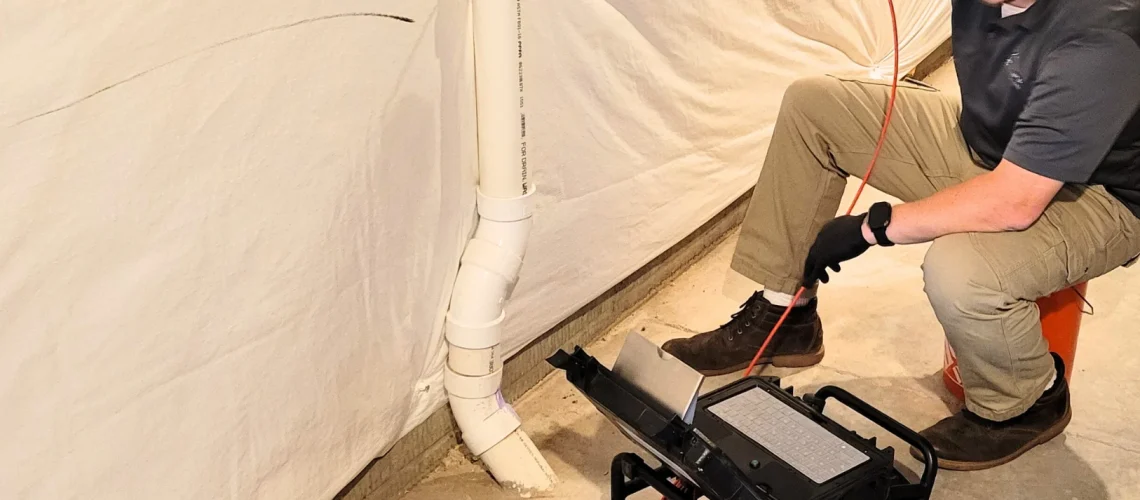
A home’s sewer line is one of its most critical—and least visible—components. Unlike roofs, HVAC systems, or plumbing fixtures, sewer lines are buried underground and cannot be evaluated through a standard visual inspection. A sewer scope inspection provides a direct look inside the line, revealing conditions that would otherwise remain unknown until a problem occurs.
For homes throughout the Mid-South, sewer scope inspections often uncover issues that significantly affect cost, usability, and long-term maintenance.
Why Sewer Lines Are Often Overlooked
During a typical home inspection, inspectors evaluate visible plumbing components and verify basic drainage function. However, this does not assess the condition of the underground sewer lateral connecting the home to the public sewer or septic system.
Many sewer line problems develop gradually and may not cause immediate backups, especially during dry conditions or limited use. As a result, issues often remain hidden until repairs become unavoidable.
Common Issues Revealed by Sewer Scoping
A sewer scope inspection uses a camera to visually examine the interior of the sewer line. This allows inspectors to identify conditions such as:
- Tree root intrusion
- Cracked, collapsed, or offset pipe sections
- Bellies or low spots where waste collects
- Deterioration of older pipe materials
- Improper slope or installation issues
- Debris buildup or obstructions
These issues are commonly found in older homes and in properties with mature landscaping.
Older Pipe Materials and Regional Housing Stock
Many Mid-South homes—particularly in established neighborhoods around Memphis, Jackson (TN), Cape Girardeau, and parts of Central Arkansas—were built with sewer lines made of materials that deteriorate over time.
These may include:
- Clay tile
- Cast iron
- Orangeburg or fiber pipe
Sewer scoping provides valuable insight into whether these materials are still performing as intended or nearing the end of their service life.
Tree Roots and Landscaping Influence
Tree roots are one of the most frequent findings during sewer scope inspections. Roots naturally seek moisture and can enter sewer lines through joints or cracks.
Properties with mature trees—common in older neighborhoods throughout Tennessee, Missouri, and Kentucky—are particularly susceptible. Root intrusion may begin as a minor issue but can progress into blockages or pipe damage if not addressed.
Why Drain Flow Alone Isn’t Enough
One of the most common misconceptions is that if a drain is flowing, the sewer line must be in good condition. In reality:
- Lines can be partially obstructed and still drain
- Root intrusion may not cause immediate backups
- Structural damage may worsen gradually over time
Sewer scoping provides visual confirmation rather than relying on assumptions based on flow alone.
How Sewer Scope Findings Are Used
Inspectors do not repair sewer lines or recommend specific contractors. Their role is to:
- Document visible conditions inside the line
- Identify areas of concern
- Explain findings in practical terms
- Recommend further evaluation or repair when warranted
This documentation can be especially important during real estate negotiations.
Sewer Scoping During a Home Purchase
During a real estate transaction, sewer scope findings often influence decisions related to:
- Repair negotiations
- Seller credits
- Budget planning for future maintenance
Because sewer repairs can be costly and disruptive, identifying issues before closing provides buyers with valuable leverage and clarity.
Final Thoughts
A sewer scope inspection reveals what a standard inspection cannot: the true condition of the underground sewer line. For many homes across the Mid-South, this information helps prevent unexpected repairs and costly surprises after move-in.
By providing a clear, visual assessment of the sewer line, sewer scoping supports informed decisions and long-term confidence in a home’s plumbing system.