
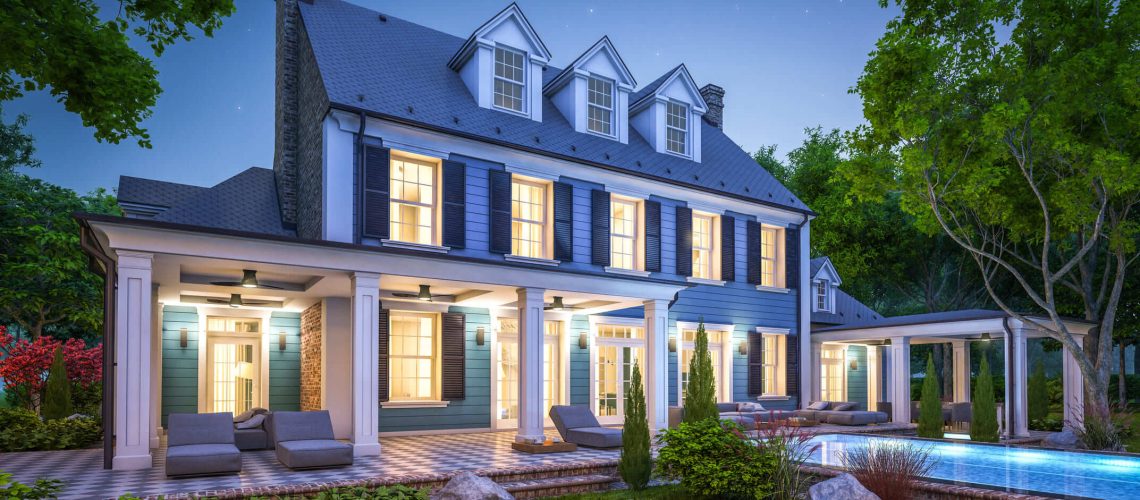
West Knoxville luxury homes don’t fall apart loudly. They fail politely — behind drywall, above ceilings, and inside systems that most inspectors don’t fully understand, much less test under real conditions.
Sequoyah Hills. Northshore. Farragut. These houses are big, complex, and packed with technology that works great on closing day and quietly bleeds money afterward. When I inspect homes like this, I’m not impressed by square footage or finish level. I’m looking for systems fighting each other behind the scenes.
Because in high-end houses, comfort problems aren’t accidents. They’re design consequences.
Complex HVAC Is Where Luxury Homes Get Dangerous
Large West Knoxville homes rarely run on a single HVAC system. They’re zoned. Sometimes aggressively. Multiple air handlers, dampers, communicating thermostats, and long duct runs stitched together across additions and remodels.
On paper, it’s efficient. In reality, I regularly find:
- Zones starving for airflow while others are over-conditioned
- Dampers stuck or never calibrated
- Systems sized for square footage, not load diversity
When HVAC systems fight each other, the house never feels right — and the equipment wears out early.
Returns Are Always Undersized
Here’s a Wes-ism: supply sells houses, returns ruin them.
Luxury homes love big supply registers. They hate return planning. I routinely see:
- Single central returns serving massive floor areas
- Returns blocked by furniture or finishes
- No returns in theater rooms or bonus spaces
Air has to get back to the system. When it can’t, pressure builds, comfort drops, and moisture problems follow.
Theater Rooms Change the Load Equation
Home theaters look cool. They also dump heat.
Projectors, amplifiers, racks, and bodies generate serious load in enclosed spaces. I’ve inspected theater rooms where:
- No dedicated return existed
- Supply air was undersized
- Equipment closets had zero ventilation
That heat has to go somewhere. Usually, it migrates into adjacent framing cavities or attic spaces — exactly where moisture problems start.
“Smart Homes” Are Only as Smart as the Install
West Knoxville homes love automation. Smart thermostats. Motorized dampers. App-controlled everything. The problem is that smart systems fail quietly.
I see:
- Thermostats reading averages instead of problem rooms
- Sensors placed where they don’t represent actual conditions
- Systems overridden repeatedly because comfort was never achieved
When homeowners constantly adjust settings manually, that’s not preference. That’s compensation.
Mechanical Rooms Tell the Truth
You want to know how a luxury house was treated? Look at the mechanical room.
I’m watching for:
- Condensate management that looks improvised
- Service access blocked by finish work
- Equipment packed too tightly to breathe
If the mechanical room feels like an afterthought, the systems usually were too.
Ductwork in Luxury Homes Is Still Ductwork
Expensive houses don’t get a pass on physics. Ducts leak. Ducts sweat. Ducts sag.
Common issues I document:
- Flex duct stretched tight across framing
- Ducts buried in insulation without vapor control
- Supply lines routed through unconditioned spaces
When ducts sweat, moisture ends up where it doesn’t belong — often inside walls that cost a fortune to open.
Humidity Control Is Usually Ignored
Square footage gets all the attention. Latent load doesn’t.
In West Knoxville, humidity control is critical — and often missing. Systems cool the air but don’t remove moisture effectively, especially in shoulder seasons.
I see:
- Sticky interiors despite “cool” temperatures
- Condensation at vents
- Mold starting in closets and behind furniture
That’s not a mystery. That’s poor moisture management.
Multiple Systems Create Single Points of Failure
Luxury homes often rely on interconnected systems. One control board, one sensor, one damper failure can knock out comfort across half the house.
That’s why I don’t just test whether systems turn on. I watch how they respond under load, how zones interact, and whether the house actually stabilizes.
If it doesn’t, the problems won’t announce themselves until after closing.
Why Expensive Homes Require Harder Inspections
Here’s the uncomfortable truth: repairs in luxury homes cost more because access is harder and systems are more intertwined.
A $200 fix in a starter home can turn into a $5,000 repair behind custom millwork or a coffered ceiling.
That’s why I’m harder on high-end houses, not easier.
The West Knoxville Reality
Buyers relocating into areas like Knoxville often assume newer and bigger means better engineered. Sometimes it does. Often it just means more complicated.
Luxury doesn’t reduce risk.
It hides it better.
For buyers evaluating high-end homes across East Tennessee, inspections have to interrogate comfort systems, not just admire finishes.
https://upchurchinspection.com/our-service-areas/home-inspections-in-east-tennessee/
In West Knoxville, the houses that feel the best long-term aren’t the flashiest ones.
They’re the ones where the systems were designed to work together — and actually do.