
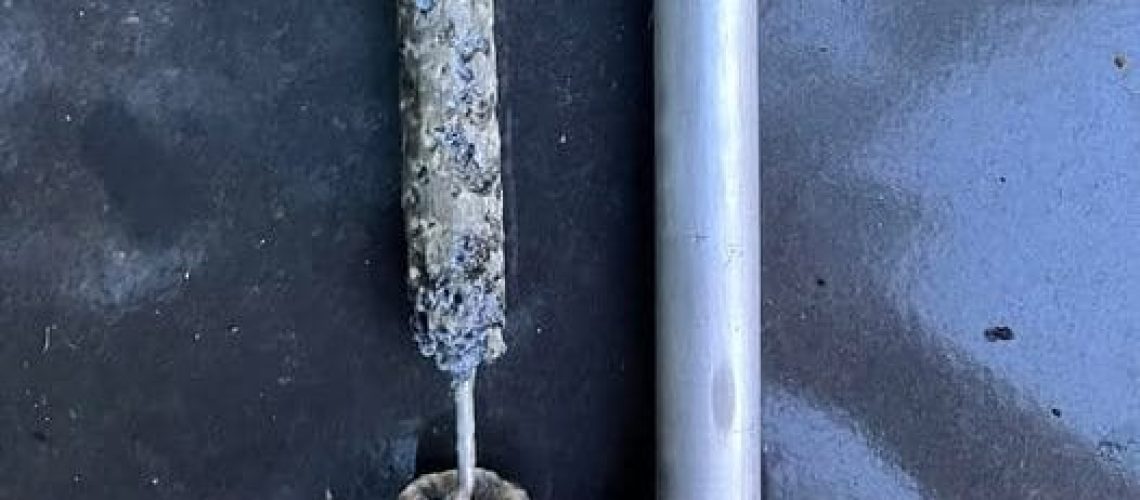
Most water heaters don’t die of old age.
They die because nobody ever checked the one part that’s designed to be sacrificed.
That part is the anode rod — and it’s quietly doing the ugliest job in your house.
What an Anode Rod Actually Does
Inside your water heater tank is a steel shell. Steel plus water equals corrosion. Always.
The anode rod exists to lose that fight on purpose.
It’s made of magnesium, aluminum, or a combination alloy, and it attracts corrosive activity so the tank itself doesn’t take the hit. In simple terms: the anode corrodes so your tank doesn’t.
When the anode is gone, the tank is next.
Why No One Talks About Them
Because you can’t see them.
There’s no drip. No warning noise. No performance drop. Hot water keeps coming right up until the tank fails catastrophically.
I’ve asked homeowners all over West Tennessee when their anode was last checked. The most common answer is a blank stare.
A Real Inspection Where the Tank Was on Borrowed Time
I inspected a home near Dyersburg with a water heater that looked fine from the outside. No rust streaks. No leaks. Manufactured less than ten years prior.
Pulled the anode rod.
What was left looked like a piece of wire someone forgot to remove. Completely consumed.
That tank wasn’t “aging.” It was unprotected.
How Fast Anode Rods Get Eaten
This depends heavily on:
- Water chemistry
- Temperature settings
- Usage patterns
In some Mid-South areas, aggressive water can destroy an anode in 3–5 years. In others, it might last longer. But once it’s gone, the clock speeds up fast.
The tank doesn’t forgive neglect.
Why Rotten Egg Smell Is a Clue
That sulfur smell in hot water? That’s often tied to anode reactions.
Especially with magnesium rods, certain water conditions can produce hydrogen sulfide gas. People blame the water heater itself — but it’s usually the rod interacting with the water.
That’s not a reason to remove the anode entirely. It’s a reason to choose the right type.
What I Look For During an Inspection
I don’t remove anode rods during a standard inspection — but I do look for clues:
- Age of the heater
- Water quality in the area
- Rust at fittings
- Discoloration at the drain valve
- History of previous replacements
If a heater is approaching mid-life with no anode service history, that gets mentioned.
Why “It’s Under Warranty” Is a Bad Strategy
Manufacturer warranties often assume maintenance that never happens.
A tank can fail prematurely due to corrosion, and the warranty won’t help much if neglect is obvious.
I’ve reviewed inspection notes from one of our inspectors near the Cape Girardeau area where a relatively young heater failed internally — the anode had been gone for years.
Warranty didn’t save it. Maintenance would have.
Replacement Is Easier Than You Think
In most cases, replacing an anode rod is:
- Inexpensive
- Fast
- Non-invasive
- Far cheaper than a new tank
It’s one of the highest return-on-effort maintenance items in a home.
What Buyers Should Understand
A water heater doesn’t need to be leaking to be failing.
Once the anode rod is consumed, corrosion starts working on the tank itself — quietly, continuously, and without remorse.
Asking about anode maintenance tells you a lot about how a home has been cared for.
The Inspector’s Bottom Line
Anode rods are meant to die. That’s the deal.
When they’re gone and nobody notices, the tank becomes the sacrifice instead. And tanks are a lot more expensive than rods.
If you want your water heater to live a long, boring life, don’t ignore the part that was designed to take the hit for it.