
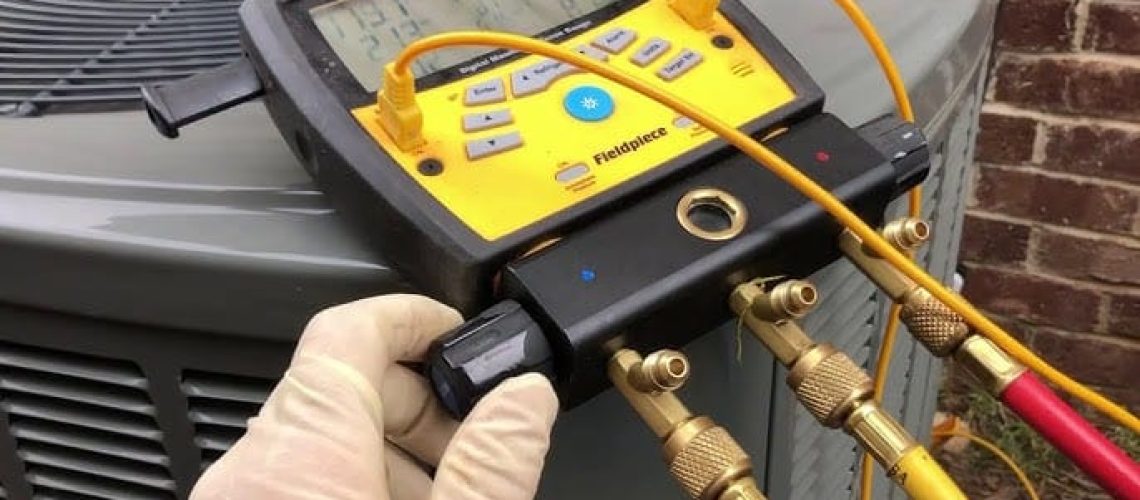
One of the first tools I pull out on an HVAC inspection isn’t a gauge or a camera — it’s a thermometer.
Delta-T is simple in theory: it’s the temperature difference between the air going into your system and the air coming out. In the real world, it tells me more about how your system is actually performing than almost anything else.
I don’t care how new the unit is. I don’t care what the listing says. I care what the numbers say.
What Delta-T Is (Without the Textbook Version)
Delta-T is the difference between:
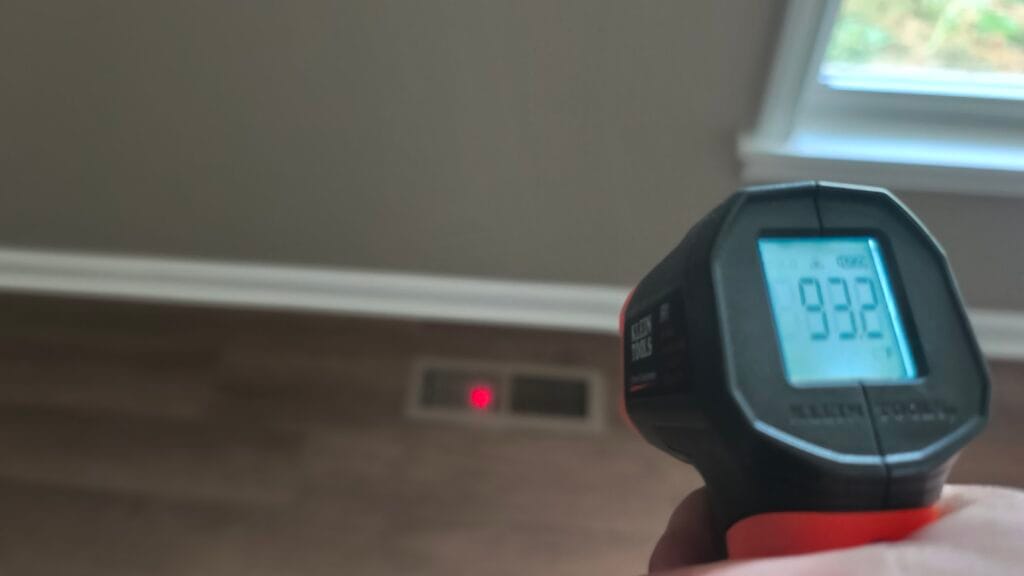
- Return air temperature (air being pulled into the system)
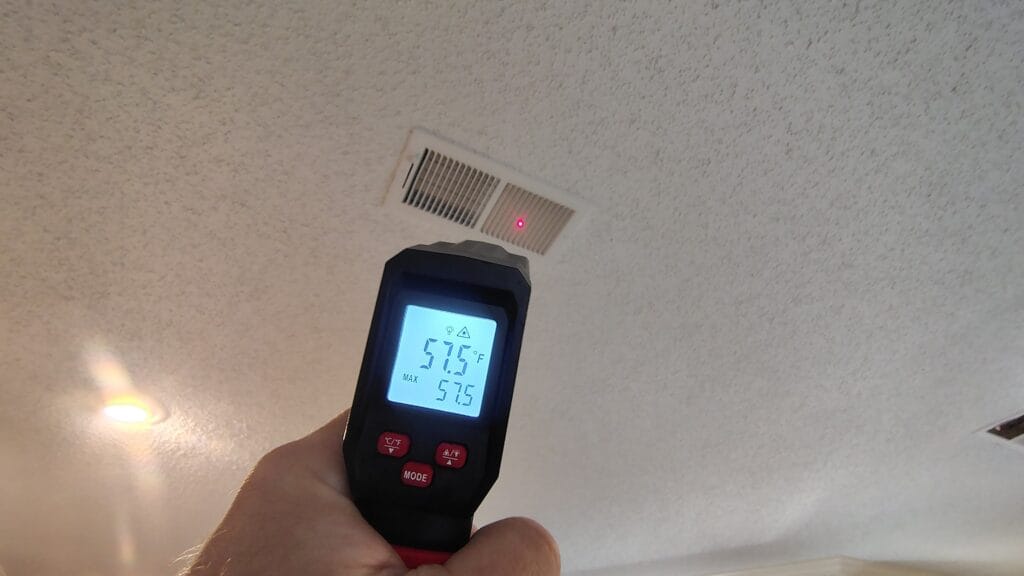
- Supply air temperature (air coming out of the vents)
In most Mid-South homes, I expect to see roughly an 18–22 degree drop in cooling mode under normal conditions.
Anything outside that range makes me slow down and start asking questions.
A Real Inspection Where Delta-T Told the Truth
I inspected a home in Southaven where the seller proudly told the buyer the AC was “ice cold.” Standing in the hallway, it felt fine. Fans were blowing. Thermostat said 72.
But my Delta-T reading was barely 11 degrees.
That’s not “ice cold.” That’s a system limping along.
I checked airflow next. Pulled the filter — completely packed with pet hair and drywall dust. The evaporator coil was already starting to ice over. The system wasn’t cooling well, and it was working overtime trying.
Without checking Delta-T, that system would’ve been marked “operating” and moved on.
Instead, the buyer knew exactly what they were walking into.
Why Delta-T Beats “It Feels Cool”
Human comfort lies. Delta-T doesn’t.
I’ve seen plenty of systems that:
- Blow lots of air but don’t cool
- Cool early in the day and fall behind by afternoon
- Seem fine until summer humidity spikes
Delta-T catches those issues before they become compressor failures.
What Low Delta-T Usually Means
When I see weak Delta-T, the usual suspects are:
- Dirty evaporator coils
- Restricted airflow
- Undersized ductwork
- Low refrigerant charge
- Failing blower motors
I once inspected a newer home in Bartlett where the Delta-T was low across every register. Turned out the installer never removed the shipping plugs from part of the duct system. Half the house was starving for airflow.
That’s not something you catch by “feeling” a vent.
High Delta-T Isn’t Always Good Either
Too much temperature drop can be just as concerning.
I inspected a flip in Memphis where the Delta-T was over 25 degrees. Sounds great — until you realize airflow was severely restricted. The system was on the edge of freezing the coil.
Two weeks after closing, that buyer called me back. Frozen coil. Water everywhere. Ceiling damage.
The numbers were warning us the whole time.
Why I Measure Multiple Locations
I don’t take one reading and move on.
I check:
- Return air
- Multiple supply registers
- Different zones if present
In zoned systems especially, Delta-T can reveal damper failures or imbalance issues that thermostats won’t show.
I’ve caught closed dampers, failed actuators, and crushed flex duct just by following the temperature trail.
What Delta-T Tells Buyers
Delta-T doesn’t predict the future — but it tells you the truth today.
It helps buyers understand:
- Whether the system is keeping up
- Whether repairs are likely soon
- Whether “recent servicing” actually fixed anything
And most importantly, it separates marketing from reality.
The Inspector’s Bottom Line
I don’t guess about HVAC performance. I measure it.
Delta-T is one of the fastest ways to cut through noise, excuses, and assumptions. It doesn’t care how new the unit is, how clean the thermostat looks, or how confident the seller sounds.
It just tells me whether your AC is doing its job — or barely getting by.