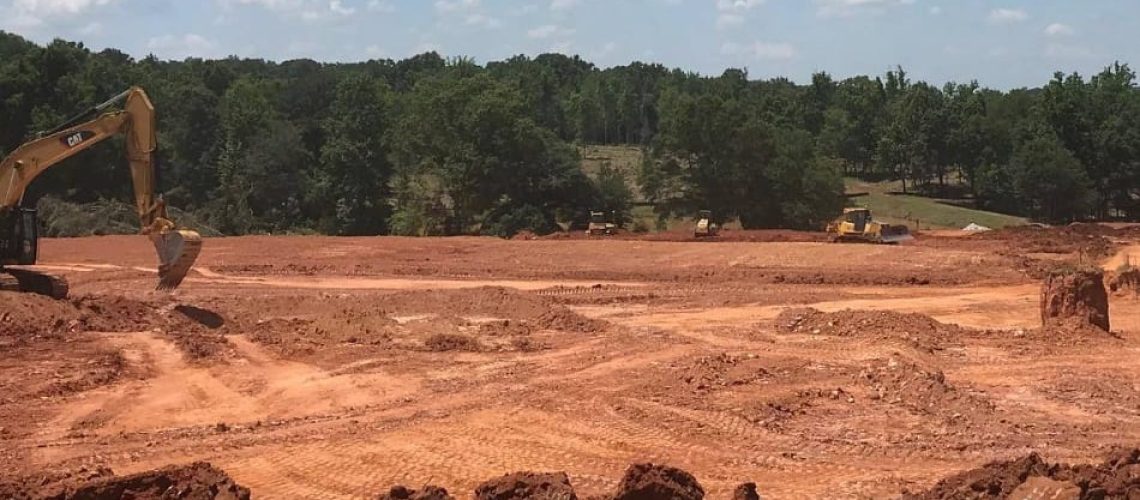
If you spend enough time inspecting homes across West Tennessee, you eventually notice something important: the ground changes before the houses do.
Hardeman County is where a lot of people get caught off guard—especially buyers coming out of Memphis. They assume soil is soil. It’s not. The shift from Memphis’ heavy silt and loess to Hardeman’s sandier profiles changes how foundations behave, how water moves, and how failures show up.
I’ve had buyers tell me, “At least it’s not that Memphis clay.”
And I usually respond with, “True—but sand has its own ways of hurting you.”
This Is Where West Tennessee Transitions
Hardeman County sits in a transition zone. You’re moving away from the dense, moisture-sensitive soils of Shelby County and into lighter, better-draining—but less forgiving—ground.
Around places like Bolivar and Whiteville, the soil profile often includes:
- Sandy loam
- Mixed silt and sand layers
- Variable compaction depending on site prep
- Poorly bound soil under older footings
Water doesn’t linger here the way it does in Memphis. It moves. And moving water takes soil with it.
Sand Drains Well — Until It Doesn’t Stay Put
Sand’s biggest advantage is drainage. Its biggest weakness is lack of cohesion.
In Hardeman County, I regularly see foundations where:
- The footing didn’t fail
- The structure didn’t crack dramatically
- The soil underneath slowly washed away
That’s settlement caused by erosion, not compression.
And it’s sneaky.
How Sand-Hill Failures Actually Start
Here’s the typical chain of events I see:
- Water is introduced near the foundation
- Soil drains quickly (everyone thinks that’s good news)
- Fine particles migrate with the water
- Voids form beneath footings
- Load shifts unevenly
- Floors slope, porches drop, or corners settle
No big cracks. No sudden collapse. Just gradual movement that homeowners chalk up to “age.”
It’s not age. It’s soil loss.
Why This Feels Different Than Memphis Movement
In Memphis, foundations fight moisture.
In Hardeman County, foundations lose support.
That difference matters.
Homes on sand-hill soil often show:
- Porch separation from the main structure
- Steps that pull away over time
- Isolated corner settlement
- Additions that settle independently
The house isn’t sinking into mud—it’s settling into empty space.
Bolivar Homes: Older Builds, Minimal Site Prep
Around Bolivar, many older homes were built when site prep was basic:
- Minimal compaction
- Shallow footings
- Little thought given to long-term drainage
Those homes can sit fine for decades—until grading changes, gutters fail, or surface water gets redirected.
Once erosion starts, it doesn’t stop on its own.
Whiteville Properties: Open Land, Faster Water
In more open areas near Whiteville, water has fewer barriers. That means:
- Faster runoff
- More erosion potential
- Less margin for error in grading
I often see homes where:
- Downspouts dump directly at the footing
- Driveways channel water toward the foundation
- Soil has visibly washed out beneath edges
Sand doesn’t forgive shortcuts.
Crawlspaces Tell the Story First
If there’s a crawlspace, it usually reveals what’s going on.
Common findings in Hardeman County crawlspaces:
- Footings exposed on one side
- Pier bases undermined
- Soil piled away from supports
- Evidence of previous “fill dirt” attempts
When I see added soil under a footing, I know someone’s already been chasing a problem instead of fixing the cause.
Why Fill Dirt Is Usually a Temporary Fix
Homeowners love the idea of “just adding dirt.”
Here’s the problem:
- Loose fill doesn’t compact itself
- Water keeps moving through it
- The original erosion path remains
Unless drainage is corrected and compaction is addressed properly, fill dirt washes away just like the soil before it.
Drainage Is the Real Foundation Here
In Hardeman County, drainage matters more than the footing design.
Homes perform best when:
- Surface water is pushed away early
- Downspouts are extended properly
- Slopes are consistent and maintained
- No water is allowed to run along the foundation line
Miss any one of those, and sand-hill soil starts disappearing grain by grain.
What I’m Watching For During Inspections
When I inspect homes in Bolivar, Whiteville, or nearby rural areas, I’m focused on:
- Evidence of soil migration
- Differential settlement at corners
- Porch and deck attachment points
- Exposed or undermined footings
- Drainage patterns after rainfall
I’m not just asking “Is it level?”
I’m asking “Is it still supported?”
What Buyers Should Understand Before Closing
Sand-hill foundations aren’t bad foundations. But they’re conditional.
The real questions are:
- Where does the water go?
- Has the soil already moved?
- Were drainage issues corrected—or ignored?
Once soil is gone, the fix isn’t cosmetic. It’s structural and site-related.
Final Thoughts
Hardeman County soil drains better than Memphis soil—but it demands more respect.
Sand doesn’t swell. It erodes. And erosion doesn’t announce itself loudly. It just keeps stealing support until something shifts.
Understanding that difference is what keeps small problems from turning into big ones.
Protecting your West Tennessee investment starts with a forensic eye. View our West Tennessee Service Area to see a full list of towns we serve.