
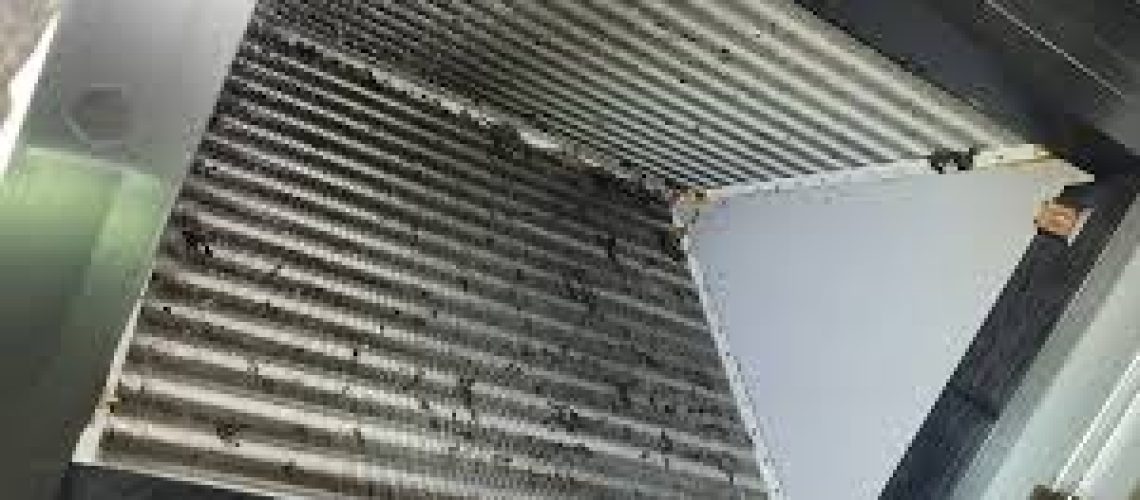
If you walk into a house and the AC kicks on — and suddenly it smells like a locker room — that’s not imagination and it’s not “new system smell.”
That’s what’s commonly called Dirty Sock Syndrome, and once you’ve smelled it, you never forget it.
What Dirty Sock Syndrome Actually Is
Dirty Sock Syndrome is caused by microbial growth on the evaporator coil, usually bacteria or mold feeding on moisture and organic material.
The smell shows up:
- When the system first starts
- During shoulder seasons
- In humid conditions
- After the system has been off for a while
It fades as the system runs — which is why people often ignore it.
A Real Inspection Where the Smell Told the Story
I inspected a home in Bolivar where the HVAC system was less than two years old. Buyer mentioned a “musty sock smell” every morning when the AC turned on.
Pulled the air handler panel and checked the coil. Visually, it looked clean. Thermally, it was staying damp far longer than it should.
That coil wasn’t drying between cycles — a perfect environment for microbial growth.
Why New Systems Get This Problem
This catches people off guard because they assume age protects them.
Dirty Sock Syndrome is common in:
- High-efficiency systems
- Oversized units
- Homes with short run times
- Tight houses with high humidity
Newer coils are more prone because their design holds moisture longer, especially in humid climates like ours.
The Role of Humidity and Short Cycling
When systems short-cycle, they cool the air but don’t run long enough to dry the coil.
That leaves:
- Standing moisture
- Warm metal surfaces
- Organic debris from household air
I reviewed an inspection report from one of our inspectors in Medina where a nearly new system had strong odor complaints tied directly to short cycling and high indoor humidity.
The equipment wasn’t defective — the conditions were.
Why Air Fresheners Don’t Fix It
Masking the smell doesn’t remove the cause.
I’ve seen homeowners try:
- Scented filters
- Duct sprays
- Deodorizers
- Candles and plug-ins
None of that stops microbial growth on the coil.
The smell comes back because the environment stays the same.
What Actually Helps
Real solutions usually involve:
- Coil cleaning or treatment
- Improving drainage
- Adjusting system sizing or airflow
- Addressing humidity control
- In some cases, adding UV treatment
Each situation is different — but ignoring it never works.
How I Evaluate Odor Complaints
When odor is present, I:
- Ask when it occurs
- Inspect coil and drain conditions
- Evaluate run times
- Check humidity levels
- Look for airflow restrictions
Smells don’t come from nowhere. The system always gives clues.
What Buyers Should Know
Dirty Sock Syndrome isn’t dangerous by itself — but it tells you something isn’t right.
Left unaddressed, it often points to:
- Moisture problems
- Comfort issues
- Potential indoor air quality concerns
And it doesn’t resolve on its own.
The Inspector’s Bottom Line
If your AC smells like a gym bag when it starts, that’s your system asking for help.
New doesn’t mean perfect. Efficient doesn’t mean dry. And smells are rarely “just smells.”
They’re symptoms — and symptoms are worth investigating.