

Think of a termite inspection as a critical health check-up for your home. It’s designed to find hidden threats that can seriously compromise its structural integrity, making it an absolutely essential step in protecting your biggest investment—especially when you’re buying or selling a property. This proactive step delivers priceless peace of mind by catching these silent destroyers before they rack up a massive repair bill.
Why A Termite Inspection Is Your Home's Best Defense
Your home's wooden frame is its skeleton. Just like a hidden illness can weaken a body from the inside out, termites can silently chew through this critical structure, often staying completely out of sight until the damage is severe. A professional termite home inspection acts like an X-ray, revealing problems that are otherwise invisible to the naked eye.
And this isn't just about dealing with a nuisance; it's about protecting your financial future.
Termites infest an estimated 600,000 homes in the United States every single year, causing over $5 billion in property damage. The average repair bill can easily top $3,000, and because most homeowner's insurance policies won't cover this kind of damage, that financial burden lands squarely on you.
To give you a quick overview, here are the essential details of a termite inspection in a nutshell.
Termite Inspection At a Glance
| Key Aspect | Typical Details |
|---|---|
| Why It's Needed | To detect hidden termite activity and prevent costly structural damage. |
| Key Focus Areas | Foundation, crawl space, attic, wooden structures, and moisture-prone areas. |
| Average Cost | Generally between $75 and $150, but can vary based on home size. |
| Official Document | Findings are recorded in a Wood-Destroying Organism (WDO) Report. |
| Outcome for Buyers | Provides negotiation leverage and peace of mind before closing. |
| Outcome for Sellers | Allows for proactive issue resolution and a smoother transaction. |
This table underscores why a small investment in an inspection now can save you from a major financial headache down the road.
The Role of The WDO Report
When a termite inspection is part of a real estate transaction, all findings are officially documented in a Wood-Destroying Organism (WDO) report. This report details any visible evidence of an infestation, signs of previous treatments, or conditions around the property that could attract termites in the future.
It's a critical piece of the home-buying puzzle. For buyers, it provides the leverage needed for negotiations. For sellers, it offers a chance to get ahead of any issues. For new homeowners, understanding the need for regular termite inspections is just as crucial as keeping up with other essential home maintenance tips to protect your property's value for the long haul.
This infographic breaks the whole process down into three simple stages: Inspect, Report, and Protect.

As you can see, a thorough inspection and a detailed report are the foundation of any effective plan to protect your home. Investing a small amount in a professional inspection today can absolutely prevent catastrophic expenses tomorrow. You can learn more about WDO reports and what you need to know by checking out our guide at https://upchurchinspection.com/wood-destroying-organisms-wdo-and-what-you-should-know/.
What Happens During a Professional Termite Inspection
Ever wonder what a termite inspector really does? It helps to pull back the curtain on the process, which can seem a bit mysterious if you've never been through one. This isn't just a quick look-around; it's a systematic investigation designed to uncover hidden threats to your home’s structure.
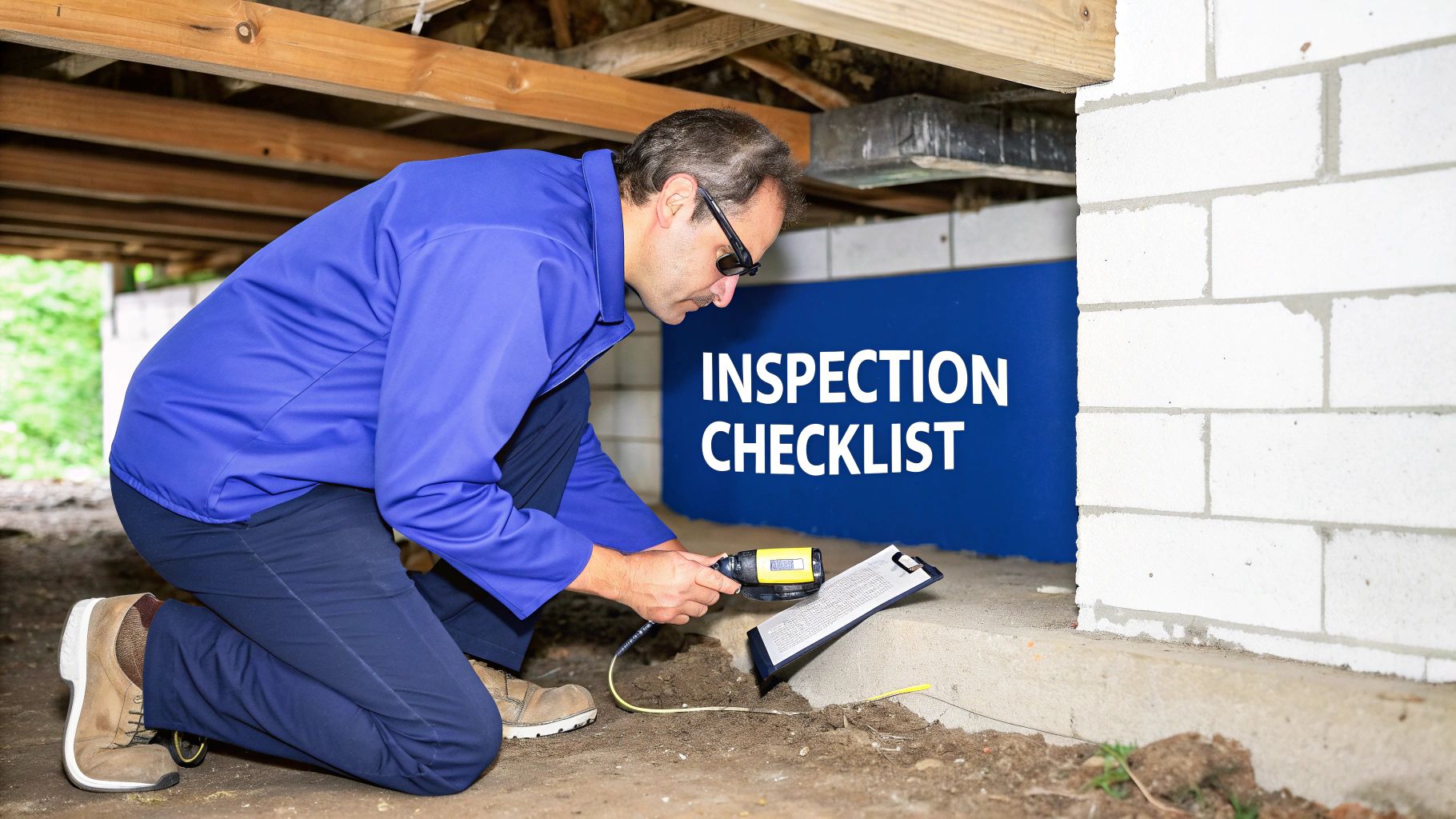
Think of it like a detective searching for clues. The inspector arrives ready to meticulously examine every vulnerable area of your property for any sign of wood-destroying pests. They're equipped with specialized tools and, more importantly, a trained eye that knows exactly what to look for—things most homeowners would walk right past.
Key Areas and The Search for Clues
A good inspector’s search is both focused and thorough, honing in on the most common hiding spots for termites. They know the typical entry points and where these pests love to set up shop. This targeted approach is what ensures no stone—or floor joist—is left unturned.
The inspection hits several critical zones:
- The Foundation: The inspector will carefully check the entire perimeter of your home’s foundation. They’re hunting for the tell-tale mud tubes that subterranean termites build to travel from the soil into your home's wood framing.
- Crawl Spaces and Basements: These dark, often damp areas are prime real estate for termites. The inspector gets into these spaces to check floor joists, support piers, and sill plates for damage or activity.
- Attics and Garages: Yes, termites can get up this high! Inspectors will check roof trusses, support beams, and any stored wood for signs of infestation, as some termite species can access these upper areas of a home.
- Exterior Structures: The inspection doesn't stop at the house. Any wood structure on your property—decks, porches, fences, and even sheds—will be examined for potential termite activity.
A professional inspector isn't just looking for live termites. They are trained to spot the subtle evidence of a past or present infestation, including discarded wings, frass (termite droppings), and conditions that make your home an attractive target in the first place.
Tools of The Trade
To get the full picture, inspectors rely on more than just their eyes. They use specific tools to confirm suspicions and uncover hidden damage that would otherwise go completely unnoticed during a simple visual check.
These instruments are essential for providing a complete and accurate assessment of your home's condition.
Common Inspection Tools and Their Uses:
| Tool | Purpose |
|---|---|
| Probing Tool | A long, thin screwdriver or a similar instrument used to tap on wood surfaces. A hollow sound can indicate that termites have eaten the wood from the inside out. |
| Moisture Meter | Termites need moisture to survive. This device detects elevated moisture levels in wood and walls, pinpointing areas at high risk for an infestation. |
| High-Powered Flashlight | Absolutely essential for lighting up the dark corners in crawl spaces, attics, and basements where termite activity often begins. |
At the end of the day, a professional termite inspection is a detailed diagnostic for your home. By systematically checking every vulnerable point and using the right tools, an inspector gives you a clear and accurate assessment of your property's health. It’s the kind of knowledge that empowers you to protect your investment.
Understanding Your Termite Inspection Report
Once the inspector wraps up and leaves, you'll get a detailed report that can look a little intimidating at first. Don't worry. Think of it less like a final grade and more like a roadmap to the property's health. We design these reports to turn technical jargon into clear, straightforward information you can actually use to make smart decisions.
One of the first things you'll notice is how we separate our findings. Getting a handle on these categories is the key to understanding what's really going on with the house.
Active Infestation vs. Past Evidence
Not every sign of termites means you have a full-blown crisis on your hands. Your report will make a clear distinction between an active infestation—where we found live termites and fresh damage—and signs of an older problem that's no longer current.
Active Infestation: This is the one you need to take seriously. It means termites are actively damaging the structure right now. An active finding requires immediate attention to stop the damage from getting worse. We'll pinpoint the location and describe the extent of the activity in the report.
Evidence of Past Infestation: This might show up as old, dried-out mud tubes, wood damage that's clearly aged, or documentation of a previous treatment. While it's not a five-alarm fire, it's a definite red flag. It tells you the home has been a target before and needs to be watched closely.
Knowing the difference here is everything. An active issue demands a plan of action, whereas past evidence calls for vigilance and solid preventative maintenance. To see exactly how we break this all down, check out our guide on how we communicate findings to home buyers.
Your report isn’t just about finding termites; it's about identifying risks. The most valuable information often lies in the section on 'conducive conditions'—factors that make your home an attractive target for future infestations.
Decoding Conducive Conditions
A huge part of any quality report is the focus on conducive conditions. These are issues around the property that essentially roll out the welcome mat for termites, even if there isn't an active problem yet. Fixing these is probably the most powerful thing you can do to protect your investment.
Here are a few of the most common culprits we find:
- Wood-to-Soil Contact: Any piece of wood on your home that's touching the ground is a direct superhighway for termites. Think deck posts, fence posts connected to the house, or siding that's buried in mulch.
- Excessive Moisture: Termites need moisture to survive. Leaky outdoor faucets, gutters that overflow, or poor drainage around the foundation create the perfect damp environment for them to set up shop.
- Firewood or Debris: That stack of firewood leaning against the foundation? It's a free buffet located just inches from your house. The same goes for any old lumber or organic debris piled up nearby.
- Dense Vegetation: Bushes, ivy, or tree branches touching the house trap moisture against the siding and give termites a hidden pathway to get inside.
When you address these items, you're not just solving a today problem—you're playing defense against future ones. The report acts as a personalized punch list, turning a complex termite home inspection into a simple, effective home-protection plan.
How to Prepare Your Home for a Termite Inspection
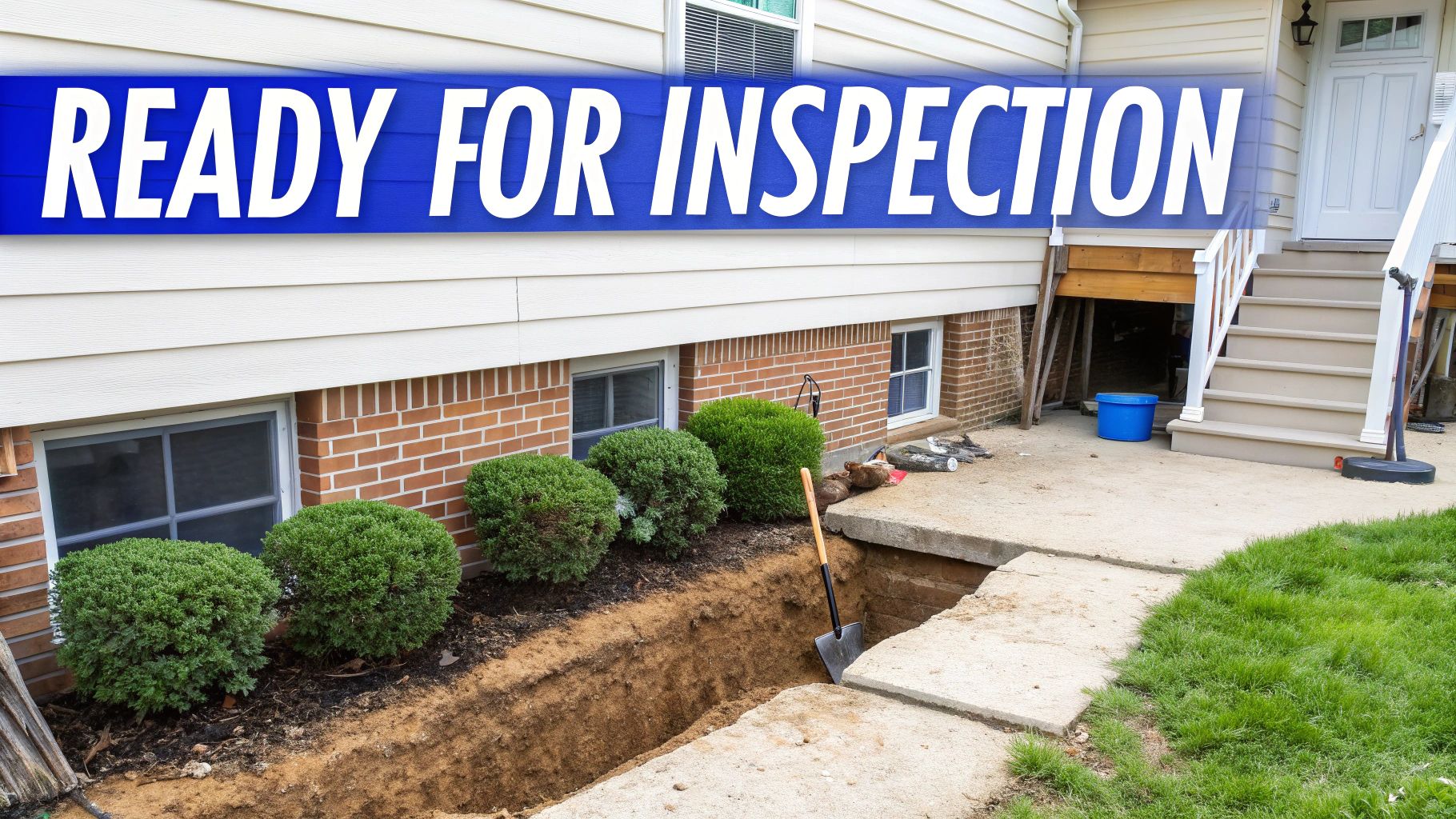
A thorough termite inspection really is a team effort. By taking just a few simple steps to get your home ready, you make sure the inspector can do their job effectively and give you the most accurate assessment possible. Think of it like clearing the way for a detective to find every single clue.
The whole idea behind this prep work boils down to one word: access. An inspector needs to get into the critical areas where termites love to hide—think foundation walls, crawl spaces, and attics. When these spots are blocked, it’s like trying to inspect a room with the door locked. Important evidence can easily be missed.
More and more homeowners are realizing the value of this partnership. The professional termite control market is growing at a steady clip of 5-6% annually, largely because people prefer an expert evaluation over DIY guesswork. It just goes to show how much homeowners value a truly accurate, professional inspection to protect their property. You can dig into the full report on market growth and trends at technavio.com.
Your Pre-Inspection Checklist
To make sure your inspection is smooth and comprehensive, focus on creating clear pathways to key structural areas. Following these simple steps will make a huge difference.
- Clear the Perimeter: Move any stored items, firewood, or general clutter at least two feet away from your home's foundation walls. This applies to both the inside (like in a basement or garage) and the outside. It gives the inspector a clear line of sight to check for mud tubes and other telltale signs of entry.
- Provide Access to Key Areas: Make sure the entry points to your attic and crawl space are completely unobstructed. If you use these areas for storage, clear a path so the inspector can safely get in and move around without having to be a contortionist.
- Trim Landscaping: Cut back any overgrown bushes, shrubs, or tree branches that are touching your home's exterior walls or roofline. Dense vegetation is notorious for trapping moisture against the siding and giving termites a hidden bridge straight into your house.
A common mistake we see is homeowners assuming the inspector can just move heavy furniture or piles of boxes. Preparing these areas ahead of time not only saves time but ensures a complete evaluation without any blind spots.
For a more detailed walkthrough, check out our complete guide on how to prepare your home for a smooth inspection. By taking these proactive steps, you help us deliver the thorough, reliable results you need to protect your investment.
Termite Inspections in Memphis and West Tennessee

Not all termite threats are created equal, and where you live plays a massive role in your home's risk level. Here in Memphis and across West Tennessee, our warm, humid climate isn't just great for sweet tea on the porch—it’s the perfect breeding ground for our region's most destructive pest: the Eastern Subterranean termite.
These pests absolutely thrive in the moist soil our local weather provides, allowing them to build sprawling underground colonies. From that hidden base, they venture out looking for food, and the wood framing of your house is their five-star restaurant. Getting a handle on this specific, local threat is the first real step toward protecting your home.
Local Construction and Climate Vulnerabilities
Our area’s unique mix of climate and common building practices creates a perfect storm for termite infestations. A lot of homes in West Tennessee, especially older ones, were built with features that can unintentionally roll out the welcome mat for termites if they aren't properly maintained.
Some key risk factors we see all the time include:
- Crawl Space Foundations: This is a very common construction style around here. Unfortunately, crawl spaces can easily trap moisture and humidity, creating an ideal, sheltered environment for termites to set up shop right under your floors.
- Brick Veneer Homes: While they look great, the weep holes in brick veneer homes can become hidden highways for termites. If these openings are close to the ground, termites can slip behind the brick and access the wooden structure completely undetected.
- High Humidity and Rainfall: Our climate keeps the ground consistently damp. This allows subterranean termite colonies to grow and forage for food all year long, without the long, hard freezes that might slow them down in other parts of the country.
A termite inspection in Memphis isn't just a generic service; it's a localized defense strategy. A skilled inspector knows these regional risks like the back of their hand and knows exactly where to look for the subtle signs of entry common in West Tennessee homes.
The Business of Local Termite Protection
Because of our high-risk environment, termite home inspections are a non-negotiable part of our local real estate world and an essential service for any homeowner. You can see just how critical this work is by looking at the pest control industry itself, where termite services are a huge focus.
Even when the housing market slows down, the need for termite inspections stays strong. Recent industry data shows that termite services account for an average of 24.6% of a pest control company’s total revenue. And get this: a staggering 94% of all termite-related jobs begin with an inspection, proving it's the absolute starting point for protecting a property. You can dig deeper into these numbers in the 2025 State of the Termite Market Report.
This really brings home why choosing an inspector with deep local knowledge is so important. They aren’t just running down a generic checklist; they're using years of experience with our specific climate, soil, and building styles to protect your biggest investment.
Your Top Termite Inspection Questions, Answered
Even with a good grasp of the process, you probably still have a few questions rolling around in your head. That's perfectly normal. This section tackles the most common questions we get from homeowners here in Memphis and West Tennessee, giving you straight, simple answers to clear up any final uncertainties.
How Often Should I Get a Termite Inspection?
Think of it like an annual check-up for your house. The standard recommendation is to have a professional termite home inspection done at least once a year. This consistent monitoring is your best defense, allowing you to catch any new termite activity long before it snowballs into a major headache.
Of course, some situations demand a more immediate look. If you spot anything suspicious—like discarded wings near a windowsill, mud tubes snaking up your foundation, or wood that sounds oddly hollow when you tap it—it's time to call in a pro right away. An inspection is also an absolute must during any real estate deal, whether you're buying or selling.
What Does a Termite Inspection Typically Cost?
For a standard-sized home in our area, you can generally expect a professional termite inspection to run between $75 and $150. The final price can shift a bit based on a few things, like the overall size of your home, the complexity of the foundation (a huge, hard-to-reach crawl space might cost more), and if it's bundled with a full home inspection.
When you consider that the average cost to repair termite damage hovers around $3,000, that small upfront investment is easily one of the smartest financial moves you can make as a homeowner. It's a tiny price for the huge peace of mind that comes from knowing your biggest asset is protected.
What Happens If The Inspector Finds Termites?
First, don't panic. Finding termites doesn't automatically kill a real estate deal or mean your house is doomed. It just means it's time to make a game plan. If an inspector finds an active infestation, the report will pinpoint the location and describe the extent of the problem.
From there, the path forward usually looks like this:
- Get a Treatment Quote: The detailed inspection report is used to get a precise quote from a licensed pest control company for professional treatment.
- Negotiate Repairs: In a home sale, this is where negotiations happen. The buyer and seller will discuss who is responsible for the cost of treatment and any related repairs.
- Implement Treatment: A pest control professional will apply the right treatment to wipe out the colony and establish a protective barrier around the home.
The most important thing is to tackle the issue head-on. A termite problem that's been identified and properly treated is always better than one that’s been allowed to silently chew away behind the walls.
Don't let the fear of finding something stop you from looking. An inspection provides clarity. Knowing what you're up against is the first—and most important—step toward solving the problem and protecting your investment.
Can I Do a Termite Inspection Myself?
While every homeowner should absolutely keep an eye out for the obvious red flags, a DIY inspection just can't replace a professional one. It's a classic case of not knowing what you don't know. A certified inspector brings years of training, specialized tools, and a deep understanding of what to look for—subtle signs an untrained eye would miss 99 times out of 100.
They know how to safely navigate tricky crawl spaces, what to look for in attics, and are familiar with the specific construction styles and risk factors common in West Tennessee. Plus, for any real estate transaction, lenders and buyers will require an official Wood-Destroying Organism (WDO) report, which can only be issued by a licensed professional.
To make sure you're hiring a true expert, it pays to have a few questions ready.
Asking the right questions upfront is the best way to vet an inspector. It helps you gauge their experience, understand their process, and feel confident you're hiring someone who will do a thorough job protecting your home.
Questions to Ask Your Termite Inspector
| Question Category | Sample Questions to Ask |
|---|---|
| Credentials & Experience | Are you licensed and insured in Tennessee? How many years have you been performing termite inspections specifically in the Memphis area? |
| The Process | What specific areas of my home will you inspect? What kind of tools do you use to detect hidden termite activity? Roughly how long will the inspection take? |
| The Report | What will the final report look like? When can I expect to receive it? Will you be available to walk me through the findings if I have questions? |
Taking a few minutes to ask these questions ensures you're partnering with a qualified professional who will give your property the detailed assessment it truly deserves.
At Upchurch Inspection, we provide the clarity and expertise you need to make confident decisions about your property. If you're ready to schedule a comprehensive termite home inspection in Memphis or the surrounding West Tennessee area, we’re here to help. Book your inspection with us today.