
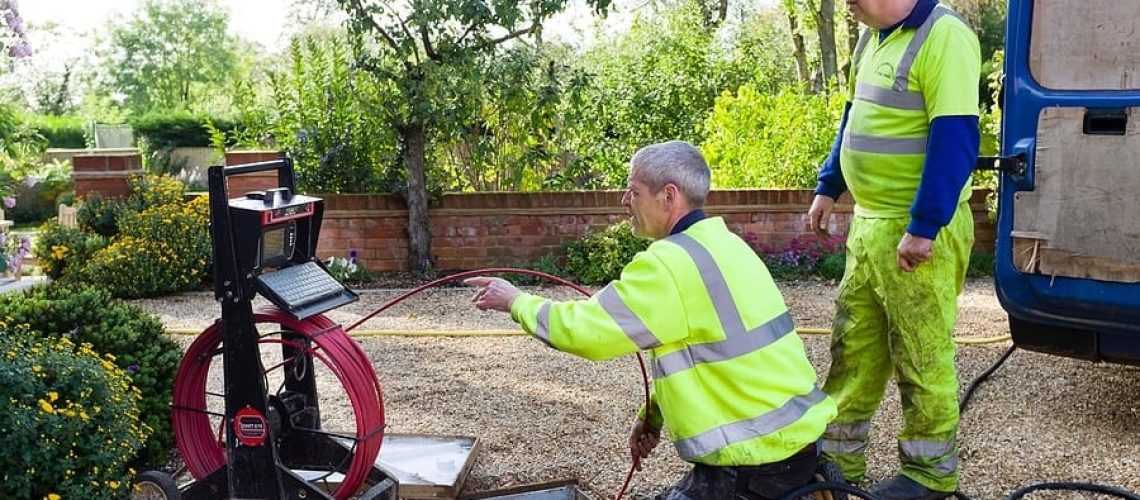
Commercial sewer systems tend to get attention only after something goes wrong. A backup. A closure. A tenant complaint that can’t be ignored. By the time those symptoms appear, the underlying problem has usually been developing for years.
At Upchurch Inspection, sewer scopes for commercial properties across Memphis and West Tennessee, Little Rock and Central Arkansas, Jonesboro, Cape Girardeau, Nashville, and Central Kentucky (Elizabethtown and Louisville) consistently reveal the same reality: sewer systems fail predictably, not randomly—and buyers often underestimate how early those failures begin.
Commercial Sewer Systems Age Differently Than Buyers Expect
Unlike residential sewer lines, commercial systems are subjected to higher volumes, different waste types, and more aggressive usage patterns. Restaurants, medical facilities, multi-tenant buildings, and older commercial properties all stress sewer infrastructure in ways that aren’t obvious from above ground.
Inspectors approach commercial sewer scopes assuming:
- The system has been altered over time
- Repairs were made for access, not optimization
- Materials vary along the same run
- Capacity assumptions no longer match current use
A sewer line that still “flows” may already be operating with reduced margin.
The First Failures Are Usually Partial, Not Total
One of the biggest misconceptions buyers have is that sewer systems fail catastrophically all at once. In reality, the earliest failures are subtle.
Inspectors commonly see:
- Offsets that restrict flow but don’t block it
- Cracks that admit soil or roots gradually
- Corrosion reducing pipe diameter over time
- Bellies that hold water between uses
- Past repairs that created new transition points
These conditions don’t stop operations immediately—but they set the stage for backups, odors, and emergency repairs later.
Older Materials Fail in Predictable Ways
In markets like Memphis, Cape Girardeau, and Louisville, many commercial properties still rely on older sewer materials that behave very differently as they age.
Inspectors frequently encounter:
- Clay tile with joint separation
- Cast iron with internal corrosion
- Orangeburg pipe collapsing under load
- Mixed-material systems patched over decades
- Unknown transitions without documentation
Understanding how these materials fail is critical. A scope isn’t just confirming presence—it’s evaluating remaining usefulness.
Commercial Usage Accelerates Wear
Commercial sewer systems don’t just carry more waste—they carry different waste.
Inspectors factor in:
- Grease and food byproducts
- Medical waste byproducts
- Cleaning chemicals
- Increased paper load
- Continuous daily usage
In Nashville and Little Rock, inspectors often see sewer systems that were originally sized for lighter commercial use now serving higher-demand tenants without upgrades. The system may function today—but it’s doing so under stress it was never designed to absorb.
Repairs Often Create New Weak Points
Many commercial sewer systems have been repaired at least once. The problem isn’t repair—it’s how repairs interact with the rest of the line.
Inspectors look closely at:
- Transitions between old and new materials
- Improvised connections
- Cleanouts added without correcting slope
- Point repairs that ignore adjacent deterioration
- Evidence of repeated intervention at the same locations
A repaired sewer line isn’t necessarily a reliable one. In many cases, repairs concentrate future failures nearby.
Site Conditions Matter More Than Buyers Realize
Sewer performance is deeply affected by what’s happening above and around the line.
Inspectors consider:
- Soil movement common in Mid-South regions
- Heavy vehicle traffic over sewer runs
- Building additions altering load paths
- Drainage issues saturating soil around pipes
- Settlement patterns affecting slope
In Central Arkansas and West Tennessee, inspectors frequently find sewer issues tied directly to soil behavior and drainage decisions—not just pipe age.
Why Commercial Buyers Skip Sewer Scopes—and Regret It
Sewer scopes are often skipped to save time or money during due diligence. Buyers assume that if plumbing fixtures work, the sewer must be fine.
Common post-closing surprises include:
- Backups triggered by tenant changes
- Odor complaints from trapped waste
- Emergency excavations disrupting operations
- Insurance claims denied due to pre-existing conditions
- Costly trenching that wasn’t budgeted
Sewer failures don’t just cost money—they interrupt business.
How Experienced Buyers Use Sewer Scope Findings
Seasoned buyers don’t expect sewer systems to be perfect. They expect clarity.
They want to know:
- Where restriction is beginning
- Which materials are near the end of useful life
- How repairs have altered system behavior
- What failures are likely within five years
- How replacement would affect operations
Sewer scope findings support pricing adjustments, repair escrows, and long-term planning—not panic.
Regional Conditions Make Sewer Scopes Non-Negotiable
In humid, soil-active regions like Tennessee, Arkansas, Missouri, and Kentucky, sewer systems are under constant external pressure. Seasonal moisture changes, freeze-thaw cycles, and soil movement all accelerate deterioration.
Inspectors don’t view sewer scopes as optional in these markets—they view them as risk management tools.
The Practical Reality
Commercial sewer systems fail quietly first. By the time failure is obvious, options are limited and costs are high.
Inspectors who understand commercial sewer behavior don’t just look for blockages. They evaluate flow behavior, material condition, repair history, and regional stress factors to understand where the system is headed.
That understanding gives buyers something far more valuable than reassurance: time to plan before failure forces their hand.