
If you’re buying acreage in Fayette County, especially around Oakland, I’m going to tell you something most people don’t want to hear:
The roof barely cracks the top five list of things that can ruin that property.
Out here, water decides whether the place works or not. And water doesn’t care how pretty the house is, how new the shingles are, or how good the pictures looked online. If the grading is wrong or the culverts are undersized, the property will fight you every single time it rains.
I’ve inspected rural properties where the house was fine—but you couldn’t get to it after a storm. That’s not rural charm. That’s bad planning.
Acreage Changes the Rules
When you move off city lots and onto acreage, everything gets bigger:
- Roof runoff
- Drainage paths
- Distances
- Consequences
You’re not managing water from one house anymore. You’re managing water from land.
And most people have no idea how much water that actually is.
Driveways Are Drainage Systems (Whether You Like It or Not)
Here’s a hard truth:
Your driveway is part of your drainage plan—even if nobody intended it to be.
On rural Fayette properties, I routinely see:
- Long gravel drives acting like creeks
- Asphalt drives channeling water straight to the house
- Washed-out edges from repeated runoff
- Ruts deep enough to snap suspension parts
If water runs down the driveway, it’s eroding something. Eventually, that something is going to be expensive.
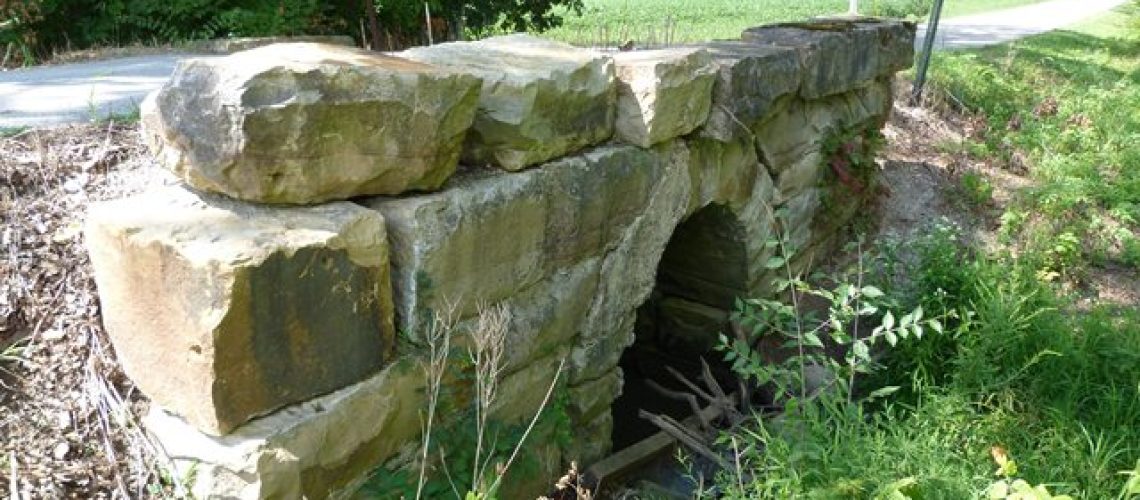
Culverts: The Most Ignored Critical Component
Culverts are boring. That’s why they get ignored. And that’s why they fail.
Most rural culvert problems come from:
- Pipes that are too small
- Pipes installed too high
- Pipes crushed by heavy equipment
- Pipes clogged with debris
- Pipes never intended for the volume of water they see
I’ve stood next to culverts during heavy rain and watched water overtop the driveway because the pipe couldn’t keep up. Once that happens, erosion accelerates fast.
One Bad Storm Can Undo Years of “It’s Been Fine”
People love saying:
“We’ve never had a problem before.”
Cool. That just means the storm hasn’t shown up yet.
In Fayette County, when you get prolonged rain:
- Saturated soil sheds water instead of absorbing it
- Runoff increases dramatically
- Low points become choke points
- Undersized culverts get overwhelmed
That’s when driveways wash out, shoulders collapse, and access disappears.
Grading: Subtle, Boring, and Everything
Grading doesn’t need to look dramatic to work—or fail.
Common grading issues I see on acreage:
- Flat ground right at the foundation
- Soil sloping toward the house just slightly
- Swales filled in “for looks”
- Landscaping that traps water instead of shedding it
Those issues don’t cause immediate problems. They cause repeat problems.
The Crown: Small Detail, Big Difference
If your driveway doesn’t have a crown, it’s wrong.
A proper crown:
- Pushes water to both sides
- Reduces channeling
- Slows erosion
- Extends driveway life
I see a lot of drives in Oakland that were graded flat because it was easier. They look fine until rain turns them into rivers.
Rip-Rap Isn’t Decorative — It’s Armor
People treat rip-rap like landscaping. It’s not. It’s erosion control.
Rip-rap belongs:
- At culvert outlets
- At drainage exits
- Where water accelerates
- Where soil is vulnerable
Without it, water scours soil away until structures lose support.
When Drainage Fails, Foundations Follow
Once water isn’t controlled at the land level, it finds the structure.
That’s when you start seeing:
- Undermined footings
- Washed-out crawlspaces
- Exposed foundation edges
- Settlement that “came out of nowhere”
It didn’t come out of nowhere. It came from uphill.
What I Look For on Rural Acreage Inspections
When I inspect acreage properties, I’m paying attention to:
- Where water enters the property
- How it moves across the land
- Where it concentrates
- Where it exits
- Whether anything important is in the way
I don’t just walk the house. I walk the site.
Access Is a Safety Issue, Not Just Convenience
If emergency vehicles can’t reach the house during or after heavy rain, that’s not a minor concern.
I’ve inspected properties where:
- Ambulances wouldn’t make it up the drive
- Fire access was questionable
- Deliveries were unreliable in wet seasons
That matters more than granite countertops.
Buyers Focus on Structures — Water Focuses on Weakness
Water doesn’t care about lot lines, comps, or listing descriptions. It moves downhill and exploits whatever is weakest.
On acreage, weakness is usually:
- Driveway crossings
- Low spots
- Poor grading near structures
- Undersized drainage components
Fix those, and the property behaves. Ignore them, and you’re constantly reacting.
Final Thoughts
In rural Fayette County, the land will either work for you or against you.
If water is managed correctly, the house has a fighting chance.
If it’s not, you’ll be fixing the same problems over and over.
The roof might keep rain out of the house—but culverts and grading decide whether the property survives it.
Protecting your West Tennessee investment starts with a forensic eye. View our West Tennessee Service Area to see a full list of towns we serve.