Central Kentucky isn’t built on dirt in the way most people imagine. It’s built on limestone — fractured, water-soluble limestone that has been quietly reshaped underground for thousands of years. In Hardin County, that reality matters far more than cosmetic cracks or surface grading. When I inspect homes in this region, especially around Elizabethtown and the rapidly developing areas near Glendale, I’m always thinking about what’s happening below the soil line.
Because in karst terrain, the ground can disappear long before the house shows obvious signs of trouble.
What Karst Terrain Really Means
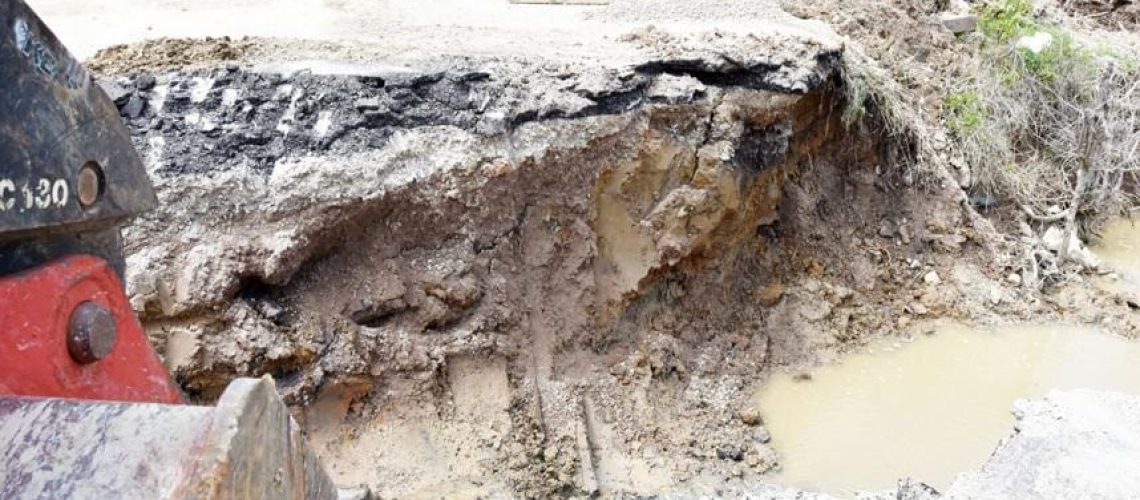
Karst geology forms when water dissolves soluble rock, primarily limestone, creating underground voids, channels, and caverns. Over time, the soil above those voids loses support. Sometimes it settles gradually. Sometimes it collapses suddenly.
This process doesn’t require dramatic events. Normal rainfall, poor drainage, or redirected runoff can accelerate subsurface erosion. The technical term for this slow internal soil migration is suffosion — fine soil particles are washed downward into voids, leaving empty space behind.
At the surface, suffosion often starts quietly.
Early Warning Signs Most Buyers Miss
Sinkhole risk rarely announces itself with a dramatic collapse. Early indicators are subtle and easy to dismiss if you don’t know what they mean. During inspections, I’m watching for:
- Shallow depressions forming in yards or near foundations
- Fence posts or small structures beginning to lean
- Cracks in exterior flatwork that don’t follow normal shrinkage patterns
Individually, these can seem harmless. Together, they point to subsurface instability that deserves closer attention.
Why New Development Doesn’t Eliminate the Risk
Areas near the BlueOval and Glendale expansion zones are seeing rapid development. New construction gives buyers a false sense of security, but fresh grading doesn’t change the geology underneath it. In fact, construction activity can make things worse.
Cut-and-fill operations alter natural drainage paths. Stormwater that once dispersed evenly is now concentrated in swales, retention areas, or foundation perimeters. That concentrated water finds its way downward, accelerating limestone dissolution and soil migration.
A new lawn can hide a serious problem for years.
Foundation Behavior in Karst Areas
In karst regions, foundation issues don’t always follow textbook settlement patterns. Instead of uniform movement, I often see:
- Isolated corner settlement
- Slab cracking that radiates from one area
- Interior doors drifting out of square without matching exterior damage
These patterns suggest localized soil loss rather than generalized compaction. That distinction matters when evaluating long-term stability.
Drainage Is the Trigger, Not the Cause
Poor drainage doesn’t create sinkholes, but it often triggers them. Downspouts dumping water near the foundation, clogged yard drains, or altered runoff paths can all focus water where it does the most damage.
During inspections, I’m evaluating how roof runoff, surface grading, and subsurface drainage interact with known karst conditions. It’s not about blame — it’s about understanding risk.
When a Crack Is More Than a Crack
In non-karst areas, a small crack might just be cosmetic. In Hardin County, context matters. Cracks combined with surface depressions, drainage issues, or structural movement tell a different story.
This is where experience matters. Knowing when to recommend monitoring versus further evaluation can save buyers from unexpected structural costs down the road.
Why Hardin County Requires Geological Awareness
Sinkhole risk in Central Kentucky isn’t rare, but it is location-specific. Two homes on the same street can behave very differently depending on subsurface conditions. That’s why inspections here require more than a checklist — they require geological awareness.
For buyers evaluating properties throughout Central Kentucky, understanding karst behavior is critical before committing to a purchase.
https://upchurchinspection.com/our-service-areas/home-inspections-in-central-kentucky/
In karst country, the ground doesn’t always give warning — unless you know how to read it.