
Radon testing is a question that comes up frequently during home inspections in Middle Tennessee, especially for buyers who are relocating from other regions or encountering radon discussions for the first time. While Middle Tennessee is not uniformly high-risk, radon is present, variable, and unpredictable, which is why testing is often recommended based on real inspection data rather than maps alone.
In areas around Nashville, Mount Juliet, Hendersonville, Franklin, Murfreesboro, and surrounding communities, inspectors see enough variation to justify taking radon seriously during a home purchase.
Why Radon Varies So Much in Middle Tennessee
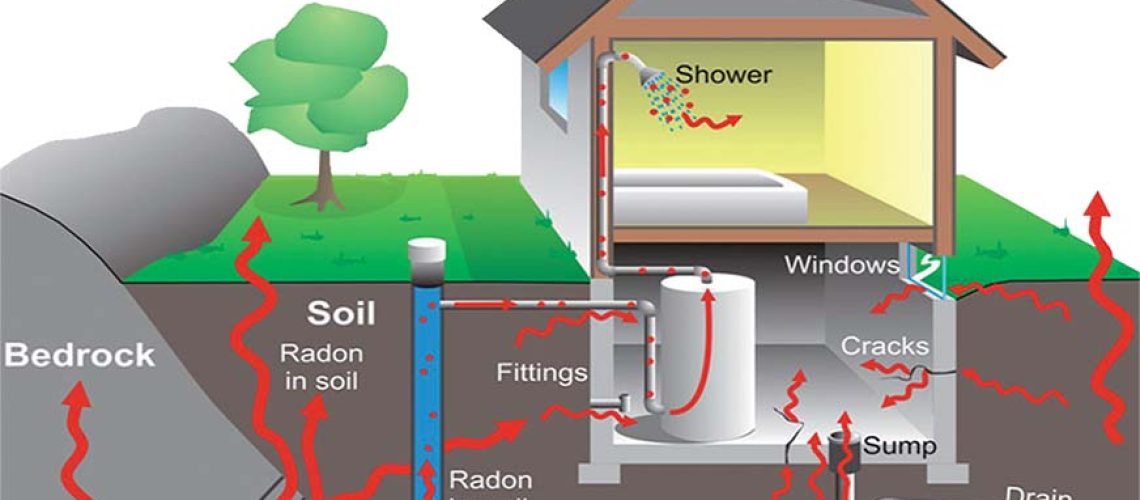
Radon comes from the natural breakdown of uranium in soil and rock. Middle Tennessee’s geology includes limestone, shale, and mixed soil conditions that can allow radon to move through the ground and enter homes.
What makes radon challenging is that:
- Two neighboring homes can have very different radon levels
- Newer homes can test higher than older ones
- Basements and slab homes can both be affected
- Renovations and air sealing can change radon behavior
Because of this variability, testing is the only reliable way to know a home’s radon level.
Homes Where Radon Is More Commonly Found
Based on testing performed in Middle Tennessee, certain home characteristics tend to show higher radon readings more often than others.
Inspectors frequently see elevated levels in:
- Homes with basements or partial basements
- Slab-on-grade homes with tight construction
- Houses with minimal natural ventilation
- Newer homes with improved energy efficiency
That said, elevated radon has also been found in homes that don’t fit these categories, which reinforces the value of testing rather than assuming.
Why Radon Isn’t Always Disclosed or Obvious
Radon has no smell, taste, or visible indicators. Unlike moisture or structural issues, there are no visual clues during a walkthrough or inspection that reliably indicate radon presence.
Many sellers are unaware of radon levels simply because the home has never been tested. In Middle Tennessee, radon disclosure is often based on knowledge rather than requirement, so absence of disclosure does not mean absence of radon.
Short-Term Testing During Real Estate Transactions
During home purchases, short-term radon testing is commonly used because it fits within transaction timelines. These tests are conducted under controlled conditions and provide a snapshot of radon levels during the test period.
Inspectors focus on:
- Proper test placement
- Maintaining closed-house conditions
- Accurate timing and retrieval
- Clear reporting of results
Short-term testing doesn’t predict future levels, but it does provide useful data for decision-making during a purchase.
What Elevated Results Typically Lead To
When elevated radon levels are identified, the most common next step is further evaluation by a qualified radon mitigation professional. Mitigation systems are well-established and often straightforward to install.
Buyers are often surprised to learn that:
- Radon mitigation is common and effective
- Systems are typically unobtrusive
- Long-term testing can confirm performance after installation
Testing early in the transaction allows buyers to address concerns before closing rather than after move-in.
New Construction and Radon in Middle Tennessee
Newer homes in the Nashville area are not immune to radon. In fact, tighter construction can sometimes contribute to higher readings by reducing natural air exchange.
Inspectors regularly test newer homes and see a wide range of results, reinforcing that age alone is not a reliable predictor of radon levels.
Why Testing Is Often Recommended
In Middle Tennessee, radon testing is recommended not because every home has a problem, but because enough homes do to make assumptions risky. Testing provides clarity in an area where uncertainty is common and visual inspection cannot help.
That clarity allows buyers to make informed decisions based on measured data rather than guesswork.