
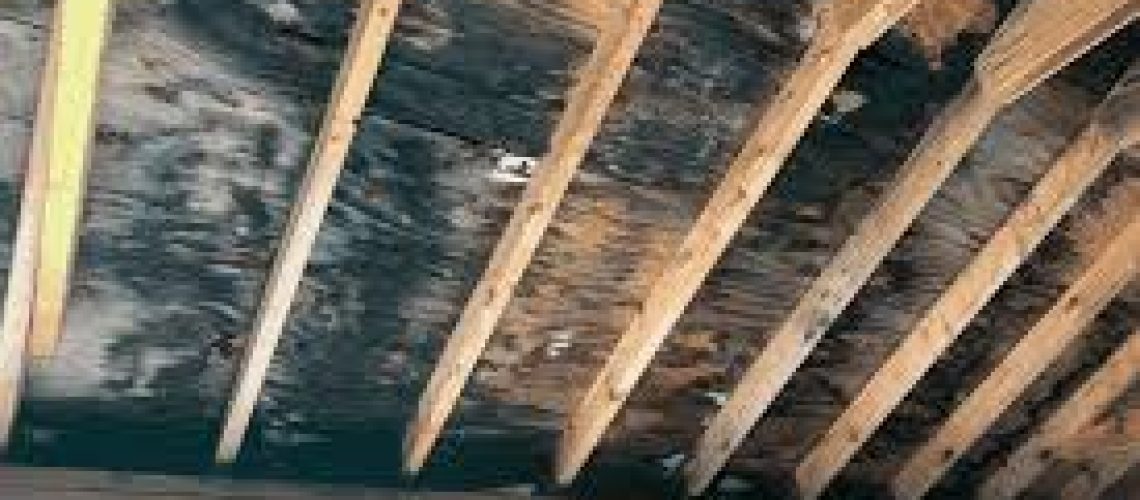
If you’ve inspected enough houses in East Tennessee, you stop being surprised by attic mold. You can have a brand-new roof, clean shingles, and zero history of leaks — and still find mold spread across the underside of the roof deck like it’s been living there rent-free for years.
This isn’t a mystery.
It’s climate, topography, and bad assumptions colliding.
The Tennessee Valley creates its own weather, and attics are where that reality shows up first.
The Valley Holds Moisture — Constantly
East Tennessee doesn’t dry out the way people expect. Moist air settles into the valley and just hangs there, especially in the mornings and evenings. That fog you see rolling through low areas isn’t just scenic — it’s humidity looking for somewhere cooler to land.
Attics are perfect targets.
When warm, moisture-laden air from the house rises and hits a cold roof deck, condensation forms. Over and over. No leaks required.
Mold Without Water Stains Confuses People
This is where homeowners argue with inspectors.
“I’ve never had a roof leak.”
“Nothing’s ever dripped.”
“There’s no staining.”
Correct. And irrelevant.
Attic mold in East Tennessee usually comes from condensation, not bulk water intrusion. That’s why you’ll see:
- Even mold growth across wide roof areas
- Concentration near ridgelines
- Clean decking everywhere else
Leaks leave trails. Condensation leaves patterns.
Venting Is Usually the Problem — Or the Lie
A lot of homes technically have attic ventilation. Ridge vents, soffit vents, gables — the works. On paper, it’s fine.
In reality, I keep finding:
- Baffle blockage where insulation was blown right over soffit vents
- Ridge vents with no actual airflow
- Gable vents fighting ridge vents instead of helping
If air can’t move from low to high cleanly, moisture doesn’t leave. It condenses.
Bathroom Fans Are Quiet Saboteurs
Here’s a Wes-ism: bathroom fans cause more attic mold than bad roofs.
Why? Because they’re constantly dumping warm, wet air into spaces that can’t handle it. I routinely find fans that:
- Terminate in the attic instead of outside
- Leak at duct joints
- Backdraft when they’re off
Every shower adds another layer of moisture to the attic environment. Over time, the roof deck loses.
Insulation Traps Moisture When It’s Installed Wrong
Insulation is supposed to slow heat transfer. When it’s installed poorly, it traps moisture instead.
Common mistakes I see:
- Insulation packed tight against the roof deck
- Missing air sealing at attic penetrations
- No vapor control at the ceiling plane
That warm air from below doesn’t need much of a gap. It finds one.
Valley Geography Makes It Worse
Homes in places like Maryville and Alcoa are prime examples. The valley holds moisture overnight, temperatures swing, and attics become condensation chambers before breakfast.
This is why mold often shows up:
- On north-facing roof planes
- Near shaded areas
- In houses with otherwise “good” roofs
Sun exposure matters. Airflow matters more.
New Roofs Don’t Fix Old Attics
I’ve inspected plenty of homes with brand-new shingles and moldy decking underneath. Roof replacements don’t address:
- Ventilation balance
- Air leakage from the house
- Bathroom and kitchen exhaust problems
People replace roofs expecting attic problems to disappear. They don’t. Sometimes they get worse because the new roof seals tighter.
Mold Isn’t the First Problem — It’s the Symptom
Here’s the part I’m blunt about: mold is late to the party.
By the time you see it, the attic has been wet — repeatedly — for a long time. That means:
- Roof sheathing has been stressed
- Fasteners may be corroding
- Insulation performance is compromised
Cleaning mold without fixing airflow is like repainting over rot.
Why East TN Attics Need Forensic Inspections
This isn’t a wipe-it-and-forget-it situation. Attic mold in East Tennessee requires figuring out:
- Where the moisture is coming from
- Why it’s condensing
- Why it’s not leaving
That means reading airflow, not just surfaces.
For buyers evaluating homes across East Tennessee, attic conditions tell you more about how the house actually breathes than any other space.
https://upchurchinspection.com/our-service-areas/home-inspections-in-east-tennessee/
In the Tennessee Valley, fog is normal.
Letting it live in your attic isn’t.