
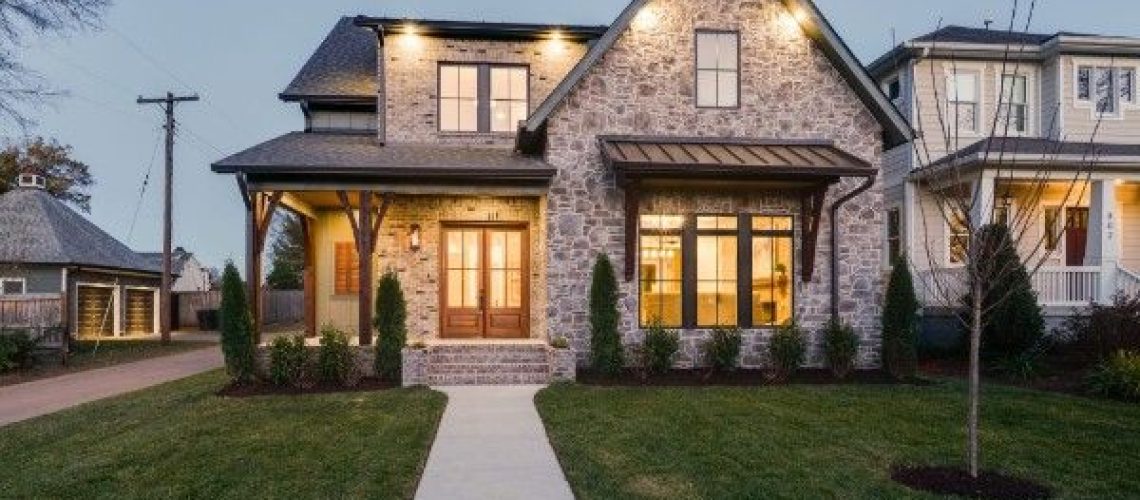
Infill construction sounds smart on paper. Use the land you’ve already got. Build closer together. Maximize density. In reality, a lot of Mt. Juliet’s infill projects are where builders get sloppy and buyers pay for it later.
When you squeeze a house onto a tight lot, something always gives. And it’s almost never the thing buyers are looking at during the showing.
Tight Lots Mean Zero Margin for Error
Older subdivisions had space baked in. New infill doesn’t. Side setbacks are minimal. Rear yards are shallow. Drainage paths are short and overloaded. When water has nowhere to go, it goes where it shouldn’t — toward foundations, into crawlspaces, and across neighboring properties.
I don’t care how new the house is. If the lot doesn’t work, the house won’t either.
Grading Gets Sacrificed First
On tight lots, proper grading is hard, time-consuming, and expensive. Guess what usually gets value-engineered out? Yep. Dirt work.
During infill inspections along the Green Hill and Mount Juliet Road corridors, I routinely see:
- Minimal slope away from foundations
- Side yards pitched toward the house instead of away
- Swales that look good on plans but don’t actually move water
You can’t cheat gravity. If the lot is flat, water will sit. If it’s sloped wrong, water will travel.
Zero-Lot Lines Create Shared Headaches
Some infill projects push structures right up to property lines. That creates a mess of shared drainage problems and access issues no one thinks about until something fails.
Here’s what that looks like in real life:
- No room to service siding or flashing
- Downspouts dumping onto neighboring property
- Roof runoff crossing lot lines
When maintenance requires stepping onto someone else’s property, problems don’t get fixed. They just get ignored.
Foundations Feel It Fast
Tight lots amplify soil movement. There’s less undisturbed soil, more fill, and more compaction variability. That’s a perfect recipe for uneven support.
I see it show up as:
- Cracks forming sooner than expected
- Doors drifting out of alignment early
- Slabs or crawlspace piers showing differential movement
These aren’t “new house quirks.” They’re site problems revealing themselves.
Water Has No Time to Disperse
On larger lots, water spreads out. On infill lots, it concentrates. Roof runoff, surface water, and even neighboring drainage all hit the same narrow zones.
That’s why crawlspaces in infill homes often struggle right out of the gate. Moisture builds up faster than ventilation or vapor barriers can handle.
Landscaping Can’t Save a Bad Lot
Fresh sod and mulch hide a lot of sins. I’ve inspected plenty of infill homes that looked great for six months — until the first real rainy season showed up.
Once erosion channels form or soil settles, the problems become obvious:
- Exposed foundations
- Washed-out side yards
- Persistent dampness against exterior walls
By then, the builder is usually long gone.
Privacy Walls and Fences Make Drainage Worse
Infill loves fences. They sell privacy. They also trap water.
When fences block natural drainage paths or sit tight against the ground, water backs up. I’ve seen fence lines act like dams, holding moisture against foundations and crawlspace vents.
It’s one of those things nobody connects until damage shows up inside.
“New” Doesn’t Mean Tested
Here’s the part buyers don’t want to hear: infill homes haven’t been stress-tested yet. They haven’t seen multiple seasons. They haven’t gone through soil saturation, drying cycles, and heavy runoff events.
You’re the test case.
That doesn’t mean the house is doomed. It means the inspection has to focus on site performance, not finishes.
Why Infill Requires a Harsher Inspection
This is where I’m less polite than most. Tight-lot construction deserves more scrutiny, not less. There’s no buffer. No forgiveness. No room for “we’ll fix it later.”
If the grading is wrong, it will matter.
If the drainage is sloppy, it will matter.
If the foundation prep was rushed, it will matter.
Soon.
The Mt. Juliet Reality Check
Mt. Juliet is growing fast, and infill is part of that growth. But not all infill is equal. Some lots should never have been built on without serious engineering, and some houses are carrying site problems they didn’t create.
Buyers moving into the Middle Tennessee market — especially those coming from areas like Nashville — often underestimate how much the dirt matters here.
For buyers evaluating homes across Middle Tennessee, tight lots deserve tight scrutiny.
https://upchurchinspection.com/our-service-areas/home-inspections-in-middle-tennessee/
Infill isn’t the problem.
Pretending the lot doesn’t matter is.