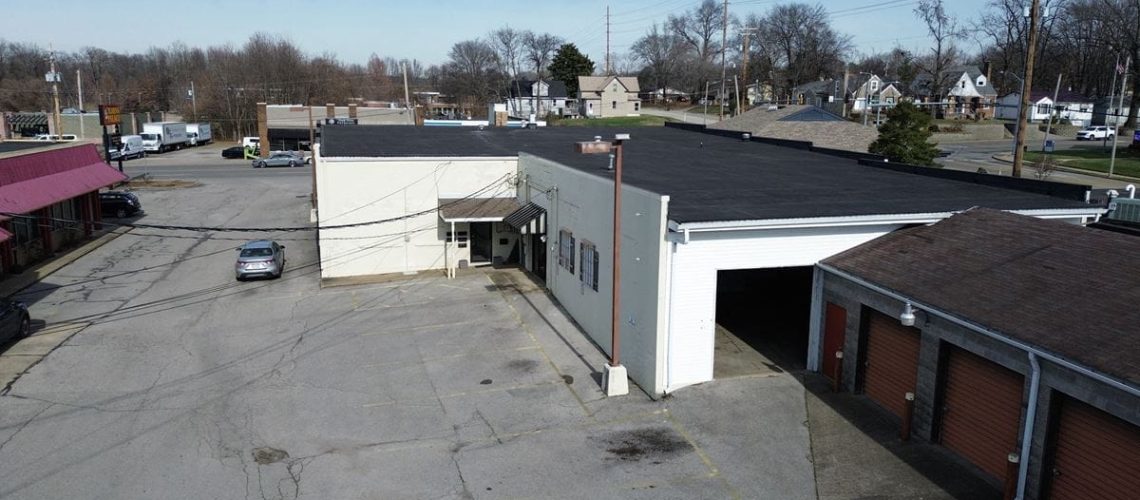
Metal buildings dominate much of Southeast Missouri’s industrial footprint, especially along Nash Road and through the Sikeston Business Park. They’re efficient, fast to construct, and deceptively simple. But from an inspection standpoint, metal buildings hide some of the most expensive long-term failures I see — largely because the problems don’t announce themselves early.
The biggest threat isn’t structural overload. It’s moisture.
Condensation: The Silent Structural Killer
Metal buildings create extreme temperature differentials. Warm, moist interior air meets cold steel surfaces, and condensation forms. Unlike a roof leak, condensation doesn’t drip in one obvious spot. It spreads across framing, fasteners, and purlins.
Over time, that moisture leads to:
- Corrosion of structural steel
- Fastener deterioration and loosening
- Hidden rot in any wood nailers or framed infill walls
Once corrosion advances, repairs become invasive and expensive.
Vapor Control Failures in Industrial Shells
Many SEMO metal buildings were erected without properly designed vapor barriers. Others had vapor control added later, often incorrectly. When interior humidity isn’t managed and vapor barriers are incomplete, moisture migrates freely and condenses wherever temperature differences exist.
I’m looking closely at:
- Insulation type and placement
- Gaps at wall-to-roof transitions
- Evidence of past condensation staining on steel members
These clues reveal whether moisture is an occasional issue or a chronic condition.
Roof Penetrations and Expansion Stress
Metal roofs move — a lot. Thermal expansion and contraction stress fasteners, seams, and penetrations over time. In industrial parks where rooftop units have been added after original construction, I often see penetrations that were never properly detailed for movement.
That’s when minor separation turns into recurring leaks that don’t respond to simple patching.
Floor Slabs and Interior Moisture Migration
Industrial slabs in SEMO are often poured directly over moisture-prone soils. Without adequate vapor barriers beneath the slab, moisture migrates upward, affecting stored materials, finishes, and equipment.
Efflorescence, surface scaling, and persistent dampness along slab edges are indicators that the building envelope is losing the moisture battle from below as well as above.
Why Metal Buildings Require Forensic Inspections
Metal buildings don’t fail fast. They fail quietly — through corrosion, hidden moisture, and movement that goes unnoticed until repairs become unavoidable. Inspecting them requires understanding how steel, vapor, and temperature interact over years, not weeks.
For buyers and operators evaluating industrial properties across Southeast Missouri, thorough inspections help identify risks before they become operational disruptions.
https://upchurchinspection.com/our-service-areas/home-inspections-in-southeast-missouri/
In SEMO’s industrial parks, what you don’t see is often what costs the most.