
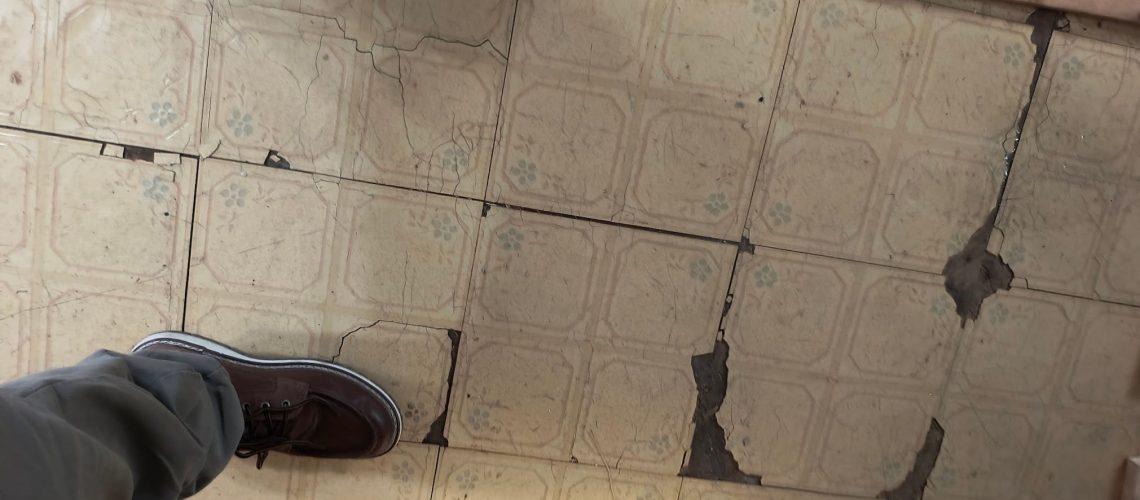
If I’m walking through an older basement and my eyes drop to the floor, I already know what I’m measuring in my head.
Nine inches by nine inches.
Those little squares show up a lot in older Mid-South homes, especially basements that were “finished” decades after the house was built. And when they do, the conversation slows down — because this is one of those topics where panic helps no one, but ignorance helps even less.
Why 9×9 Tiles Get Everyone’s Attention
Most 9×9 floor tiles installed before the early 1980s may contain asbestos. Not definitely. Not automatically dangerous. But possible.
That distinction matters.
Asbestos isn’t radioactive. It doesn’t leap into the air because you looked at it wrong. The risk comes from disturbance, not presence.
A Real Inspection Where Context Changed Everything
I inspected a home outside Jackson, TN where the basement had original 9×9 tiles still intact. No cracking. No sanding. No chipping.
The buyer was ready to walk immediately.
Once we talked it through, the picture changed. The tiles had been there for decades, undisturbed. No dust. No flaking. No active renovation.
That wasn’t an emergency. It was information.
Why Size Matters (And Why It’s Not the Only Clue)
Nine-by-nine tiles are a red flag — not a diagnosis.
I also look at:
- Installation era
- Tile thickness
- Adhesive type (black mastic is another clue)
- Condition and wear
- Evidence of past removal attempts
I’ve seen 12×12 tiles that were asbestos-containing too. Size helps, but it’s not the whole story.
The Bigger Risk Is What People Do Next
The real danger often shows up after the inspection.
I’ve reviewed inspection photos from one of our inspectors near Bolivar where a homeowner had started peeling tiles up “just to see what was underneath.” No containment. No protection. Dust everywhere.
That’s how exposure happens — not from walking across intact tile.
What Not to Do With Suspected Asbestos Tile
Here’s the short list:
- Don’t sand it
- Don’t grind it
- Don’t snap it
- Don’t scrape adhesive
- Don’t dry-sweep debris
If you don’t disturb it, it doesn’t become airborne.
What Your Actual Options Are
When intact, suspected asbestos tile can often be:
- Left in place
- Covered with new flooring
- Encapsulated with approved materials
Removal is an option — but it should be done intentionally, not impulsively.
Testing is the only way to confirm asbestos content. Visual identification gets you to maybe, not yes.
How I Document This in an Inspection
I don’t label it “asbestos” unless it’s been tested.
I document:
- Tile size and appearance
- Age of the home
- Condition of the material
- Potential for disturbance
- Recommendations for testing if renovation is planned
Context keeps people from making bad decisions.
What Buyers Should Take Away
Suspected asbestos tile isn’t a deal-killer. It’s a planning item.
Plenty of Mid-South homes have lived peacefully with these materials for decades. Problems start when people rush, tear, or remodel without understanding what they’re dealing with.
The Inspector’s Bottom Line
Asbestos isn’t scary because it exists — it’s scary because it’s misunderstood.
Those little 9×9 tiles don’t demand panic. They demand respect, information, and a plan.
When you slow down and make informed choices, this becomes manageable — not monstrous.