
Imagine having a pair of glasses that could see the invisible world of heat signatures in your home. That's essentially what a home thermal imaging inspection gives you—a non-invasive way to spot hidden problems before they become catastrophes.
An inspector armed with a high-tech infrared camera can scan the surfaces in your home and see temperature differences that are completely invisible to the naked eye. This process creates a color-coded 'heat map,' instantly showing where your expensive conditioned air is escaping, where moisture might be hiding, or where an electrical circuit is dangerously overheating.
Uncovering Your Home’s Hidden Secrets
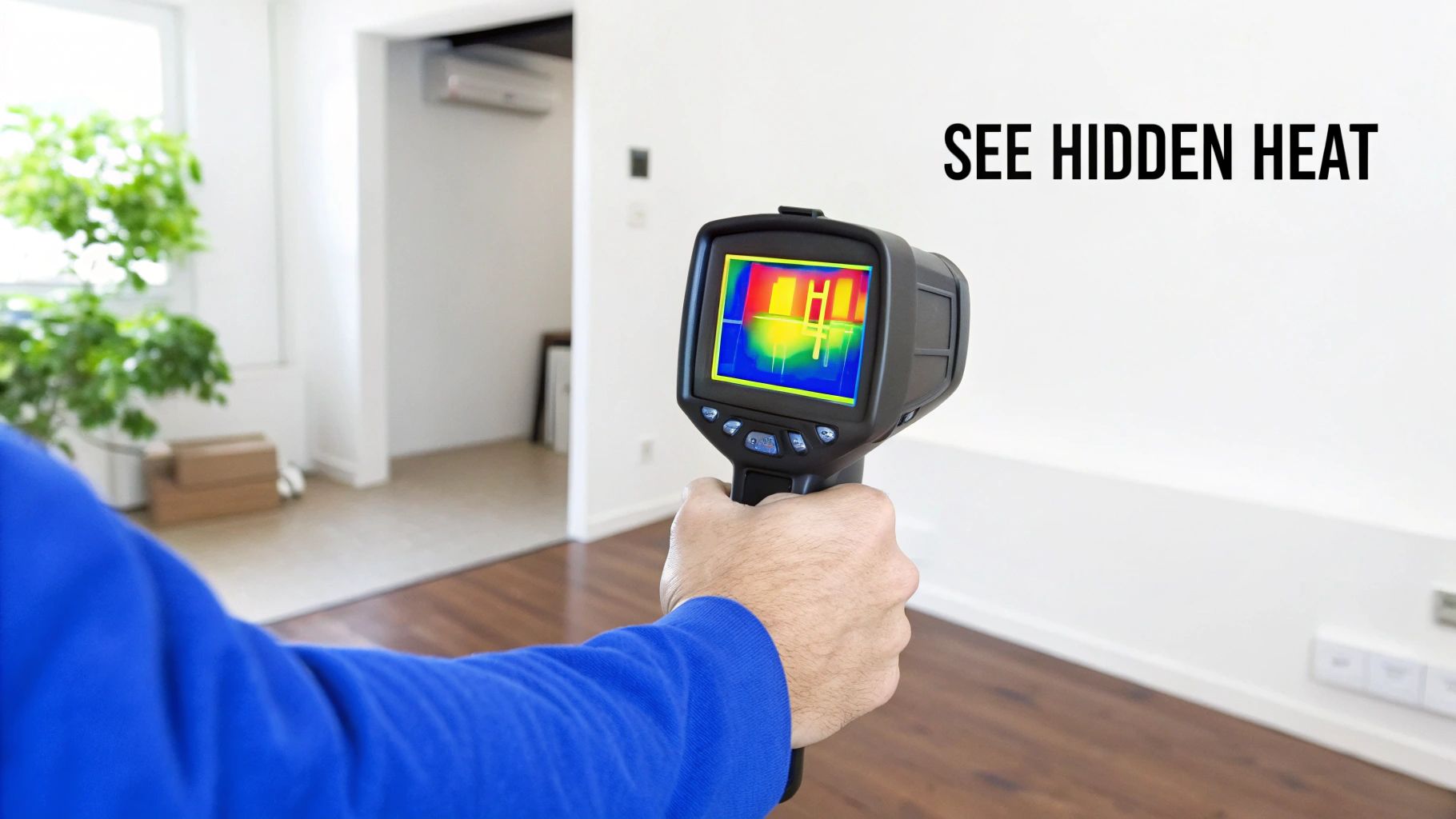
Unlike a standard home inspection that relies on what the inspector can physically see, thermal imaging offers a much deeper, diagnostic look at your property's true condition. The camera translates surface temperatures into a visual spectrum, where cooler areas typically show up as blue or purple, and warmer spots appear as red, orange, or yellow.
It’s important to understand this isn't X-ray vision. An infrared camera can't actually see through your walls. What it does, and does incredibly well, is read the subtle temperature changes on a wall's surface that are caused by issues hidden behind it. This simple principle allows a trained inspector to find problems that would otherwise go completely unnoticed until they’ve already caused major damage.
Beyond a Standard Visual Check
A general home inspection is an absolutely vital part of the home-buying process, but its scope is limited to what's visible. Think of thermal imaging as a powerful supplement—an extra sense that allows the inspector to detect unseen threats. While your standard inspection confirms the home’s visible health, a thermal scan tells the story of what’s happening underneath.
For homeowners, this means catching small issues like a minor insulation gap or a faint leak before they snowball into thousand-dollar repair bills. It’s a game-changing tool for maintaining your home's health, safety, and efficiency for the long haul.
A thermal imaging inspection can pinpoint a wide variety of problems with stunning accuracy. Understanding what a home inspection includes is your first step; adding a thermal scan provides a whole new layer of diagnostic certainty.
Here are just a few of the key problems this technology helps us uncover:
- Energy Inefficiency: We can easily spot gaps in insulation, air leaks around windows and doors, and poorly sealed ductwork that are forcing your HVAC system to work overtime and driving up your utility bills.
- Hidden Moisture Intrusion: This is a big one. Thermal imaging is fantastic at detecting water leaks from plumbing, roofs, or foundations that can lead to wood rot and dangerous mold growth.
- Electrical Hazards: We can identify overloaded circuits, faulty breakers, and loose connections that generate excess heat—a serious fire risk that's often completely invisible.
- Structural and Pest Issues: The camera can even reveal missing structural components (like a missing stud in a wall) or the distinct heat signatures created by hidden termite or rodent infestations.
How Infrared Technology Makes the Invisible Visible
So, how does an infrared camera actually see heat? It’s a pretty neat trick. Every single object in your house, from the walls to your coffee maker, is constantly giving off thermal energy. An infrared camera works a lot like a regular one, but instead of capturing visible light, its high-tech sensor is built to detect this invisible infrared radiation.
The camera takes those different energy levels and translates them into a visual image we call a thermogram. Think of it as painting a picture with temperature instead of color. It's an incredibly powerful diagnostic tool because it reveals patterns the naked eye would completely miss.
Reading the Thermal Story of Your Home
Here's a key point that trips some people up: the camera isn’t seeing through the wall. Not exactly. What it’s actually doing is expertly reading the tiny, subtle temperature changes on the surface of the wall that are caused by issues hidden behind it. This is where the real diagnostic power of a home thermal imaging inspection shines.
For instance, a strangely cold spot on your living room wall could point to a hidden water leak. As moisture evaporates, it cools the drywall's surface, causing it to emit less thermal energy. On the camera's screen, this shows up as a distinct dark blue or purple area.
On the flip side, an overloaded electrical wire will be much hotter than its surroundings and will pop out as a bright red or yellow spot on the thermogram, flagging a serious fire hazard that would have otherwise gone unnoticed.
A professional thermographer interprets these thermal patterns—the subtle blues, purples, reds, and yellows—to uncover the hidden story of your home's condition, turning raw data into a clear, actionable diagnosis.
The Right Tool for the Job
Of course, the quality of the inspection depends heavily on the quality of the equipment. For home thermal imaging, technical specs like resolution matter a lot. Most professional inspectors rely on cameras with at least a 320 x 240 pixel resolution, as this offers a great balance between capturing detailed images and keeping the service affordable for homeowners. Modern handheld cameras allow us to move efficiently through a property, spotting thermal anomalies from insulation gaps to faulty wiring.
Infrared technology is all about bringing the unseen to light. This isn't just limited to what's behind your drywall; specialists can learn a ton by examining the invisible layers of your home's roof as well. Understanding the role of technology in modern home inspections helps homeowners see just how valuable these advanced tools are for getting a complete picture of a property's health.
What a Thermal Scan Can Uncover
Think of a home thermal imaging inspection as giving your house an MRI. It allows us to see problems that are completely invisible to the naked eye, turning hidden issues into obvious visual cues on a color-coded map. This technology is like having a skilled detective on the job, uncovering a whole range of costly and dangerous problems hiding just beneath the surface.
Instead of guessing where a problem might be, we get concrete, visual evidence. This gives you a clear roadmap for targeted, effective repairs.
Pinpointing Critical Energy Loss
One of the most common and financially draining issues we find is energy loss. It happens all the time. Small gaps in insulation, windows and doors that aren't sealed properly, and leaky ductwork create thermal bridges where your heated or cooled air—and your money—slips right out.
On the thermal camera, these weak spots show up as distinct cold streaks in the winter (shades of blue and purple) or hot spots in the summer (bright reds and yellows). Finding these deficiencies allows for precise fixes, so instead of a costly, whole-home insulation overhaul, you can focus only on the areas that are actually failing. It makes your home more comfortable and can put a real dent in your monthly utility bills.
Detecting Hidden Moisture Intrusion
Moisture is public enemy number one for a home. It leads to wood rot, serious structural damage, and the kind of mold that can impact your family's health. The worst part? Many leaks from plumbing, roofs, or foundations go completely unnoticed for months, sometimes even years.
This is where thermal imaging really shines. Because water evaporation creates a cooling effect, damp areas behind drywall or under your flooring will appear noticeably cooler than the surrounding dry materials. This allows us to trace the moisture right back to its source without tearing into your walls.
By spotting the distinct, cool signature of evaporating moisture, a thermal scan can identify a small leak from a shower pipe or a failing roof flashing long before it causes a catastrophic ceiling collapse or a serious mold problem.
This diagram shows how a thermal camera works. It’s not an X-ray seeing through the wall, but rather a sophisticated tool reading the subtle surface temperature changes caused by hidden conditions on the other side.

This ability to read surface temperatures is what makes thermal imaging such a powerful, non-invasive diagnostic tool for your home.
Here's a quick guide to help you understand what those different colors and patterns might mean when you see a thermal image from your home inspection.
Interpreting Common Thermal Patterns
| Thermal Pattern (Color) | What It Typically Means | Potential Problem Area |
|---|---|---|
| Cool Blues/Purples | A colder surface temperature, indicating heat loss or moisture. | Missing/damaged insulation, air leaks around windows/doors, hidden water intrusion. |
| Hot Reds/Yellows/Whites | A warmer surface temperature, indicating heat gain or an active heat source. | Overheating electrical circuits, leaky HVAC ducts, pest nests, heat gain from outdoors. |
| Streaks or Geometric Shapes | A uniform pattern suggesting a structural element. | Air leaks along wall studs, uninsulated ceiling joists, or framing members. |
| Amorphous "Blobs" or Spots | An irregular shape that doesn't follow the home's structure. | Moisture intrusion from a plumbing leak, wet insulation, or a large pest colony. |
Remember, these patterns are clues, not definitive diagnoses. An experienced inspector uses these visual cues, combined with other tools and knowledge of home construction, to pinpoint the root cause of the problem.
Identifying Dangerous Electrical Hotspots
Faulty electrical systems are a major fire hazard, and the warning signs are often completely invisible until it's too late. Things like overloaded circuits, failing breakers, and loose connections generate a lot of excess heat long before they fail.
A thermal scan of your electrical panel and outlets can instantly identify these dangerous hotspots. On the camera, these connections will glow brightly, appearing as intense red or yellow spots against a cooler background. Catching this early is absolutely critical for preventing electrical fires and keeping your family safe.
Uncovering Unwelcome Pest Intrusions
You might be surprised to learn that even pests can't hide from an infrared camera. Large colonies of termites, carpenter ants, or even rodents generate their own metabolic heat. A significant infestation can create a subtle but detectable warm spot on a wall or ceiling.
While a thermal scan isn't a substitute for a full pest inspection, this thermal clue can alert an inspector to a potential problem that warrants a closer look by a pest control professional. It’s just one more layer of diagnostic capability that a comprehensive home inspection should provide.
What to Expect During Your Inspection
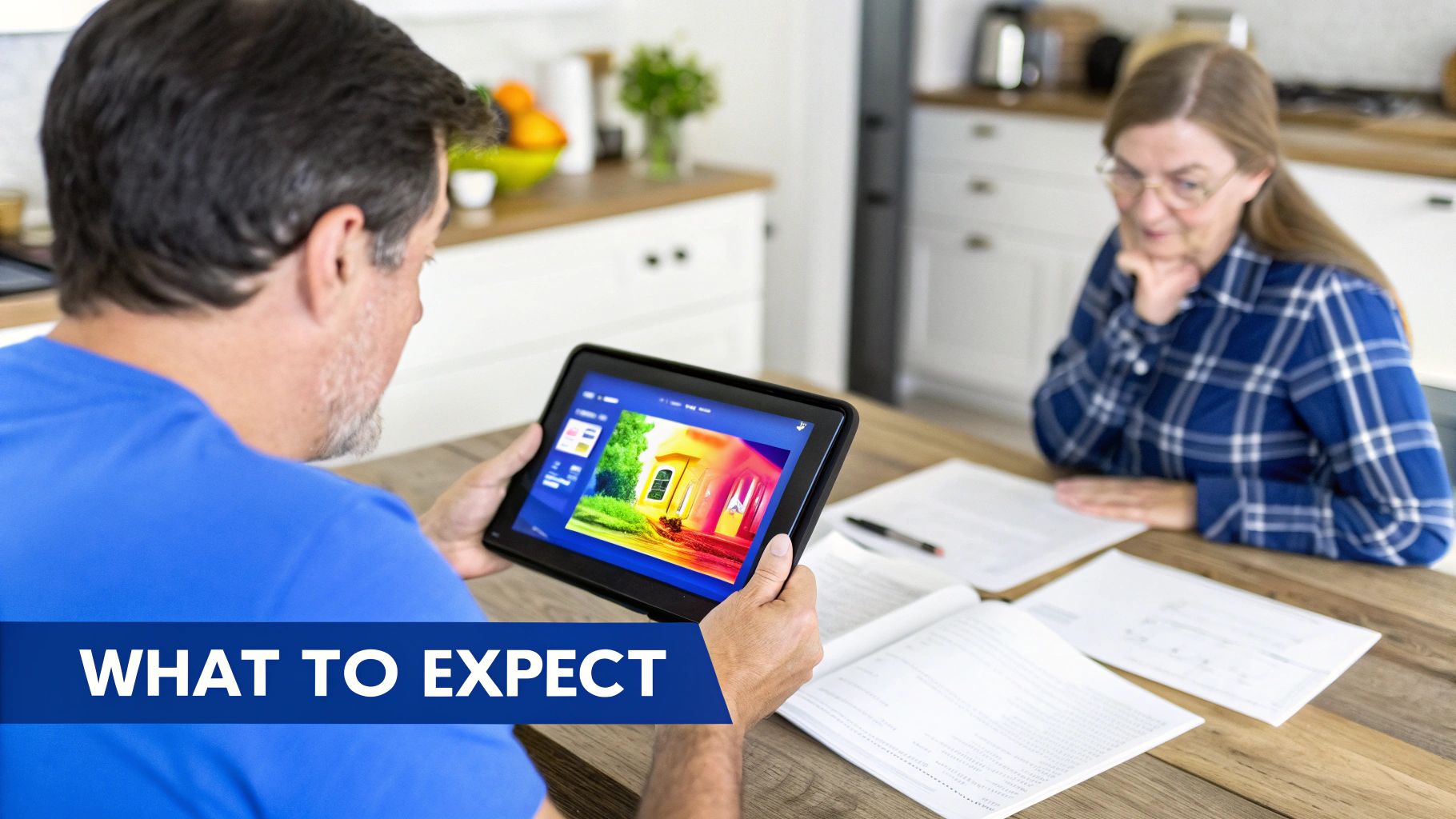
So, you’ve scheduled a home thermal imaging inspection. What happens now? Knowing what the process looks like from start to finish can make everything feel much smoother and easier to understand.
The good news is that the entire procedure is straightforward and completely non-invasive. We’re not drilling holes or tearing anything apart. We’re just giving you a clear, behind-the-scenes picture of your home’s performance without turning your day upside down.
The whole thing breaks down into three simple stages: prepping the house, the scan itself, and finally, the analysis and report. Each step is essential for getting you accurate results you can actually use.
Stage 1: Prepping Your Home for the Scan
To get the best results, we need a little teamwork. A bit of prep work on your end is key to getting the most accurate readings from our infrared camera.
The goal is to create a significant temperature difference between the inside of your home and the outside air—ideally, at least a 15-20°F variance. Think of it like this: this temperature contrast makes problems like air leaks or missing insulation "light up" on the camera, making them impossible to miss.
Here’s how you can help us get a crystal-clear picture:
- During Cooler Months: Before we arrive, crank up your heat to warm the inside of the house. Make sure all windows and exterior doors stay shut.
- During Warmer Months: Run your air conditioning to get the interior nice and cool. Again, keep everything sealed up tight.
It also helps to close your blinds and curtains and turn off any ceiling fans. This ensures we're reading the true surface temperature of your walls and ceilings, not just picking up reflected heat or air being moved around by a fan.
Stage 2: The On-Site Thermal Scan
Once your home is ready, one of our certified thermographers will arrive to conduct the scan. This is the hands-on part of the inspection, where we methodically move through your property with a high-resolution infrared camera.
We'll scan all the critical areas, including:
- Interior Surfaces: We meticulously scan walls, ceilings, and floors in every room to spot insulation gaps or signs of hidden moisture.
- Exterior Surfaces: The entire building envelope gets a once-over to find air leaks and spots where heat is escaping.
- Key Systems: We'll examine your electrical panel, outlets, and HVAC components for dangerous hotspots that could indicate a fire risk.
As we move through the home, we capture detailed thermal images of any anomalies we find. For every colorful thermal picture we take, we’ll also snap a regular digital photo. This side-by-side comparison gives you crucial context and makes the final report much easier to follow.
Stage 3: Analysis and Reporting
The on-site scan is really just the beginning. After we leave your property, the real work begins back at the office: interpreting all that data. We analyze every single thermal image, carefully separating the real issues from potential false positives, like heat on a wall from recent sun exposure.
The final report isn’t just a collection of cool-looking pictures. It’s a detailed diagnostic tool. You’ll get the annotated thermal photos right alongside the standard ones, a clear explanation of what each finding actually means for you, and specific, actionable recommendations for what to do next.
This comprehensive report is designed to turn complex thermal data into a simple roadmap for improving your home’s safety, comfort, and energy efficiency.
Why an Experienced Thermographer Is Essential
A high-tech thermal camera is an incredible piece of equipment, but it's important to remember that it's just that—a tool. In a home thermal imaging inspection, the real value comes from the certified professional interpreting what the camera sees. An infrared camera doesn't spit out simple 'yes' or 'no' answers; it reveals complex thermal patterns that require a truly expert eye to make sense of.
Without proper training, it's dangerously easy to get it wrong. An inexperienced operator might see a cool spot on a wall and immediately jump to the conclusion that it’s a water leak, causing a whole lot of unnecessary panic. A seasoned thermographer, however, knows to think through other possibilities, like an uninsulated pipe or a simple draft from a nearby outlet. That difference is everything.
This expertise is especially critical when it comes to telling real problems apart from the common false positives that can easily fool an amateur.
Beyond the Pretty Pictures
An experienced thermographer brings a deep understanding of building science and thermal dynamics to the job. They can immediately recognize normal heat patterns that aren't defects at all, saving you from spending money on pointless and costly "repairs."
Here are a few common examples where inexperience leads to misinterpretation:
- Thermal Bridging: This happens when heat moves through wall studs, which are naturally less insulated than the wall cavity between them. An amateur might flag every single stud as an insulation problem, while a pro knows this is a perfectly normal characteristic of wood-frame construction.
- Solar Loading: A wall that’s been baking in the afternoon sun will hold onto that heat for hours. A trained inspector knows to account for this, preventing a false reading that looks like an internal hotspot.
- Air Currents: Even subtle drafts and convective loops can create thermal patterns that look just like moisture issues. An expert knows how to control the environment to get a clean, accurate reading.
A certified thermographer doesn't just take pictures. They use their knowledge to analyze the context behind each image and confirm findings with secondary tools, like a moisture meter, to deliver an accurate diagnosis you can trust.
The use of this technology is exploding. The global thermal imaging market was valued at USD 6.74 billion in 2024 and is projected to skyrocket to USD 10.69 billion by 2032, with North American residential inspections being a major reason why. You can learn more about the expanding use of thermal imaging in homes and see just how mainstream this is becoming.
At Upchurch Inspection, our thermographers are trained to turn that raw thermal data into actionable, trustworthy insights. This ensures you get a precise understanding of your home's condition—not just a collection of confusing images.
Scheduling Your Memphis Thermal Imaging Inspection
Investing in a home thermal imaging inspection is one of the smartest, most proactive moves you can make to protect your property. This isn't just another item on a checklist; it's a powerful diagnostic service that gives you a massive advantage. It's invaluable whether you're buying a new house in Germantown, mapping out a major renovation in Collierville, or just trying to hunt down a mysterious draft or a shockingly high energy bill in your Memphis home.
People sometimes hesitate at the initial cost, but that's often shortsighted. The investment is quickly offset by significant long-term savings. When you catch energy leaks, you start lowering your utility bills every single month. When you find hidden moisture before it turns into widespread rot or mold, you avoid catastrophic repair costs down the road. For homeowners all across West Tennessee, a thermal scan delivers something you can't put a price on: genuine peace of mind.
Taking the Next Step
So, how does it all work? The process is probably simpler than you imagine. Using portable, high-tech infrared cameras, certified professionals can quickly see what the naked eye can't: heat loss, failures in your insulation, and hidden water leaks that are secretly driving up your heating and cooling costs. Modern cameras, which now make up nearly half the market revenue for these devices, deliver high-resolution images and advanced analytics for crystal-clear, accurate results. You can discover more about infrared technology's market impact to see why it’s become so vital in home inspections.
A thermal imaging inspection empowers you with knowledge, turning invisible threats into a clear, actionable report. It’s the difference between guessing about your home's condition and knowing for sure.
If you’re ready to finally see what your eyes can't, taking the next step is easy. A professional inspection gives you the clarity you need to make confident decisions, whether that means negotiating a better purchase price or planning your next big home improvement project.
For those in the Greater Memphis area, getting this vital information is just a click away. You can schedule your thermal imaging inspection with Upchurch Inspection to get a clear quote and talk through your home’s specific needs with our certified team.
Your Top Questions About Thermal Inspections, Answered
Thinking about adding a thermal imaging scan to your home inspection? You probably have a few questions. It’s a specialized service, after all.
Here are a few of the most common questions we get from homeowners, with straightforward answers to help you see the value hiding just beneath the surface.
Is Thermal Imaging Included In A Standard Home Inspection?
Typically, no. Your standard home inspection is an incredibly thorough visual assessment of the property, but it's limited to what the naked eye can see.
Think of a home thermal imaging inspection as a specialized, diagnostic layer on top of that. It’s a powerful add-on that lets us find problems that are completely invisible otherwise, giving you a much deeper understanding of the home's condition.
Can A Thermal Camera See Mold?
This is a great question, and the answer is no—not directly. An infrared camera can't "see" the mold itself. What it can see, with remarkable clarity, is moisture.
Because mold needs moisture to grow, a thermal camera is one of the best tools we have for hunting down the source. By spotting hidden water leaks, condensation behind walls, or damp insulation, it points us directly to the areas that need a closer look for potential mold growth.
When Is The Best Time of Year For An Inspection?
We can perform a thermal inspection any time of year, but the results are sharpest when there’s a big temperature difference between inside and outside. We're looking for a gap of at least 15-20°F.
This contrast is key. It makes the heat signatures from things like insulation gaps, drafty windows, or air leaks stand out in stark relief on the camera's display.
The greater the temperature difference between inside and out, the clearer the thermal images become, making it easier for an inspector to pinpoint hidden problems with accuracy.
How Much Does A Thermal Imaging Inspection Cost?
The cost really depends on the size and complexity of your home and exactly what you need us to investigate. A comprehensive scan of an entire house will differ from a targeted scan looking for a specific roof leak, for example.
The best way to get a clear number is to reach out to a certified local inspector who can give you a quote tailored to your property.
Ready to uncover your home's hidden secrets? The certified team at Upchurch Inspection provides detailed thermal imaging services across Greater Memphis and West Tennessee. Schedule your inspection today and get the true peace of mind you deserve.