
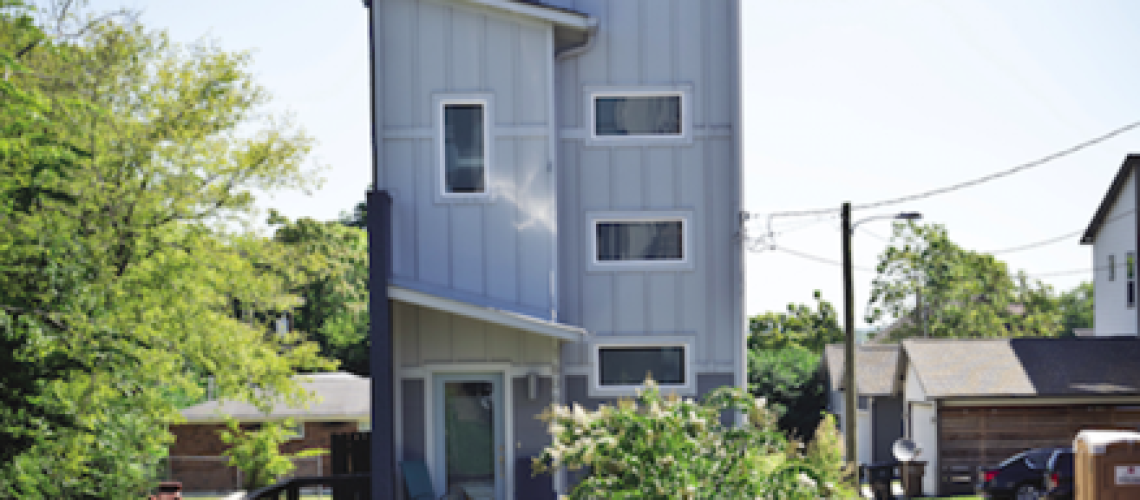
The Short Answer (Here’s the Problem)
Yes—many “tall & skinny” homes in East Nashville are at real risk of crawlspace flooding and foundation damage, even when the house itself is brand new.
The issue isn’t bad construction so much as bad spacing. In ZIPs like 37206, homes are built so close together that your neighbor’s roof can dump water directly against your foundation.
I see this weekly in East Nashville and parts of Madison.

Why This Happens in East Nashville (The Physics, Not the Sales Pitch)
Urban infill works on paper. It fails in water management.
In neighborhoods near Shelby Bottoms Greenway, along streets like Fatherland Street or Greenwood Avenue, lots are narrow, flat, and packed tight.
Here’s what that creates:
- Roofs only 6–10 feet apart
- Side yards with no meaningful slope
- Downspouts terminating between houses
- Zero room for proper swales or splash blocks
Now add Middle Tennessee rainfall.
The “Shared Gutter” Reality
This is the part buyers aren’t warned about:
If your neighbor’s roof dumps water toward your house and causes damage, it can become a legal issue, not just a maintenance one.
But legally messy doesn’t mean physically survivable.
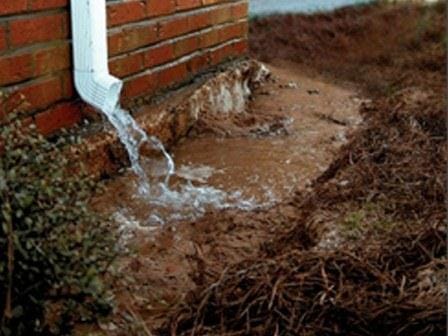
What I Actually Find During Inspections
This is not theoretical.
Wes-ism:
If the side yard stays muddy three days after a rain, the crawlspace has already been wet — whether you smell it yet or not.
Common findings in tall & skinnies:
- Erosion trenches forming between homes
- Crawlspace vapor barriers pushed aside by flowing water
- Foundation wall staining on only one side of the house
- HVAC ducts rusting prematurely from chronic moisture
- Sump pumps added after the problem starts (never before)
And no — fresh sod doesn’t fix this. It hides it.
Why This Is Worse Than an “Old House Problem”
Buyers assume:
“New construction = fewer problems.”
But older East Nashville homes were built:
- Farther apart
- With deeper roof overhangs
- On lots designed for runoff
Tall & skinnies are engineered for maximum square footage, not water physics.
Madison Has the Same Issue — With One Extra Twist
In parts of Madison, you also get:
- Slightly heavier clay soils
- Older stormwater infrastructure
- Infill homes placed next to houses from the 1950s
That mismatch causes water to seek the weakest structure, which is usually the newer crawlspace with thinner margins.
What We Focus On That Others Miss
During an East Nashville infill inspection, we:
- Track roof runoff paths, not just grading
- Inspect side-yard drainage during or after rain when possible
- Photograph shared runoff conditions clearly
- Flag future-risk conditions, not just current damage
This isn’t about failing a house.
It’s about predicting the first bad storm after closing.
The Next Step (This Is a Negotiation Issue)
If you’re under contract on a tall & skinny:
- This is not a cosmetic issue
- This is not a “monitor it” item
- This is a fix-it-or-pay-later problem
Our findings roll directly into the ISN Repair Request Builder, allowing you to:
- Isolate drainage-related corrections
- Attach photos showing shared runoff
- Ask for specific solutions (extensions, regrading, drainage systems)
Don’t just get a report.
Get something you can actually negotiate with.
Bottom Line
Tall & skinnies don’t fail because they’re new.
They fail because water doesn’t care about lot lines.
And in East Nashville, water always wins if you ignore it.