
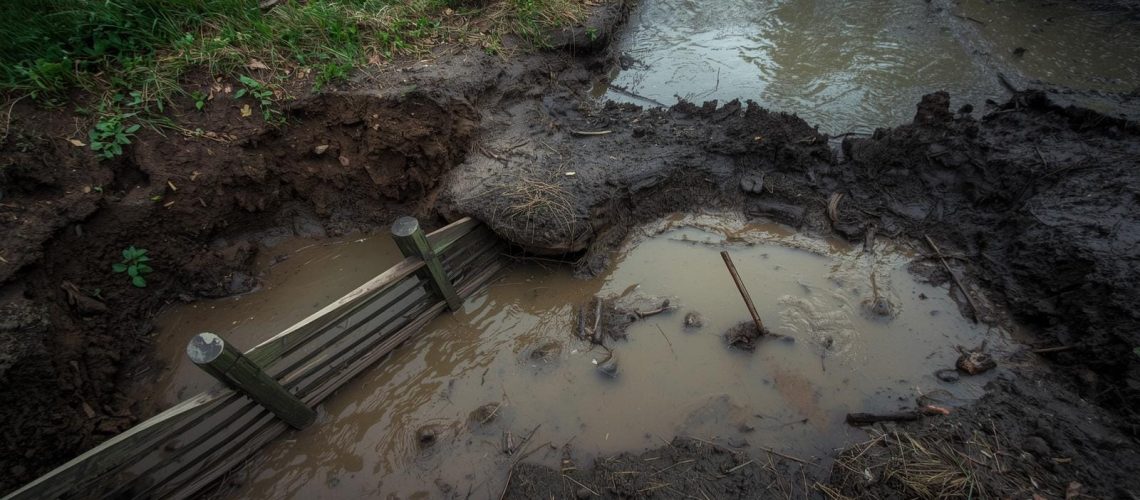
Heavy rain events in Kentucky tend to reveal things about a property that aren’t obvious during dry weather. Homes can appear perfectly fine during a showing, only to show signs of water-related stress after sustained or intense rainfall. In Central Kentucky communities such as Elizabethtown, Radcliff, Vine Grove, Bardstown, and surrounding areas, inspectors routinely see drainage and grading issues that only become apparent once the ground is saturated.
These issues are rarely dramatic at first, but they often explain moisture-related findings inside and beneath the home.
Soil Saturation Changes How Water Moves
Kentucky soils, particularly in Central Kentucky, can become saturated quickly during prolonged rain. Once that happens, water looks for the path of least resistance.
Inspectors frequently observe:
- Surface water moving toward foundations instead of away
- Areas where soil holds water rather than draining
- Temporary pooling that wasn’t present during dry conditions
- Moisture lingering long after rainfall has stopped
When the soil can’t absorb water efficiently, drainage details become critical.
Grading That Appears Acceptable Until It Rains
Many grading issues are subtle and easy to miss during a walkthrough. A yard may look level and well kept but still direct water toward the home.
Common inspection findings include:
- Slight negative slope toward foundation walls
- Settled backfill creating low spots near the perimeter
- Mulch or landscaping built up against siding or brick
- Walkways or patios that trap water against the structure
These conditions often reveal themselves only after heavy rain.
Downspouts and Roof Runoff Concentration
Roof runoff management is a major factor in drainage performance. During heavy rains, even small deficiencies can lead to large volumes of water collecting near the foundation.
Inspectors regularly note:
- Downspouts discharging too close to the home
- Extensions missing or improperly sloped
- Gutters overflowing due to debris or undersizing
- Roof runoff concentrated at corners or low points
Over time, repeated saturation near the foundation increases the risk of moisture intrusion.
Crawlspace and Basement Moisture After Rainfall
In Kentucky homes with crawlspaces or basements, drainage issues often show up below grade first.
After heavy rains, inspectors commonly find:
- Elevated crawlspace humidity
- Damp soil or standing water beneath the home
- Moisture staining on basement walls
- Efflorescence indicating water movement through masonry
These findings often correlate directly with exterior grading and runoff patterns.
Driveways, Patios, and Hard Surfaces
Hard surfaces around a home can unintentionally redirect water if they are sloped incorrectly or have settled over time.
Typical observations include:
- Driveways channeling water toward the foundation
- Patios sloping back toward exterior walls
- Sidewalks creating dams that trap water
- Cracks allowing water to reach below-grade areas
Because these surfaces are often added after original construction, they don’t always integrate well with drainage plans.
Window Wells and Below-Grade Openings
Homes with basements or partially below-grade rooms often include window wells or exterior openings that require careful drainage.
Inspectors frequently see:
- Window wells without proper drainage
- Soil or debris blocking drainage paths
- Water marks inside basement window frames
- Covers that trap water rather than divert it
During heavy rain, these areas can become direct entry points for moisture.
Short-Term Moisture vs. Long-Term Risk
Not every moisture observation after heavy rain indicates a chronic problem. Inspectors evaluate whether conditions appear temporary or suggest ongoing risk.
Key considerations include:
- Frequency and severity of moisture evidence
- Relationship between rain events and findings
- Drainage patterns around the home
- Whether corrective measures have been attempted before
Understanding this context helps buyers prioritize improvements rather than overreact.
Why Kentucky Experience Matters
Homes in Central Kentucky respond to heavy rainfall in predictable ways influenced by soil composition, terrain, and construction practices. Inspectors familiar with the region recognize which drainage issues are common and which indicate a higher likelihood of future moisture intrusion.
That local understanding helps buyers interpret inspection findings accurately and plan practical, effective solutions rather than relying on guesswork.