
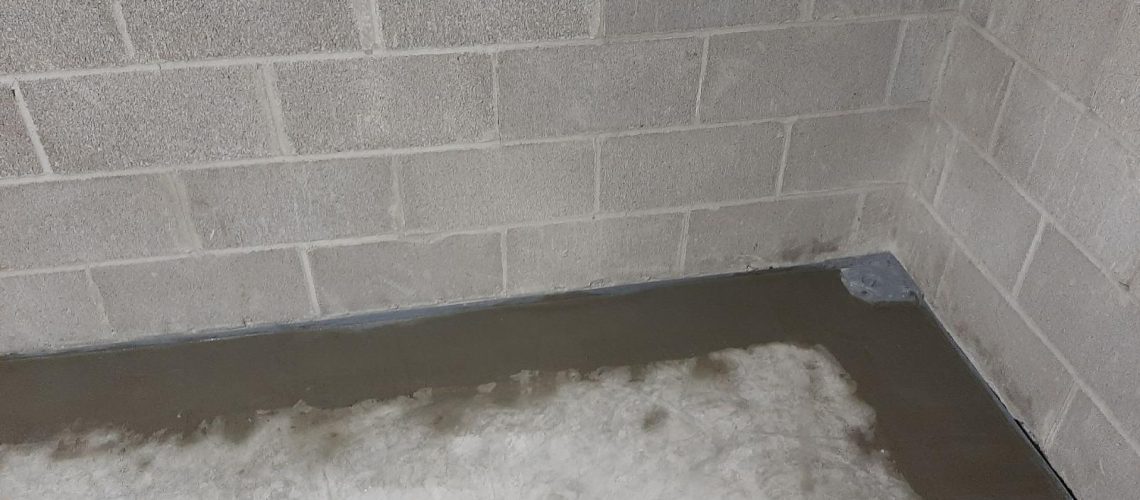
Moisture problems in Central Kentucky don’t start with leaks. They start with physics. The combination of limestone geology, high summer humidity, and legacy construction practices has turned vented crawlspaces into one of the most consistent failure points I see across the region. Floors sag. Insulation falls. Musty odors creep into living spaces. And homeowners are left wondering how a house with “good ventilation” can feel damp year-round.
The answer lives at the intersection of air, temperature, and pressure — not in the vents themselves.
The Myth of “Letting the Crawlspace Breathe”
Vented crawlspaces were designed around a simple assumption: outside air would dilute moisture and carry it away. That assumption fails in Central Kentucky for most of the year. From late spring through early fall, outside air is already moisture-laden. Bringing it into a shaded, cooler crawlspace doesn’t dry anything. It does the opposite.
When warm, humid air enters a cooler crawlspace, it crosses the dew point. Moisture condenses on the first cool surfaces it finds — floor framing, ductwork, plumbing lines, and the underside of the subfloor. The space isn’t breathing. It’s sweating.
Dew Point Is the Real Enemy
To understand why vented crawlspaces fail here, you have to think in terms of the psychrometric chart — the relationship between air temperature, relative humidity, and moisture content. In Central Kentucky summers, outdoor air often carries a dew point in the high 60s or low 70s.
Crawlspaces, shaded and earth-coupled, often sit several degrees cooler. That temperature difference guarantees condensation. It’s not a defect. It’s physics doing exactly what physics does.
Why Vents Make It Worse
Crawlspace vents don’t control air. They invite it. Wind pressure, stack effect, and mechanical systems inside the house all move air through crawlspaces unpredictably. Instead of controlled drying, you get cycles of saturation.
During inspections in areas like Sonora and Upton, I routinely see:
- Rusting HVAC components below the home
- Water droplets forming on duct jackets
- Moisture staining on joists directly beneath vent openings
The vents aren’t solving the moisture problem. They’re feeding it.
Ground Moisture Never Stops
Even when it hasn’t rained in weeks, the soil beneath a crawlspace is releasing moisture upward. Without a continuous, well-sealed ground vapor barrier, that moisture enters the crawlspace air and raises humidity levels around the clock.
In many Central Kentucky homes, vapor barriers are:
- Partial, leaving exposed soil
- Thin and torn from foot traffic
- Unsealed at piers and perimeter walls
Once ground moisture enters the air, vents can’t remove it effectively — especially when outdoor humidity is already high.
Insulation Failure Is a Symptom, Not the Cause
Fallen insulation is one of the most common crawlspace complaints I hear. But insulation doesn’t fail on its own. It fails because moisture has made it heavy, compressed, and ineffective.
Fiberglass insulation absorbs moisture from humid air. As it becomes saturated, gravity does the rest. When insulation falls, the subfloor above is exposed to temperature swings and moisture, accelerating floor movement and comfort issues.
Reinstalling insulation without addressing moisture conditions simply resets the clock.
Mold Growth Without Standing Water
Many homeowners assume mold requires leaks or flooding. In crawlspaces, it doesn’t. Sustained relative humidity above about 60% is enough to support fungal growth on wood framing.
I routinely document:
- White or gray fungal growth on joists
- Dark staining on sill plates
- Musty odors migrating upward into living spaces
These conditions develop quietly and spread slowly, often going unnoticed until odor complaints or floor issues prompt investigation.
Mechanical Systems Compound the Problem
HVAC systems running through vented crawlspaces create additional moisture dynamics. Cold supply ducts become condensation surfaces when exposed to humid air. Return leaks pull damp crawlspace air into the system and distribute it throughout the home.
In some cases, negative pressure created by the HVAC system actively draws outdoor air through crawlspace vents, increasing moisture load during peak cooling months.
The house and crawlspace aren’t separate systems. They’re connected whether the design intended it or not.
Why Central Kentucky Is Especially Vulnerable
Central Kentucky’s climate sits in a difficult middle ground. Winters are cold enough to justify insulation. Summers are humid enough to overwhelm ventilation strategies. Add limestone soils that retain and transmit moisture, and crawlspaces remain damp for extended periods.
This is why crawlspace failures are so consistent across the region — regardless of home age or price point.
The False Comfort of “It’s Always Been This Way”
Many homeowners are told their crawlspace has “always been like that.” That doesn’t mean it’s acceptable. It means the damage has been slow enough to go unnoticed. Moisture problems don’t need to be dramatic to be destructive. They just need time.
Wood decay, fastener corrosion, and microbial growth all operate on long timelines. By the time symptoms appear inside the living space, the crawlspace has often been struggling for years.
Reading Moisture Patterns During Inspections
When I inspect crawlspaces in Central Kentucky, I’m not just checking boxes. I’m reading patterns:
- Where moisture is highest
- Which materials are deteriorating first
- How air is moving through the space
Those patterns reveal whether the problem is seasonal, chronic, or structural in nature.
Why Crawlspace Strategy Matters Before Purchase
Crawlspace remediation can range from modest improvements to significant investment, depending on conditions. Understanding the scope before purchase allows buyers to plan realistically and avoid surprise costs.
For buyers evaluating homes throughout Central Kentucky, moisture forensics are a critical part of understanding long-term performance.
https://upchurchinspection.com/our-service-areas/home-inspections-in-central-kentucky/
In this region, vented crawlspaces aren’t failing because they’re neglected. They’re failing because they were never designed for Kentucky’s air.