
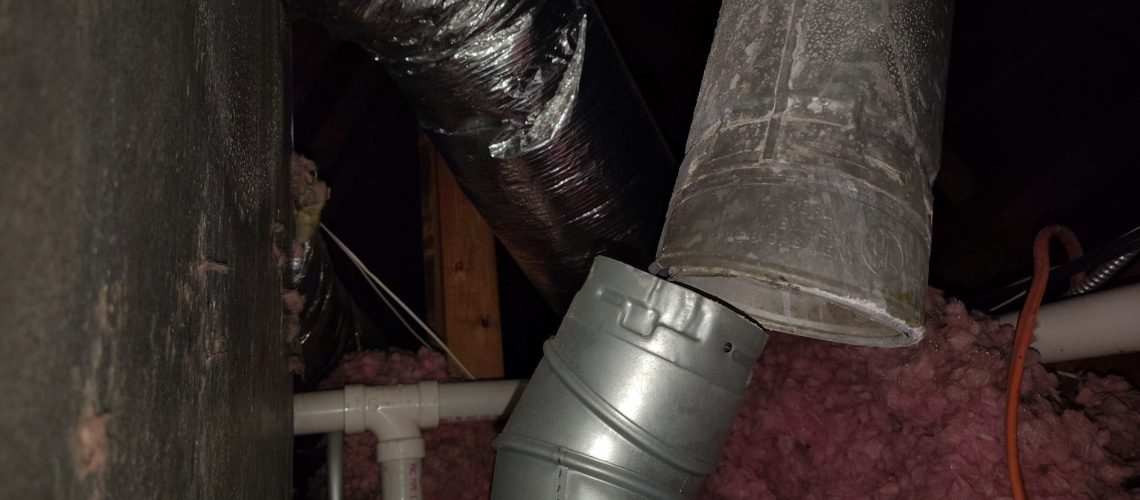
Attics hide some of the most dangerous inspection issues because no one goes up there unless they have to.
When I see a metal B-vent running through an attic, I’m immediately checking one thing first: clearance.
Because heat plus combustible materials is a bad equation every single time.
What B-Vent Is — and Why Clearance Matters
B-vent is a double-wall metal vent commonly used to exhaust gas-fired appliances like furnaces and water heaters.
It’s designed to get hot. That’s normal.
What’s not normal is when insulation, framing, or stored items are allowed to touch it.
B-vent relies on air space to dissipate heat. Take that space away, and the risk goes way up.
A Real Inspection Where the Danger Was Hidden
I inspected a home in Arlington where the attic looked clean at first glance. Plenty of insulation. No obvious issues.
Until I followed the B-vent.
Loose-fill insulation had been piled directly against the vent for years. In some spots, it was packed tight all the way around it.
That vent had no clearance at all.
Nothing had caught fire yet — but the conditions were there.
What Clearances Are Typically Required
Most B-vent installations require:
- At least 1 inch clearance to combustible materials (sometimes more, depending on manufacturer)
- No insulation contact unless a listed fire-stop or insulation shield is present
- Proper fire-stop spacers at ceiling and floor penetrations
When those aren’t present, the vent may overheat surrounding materials over time.
Why Insulation Is the Biggest Offender
Insulation is usually added after the vent is installed.
Blown insulation doesn’t respect boundaries. Over the years, it drifts, piles up, and gets moved during attic work.
I’ve reviewed inspection photos from one of our inspectors in the Jonesboro area where insulation had completely buried the B-vent from floor to roof penetration.
No shield. No clearance. No warning.
Other Clearance Issues I See
It’s not just insulation.
I also find:
- Wood framing touching the vent
- Improper fire-stop spacers
- Vent offsets jammed against rafters
- Stored items placed against vent piping
- Vent connectors too close to drywall
Clearance violations don’t always look dramatic — but they’re still dangerous.
Why This Doesn’t Show Up on Day One
Fire hazards like this develop slowly.
Wood doesn’t ignite instantly. It dries out, heats repeatedly, and degrades over time. That’s how fires start years after installation.
I’ve seen scorch marks on framing that no one noticed until an inspection forced a closer look.
How I Inspect B-Vent Runs
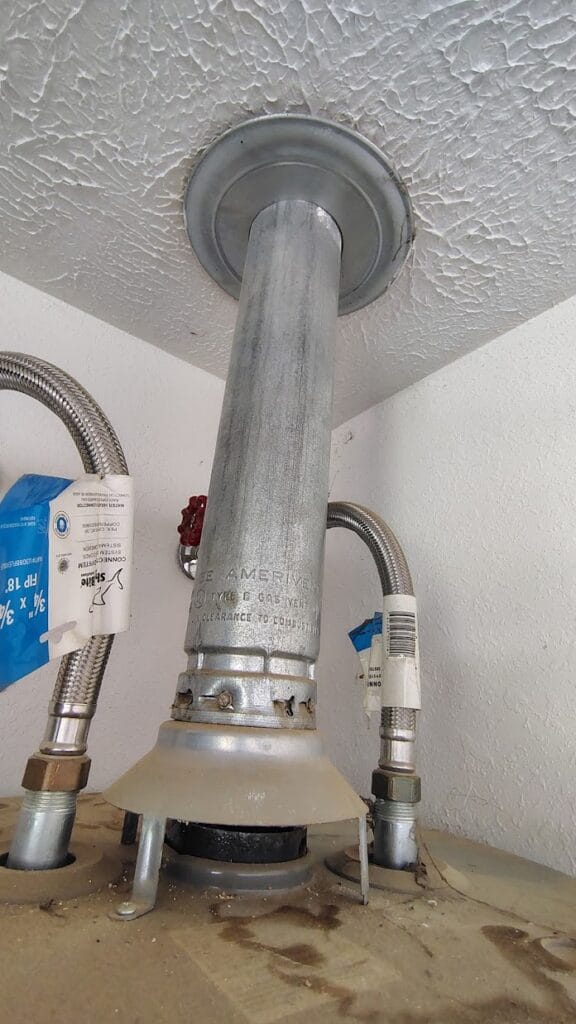
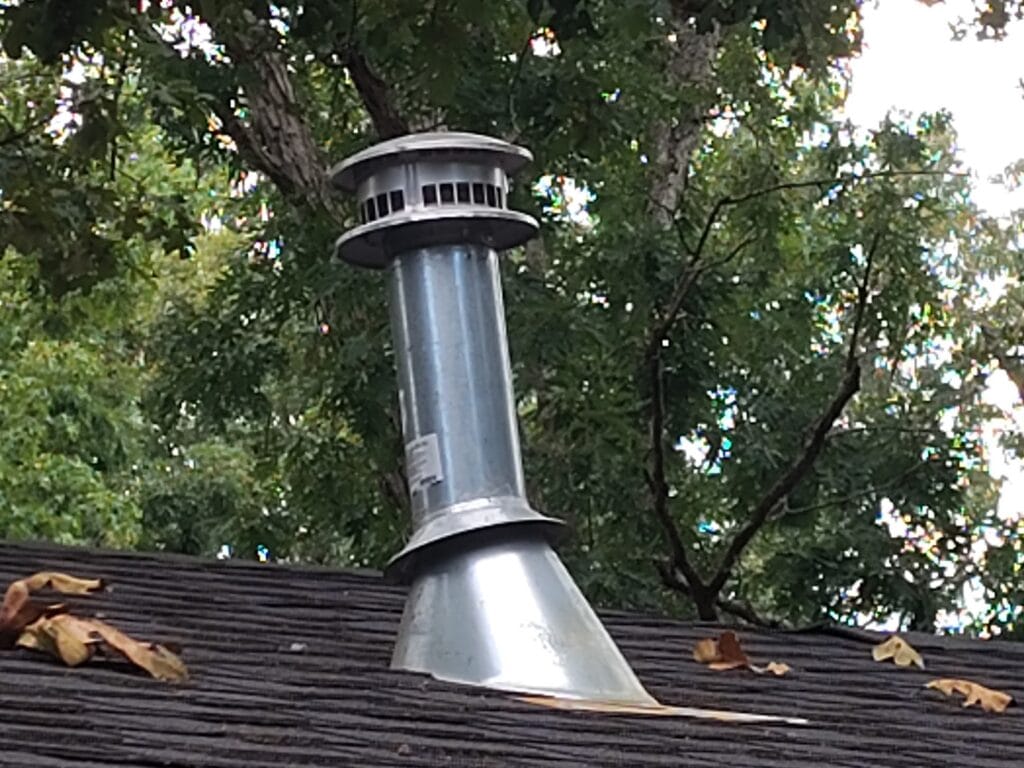
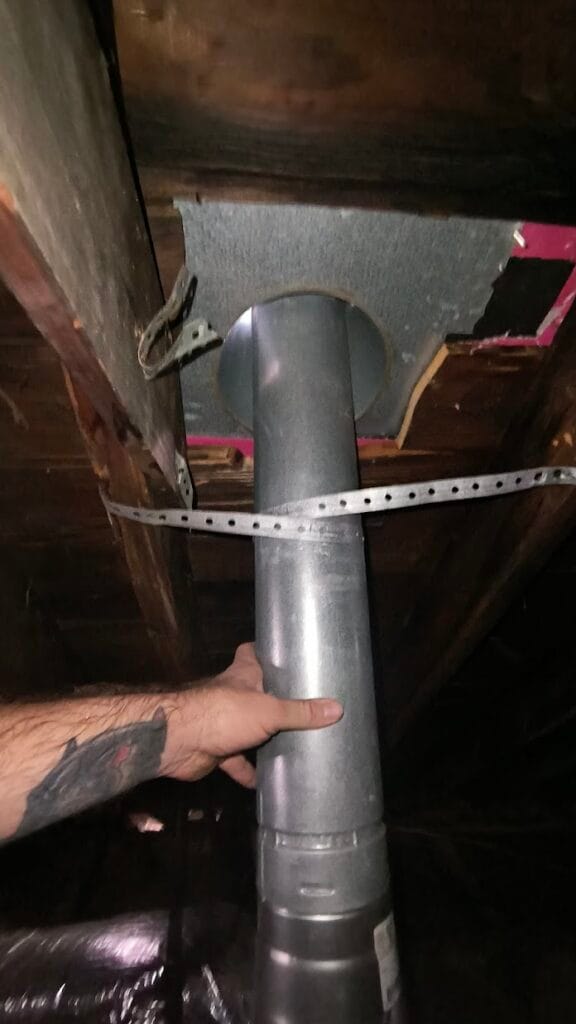
I trace the vent:
- From the appliance
- Through the attic
- Through the roof penetration
I check:
- Clearance along the full run
- Fire-stop spacers
- Support and alignment
- Evidence of overheating or discoloration
If I can’t see the full run, that limitation gets documented clearly.
What Buyers Need to Understand
Clearance issues aren’t cosmetic.
They’re:
- Code violations
- Fire risks
- Easy to overlook
- Often inexpensive to fix when caught early
Ignoring them isn’t worth the gamble.
The Inspector’s Bottom Line
B-vent doesn’t fail loudly. It fails slowly and dangerously.
Just because something has “always been that way” doesn’t mean it’s safe. Attics hide problems that live quietly for years — until one day they don’t.
That’s why I always make space around heat. Fire doesn’t care how long something has worked without incident.