
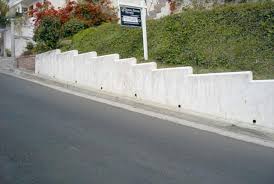
I don’t care how thick the concrete is or how much rebar you buried in it—if a retaining wall can’t drain, it’s on borrowed time.
Weepholes look insignificant. Half-inch to two-inch openings near the base of a wall, often ignored, often buried by mulch, soil, or someone’s “landscaping upgrade.” But those little holes are the only reason that wall is still standing.
Here’s what’s actually happening behind the scenes. Soil holds water. Clay-heavy backfill holds a lot of water. When rain hits, groundwater builds up behind the wall and creates hydrostatic pressure. That pressure doesn’t care about your footer depth or your contractor’s confidence. It pushes—slowly at first, then all at once.
Weepholes are the pressure relief valve. When they’re clear, water drains out instead of loading the wall. When they’re clogged, missing, or never installed, the wall becomes a dam. I’ve inspected walls that looked fine from ten feet away but were already bowing at the midpoint because the backfill stayed saturated for years.
The failure pattern is almost always the same. First, hairline horizontal cracking. Then outward lean. Then separation at the cap or steps. Eventually, the wall rotates forward and dumps soil like a landslide. I’ve seen this exact sequence on a hillside property we inspected outside Little Rock—beautiful view, expensive masonry, zero drainage strategy.
Sometimes the weepholes are technically there but useless. I’ll find them packed solid with dirt, clogged with mortar droppings, or buried below grade after someone reworked the yard. Other times, they’re spaced too far apart or terminate into soil instead of daylight. That’s not drainage—that’s decoration.
As an inspector, I’m not guessing when I flag this. I look for staining below the holes, signs of active discharge, and whether the grade allows water to escape. If I don’t see evidence that the wall has ever relieved pressure, I assume it hasn’t—and that assumption has saved more than one buyer from inheriting a five-figure repair.
Retaining walls don’t usually fail because they’re underbuilt. They fail because water was ignored. And when water wins, it doesn’t crack politely—it takes the whole wall with it.