
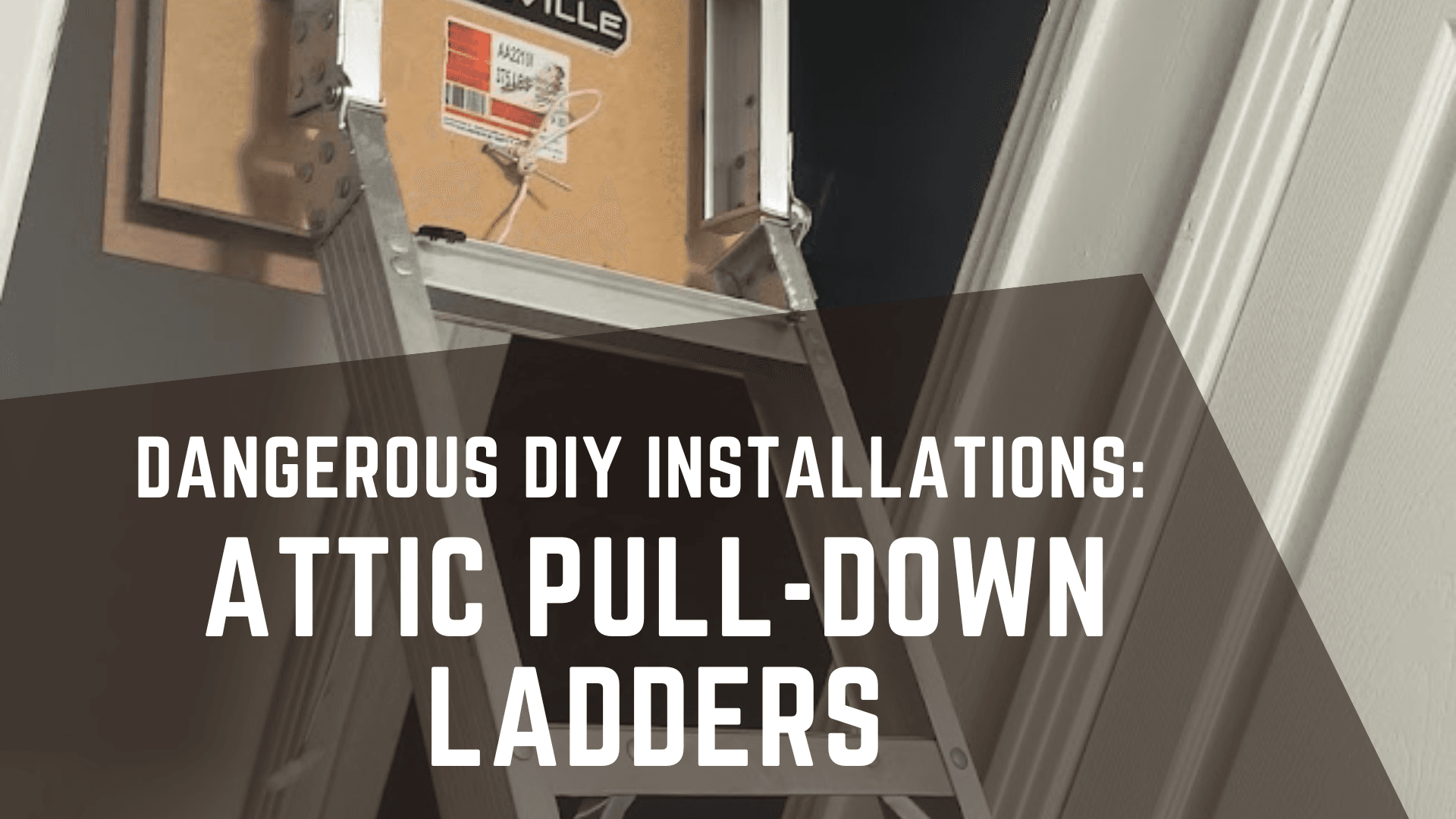
Pull-down attic ladders are one of those things that seem simple — until you actually use one that isn’t installed right.
I’ve had ladders drop too fast, twist under load, scrape the opening, or flex in ways that make your brain say, “This isn’t right.” When that happens, it usually isn’t the ladder’s fault. It’s the install.
Why Attic Ladders Fail (Even When They Look Fine)
Most pull-down ladders fail quietly. No warning. No obvious damage.
The common problems come from:
- Incorrect rough opening size
- Improper framing support
- Missing or undersized fasteners
- Trim holding weight instead of structure
- Ladder units retrofitted where they weren’t designed to go
They’ll open. They’ll close. And then one day they won’t — usually with someone on them.
A Real Inspection Where the Ladder Told the Truth
We inspected a home in the Hendersonville area where the attic ladder looked brand new. Clean. Smooth operation. Fresh trim.
Climbed it anyway.
The ladder flexed noticeably under load, and the frame shifted inside the ceiling opening. Whoever installed it had fastened it mostly to drywall and trim — not framing.
That ladder wasn’t anchored. It was hanging.
Why DIY Installs Are the Biggest Risk
Pull-down ladders are often added after the house is built.
That’s where problems creep in.
I see DIY installs where:
- Ceiling joists were cut without proper headers
- Fasteners missed framing entirely
- The ladder box wasn’t shimmed or squared
- The ladder wasn’t rated for attic height
- Load ratings were ignored
I reviewed an inspection from one of our inspectors in the Cape Girardeau area where a ladder collapsed under normal use because the framing had been cut and never reinforced.
That’s not bad luck. That’s bad structure.
The Load Problem Nobody Thinks About
People don’t just climb ladders — they carry things.
Boxes. Decorations. HVAC filters. Storage bins.
That extra load matters.
Many ladders are rated for 250–300 pounds total, including the person and whatever they’re carrying. Improper framing makes that rating meaningless.
What I Look For During an Inspection
I don’t just pull the ladder down and look at it.
I check:
- Framing around the opening
- Fastener placement and type
- Ladder alignment and square
- Flex during use
- Cracks or separation at the ceiling
- Signs of previous movement or repair
If the ladder shifts, creaks, or binds, it gets documented.
Why Cosmetic Trim Can Be Misleading
Nice trim hides a lot of sins.
I’ve seen beautifully trimmed ladder openings in homes near Elizabethtown where the ladder box wasn’t attached to a single structural member properly.
Trim makes it look finished. It doesn’t make it safe.
What Buyers Should Know
A bad attic ladder isn’t just inconvenient — it’s a fall hazard.
Fixes can range from:
- Reinforcing framing
- Reinstalling the ladder correctly
- Replacing the unit entirely
Knowing what you’re dealing with ahead of time keeps it from becoming an injury later.
The Inspector’s Bottom Line
Pull-down attic ladders shouldn’t feel exciting.
If it flexes, shifts, or makes you hesitate halfway up, something’s wrong — even if it hasn’t failed yet.
When I test attic ladders, I’m not being picky. I’m making sure gravity doesn’t get an easy win later.