
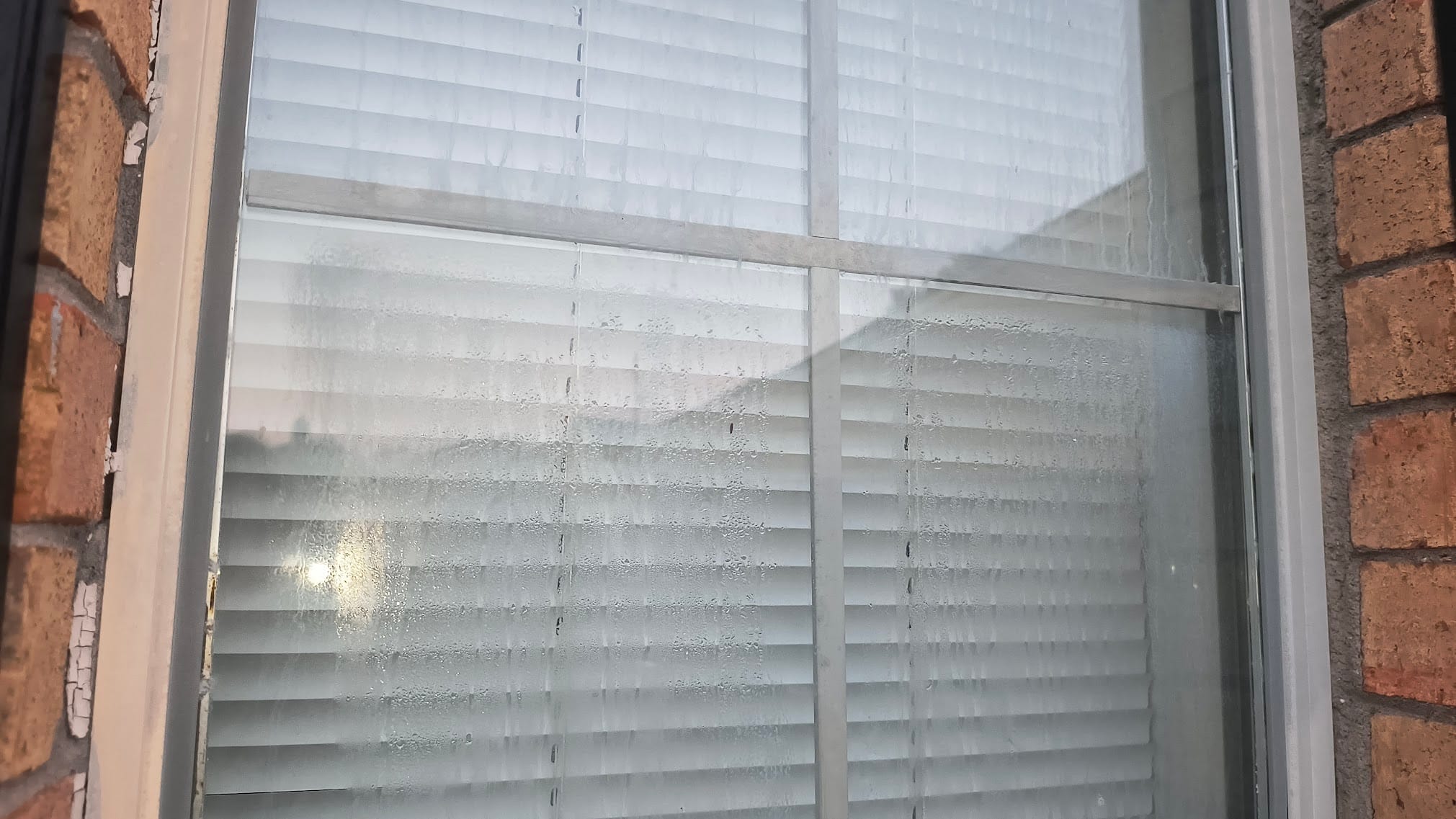
Fogged windows are one of the most misunderstood inspection findings I write up.
A lot of people shrug them off and say, “It’s just cosmetic.”
It’s not.
When a window loses its thermal seal, it’s telling you something important about performance, efficiency, and long-term durability.
What Causes Windows to Fog
Most modern windows are double- or triple-pane units with a sealed airspace between panes. That space is often filled with insulating gas.
When the seal fails:
- Moist air enters the space
- Condensation forms between panes
- Fogging becomes visible
- The insulating value drops permanently
Once that seal is gone, it doesn’t come back.
A Real Inspection Where Fogging Told the Truth
I inspected a home near Medina where several windows showed light fogging only in the morning. Seller said it was “just temperature difference.”
It wasn’t.
Those windows had failed seals. Thermal imaging showed significantly different surface temperatures compared to adjacent units that were still intact.
The fog was the symptom. Heat loss was the real issue.
Why Fogged Windows Cost More Than You Think
A failed seal affects more than appearance.
Fogged windows:
- Lose insulating value
- Increase heating and cooling costs
- Allow UV degradation inside the unit
- Trap moisture that can damage coatings
- Reduce overall comfort near the glass
I’ve inspected homes in Jackson where buyers complained of cold drafts near windows that “looked fine” except for mild fogging. The seals were already gone.
Why Wiping the Glass Doesn’t Fix Anything
One giveaway: the fog doesn’t wipe off.
That’s because it’s inside the window assembly.
I’ve seen homeowners try:
- Cleaning sprays
- Defogging kits
- Drilling holes
- Temporary repairs
None of those restore insulation. At best, they improve appearance. At worst, they make the window fail faster.
When Fogging Becomes a Bigger Problem
Fogging is especially concerning when:
- Multiple windows are affected
- Windows are relatively new
- Fogging is paired with frame deterioration
- Moisture is present at the sill
- The home has high indoor humidity
In newer homes, widespread fogging often points to manufacturing or installation issues.
Why Some Rooms Show It More
Fogging often appears first:
- On north-facing windows
- In bathrooms or kitchens
- Near HVAC registers
- In rooms with high humidity
- On windows exposed to harsh sun cycles
That doesn’t mean those rooms caused the failure — they just revealed it first.
How I Evaluate Fogged Windows
I don’t just note that fogging exists.
I consider:
- Number of affected windows
- Location and exposure
- Age of the units
- Thermal performance differences
- Signs of moisture damage around frames
That context helps buyers understand whether they’re looking at a few replacements or a future project.
What Buyers Should Understand
Fogged windows aren’t urgent safety hazards — but they are permanent failures.
They affect:
- Energy efficiency
- Comfort
- Resale perception
- Long-term maintenance costs
Ignoring them doesn’t make them better. It just delays the expense.
The Inspector’s Bottom Line
Windows don’t fog because they’re dirty or old — they fog because their seal has failed.
Once that happens, the window is no longer doing the job it was designed to do. It may still open and close, but it’s no longer insulating the way you’re paying it to.
That’s why I don’t call fogged windows “cosmetic.” They’re performance issues hiding in plain sight.