
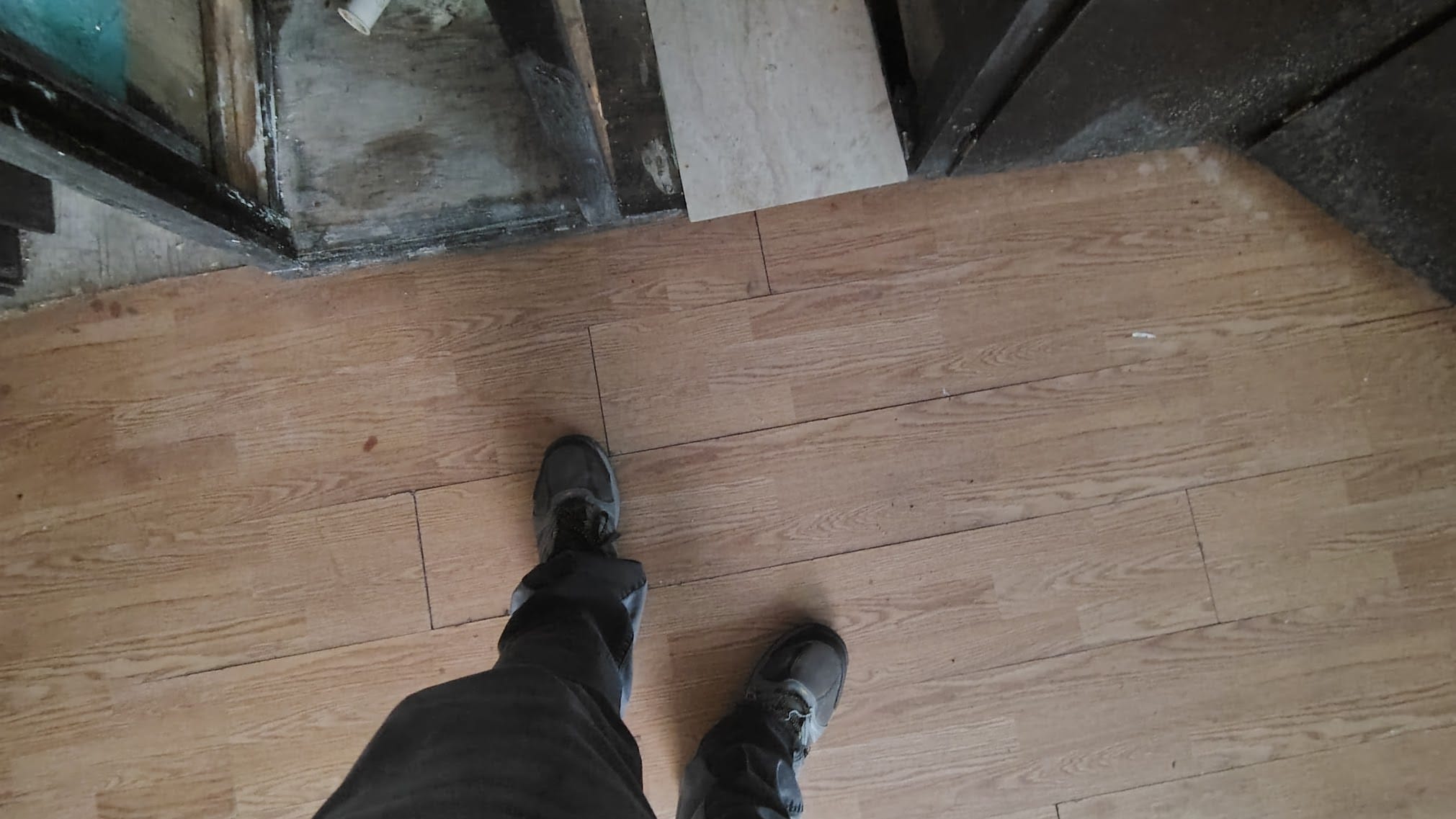
If a floor feels bouncy, I don’t ignore it — and I don’t automatically panic either.
I do a quick walk, slow my pace, and let the house tell me what’s going on. Floors communicate through movement, sound, and vibration. You just have to pay attention.
What “Floor Bounce” Really Means
Not all floor movement is bad.
Some homes have:
- Longer floor spans
- Older framing methods
- Thinner subfloor materials
- Construction styles that allow a little flex
That kind of movement feels soft, not alarming.
Problem floors feel elastic, rhythmic, or hollow — like the structure is lagging behind your steps.
A Real Inspection Where Bounce Was the First Clue
I inspected a home near Jackson, TN where the buyer mentioned the living room felt “a little springy.”
Walking it, the bounce was noticeable — not extreme, but consistent. No squeaks. No cracks upstairs. Easy to dismiss if you weren’t looking for it.
Crawlspace inspection told the real story: an undersized girder with mid-span deflection and inadequate support piers. The framing had been carrying too much load for too long.
That wasn’t cosmetic bounce. That was structural fatigue.
Why Bounce Isn’t Always About Joists
People assume springy floors mean bad joists. Sometimes they’re right — but not always.
Common causes I see include:
- Overspanned joists
- Improper joist sizing
- Sagging or undersupported girders
- Settling piers
- Rot or moisture damage
- Improper modifications during remodels
I’ve seen bounce caused by a single missing support column.
When It’s Just Annoying — Not Dangerous
I inspected a home outside Bolivar where the floors had mild bounce but solid framing. Joists were properly sized, supports were intact, and moisture levels were normal.
That movement was inherent to the design — not a failure.
Important difference.
What Makes Me Dig Deeper
Floor bounce becomes a concern when it’s paired with:
- Cracks above doorways
- Sloping floors
- Doors that won’t latch
- Visible framing deflection
- Evidence of moisture or rot
Movement plus symptoms equals investigation.
Why Finished Floors Can Hide Big Problems
Tile, LVP, and hardwood can mask structural issues — until they can’t.
I’ve seen:
- Tile cracking from deflection
- Seams separating
- Fasteners pulling loose
- Furniture rocking subtly over time
The floor finish fails after the structure does.
How I Evaluate Floor Movement
I don’t jump up and down — that’s not helpful.
I:
- Walk slowly and consistently
- Watch how the floor reacts
- Listen for hollow or delayed movement
- Compare rooms
- Correlate what I feel with what I see underneath
If access is limited, that limitation gets documented. You can’t assess structure blindly.
What Buyers Should Understand
Springy floors aren’t an automatic deal-breaker.
But they are a signal — and signals deserve explanation.
Sometimes the answer is “that’s how this house was built.”
Sometimes the answer is “this needs structural correction.”
The inspection is where you figure out which one applies.
The Inspector’s Bottom Line
Floors shouldn’t feel like trampolines — but they also aren’t meant to feel like concrete.
The key isn’t whether a floor moves. It’s why it moves.
When I feel bounce, I don’t guess. I trace it. Because structure doesn’t lie — it just responds to the loads it’s given.