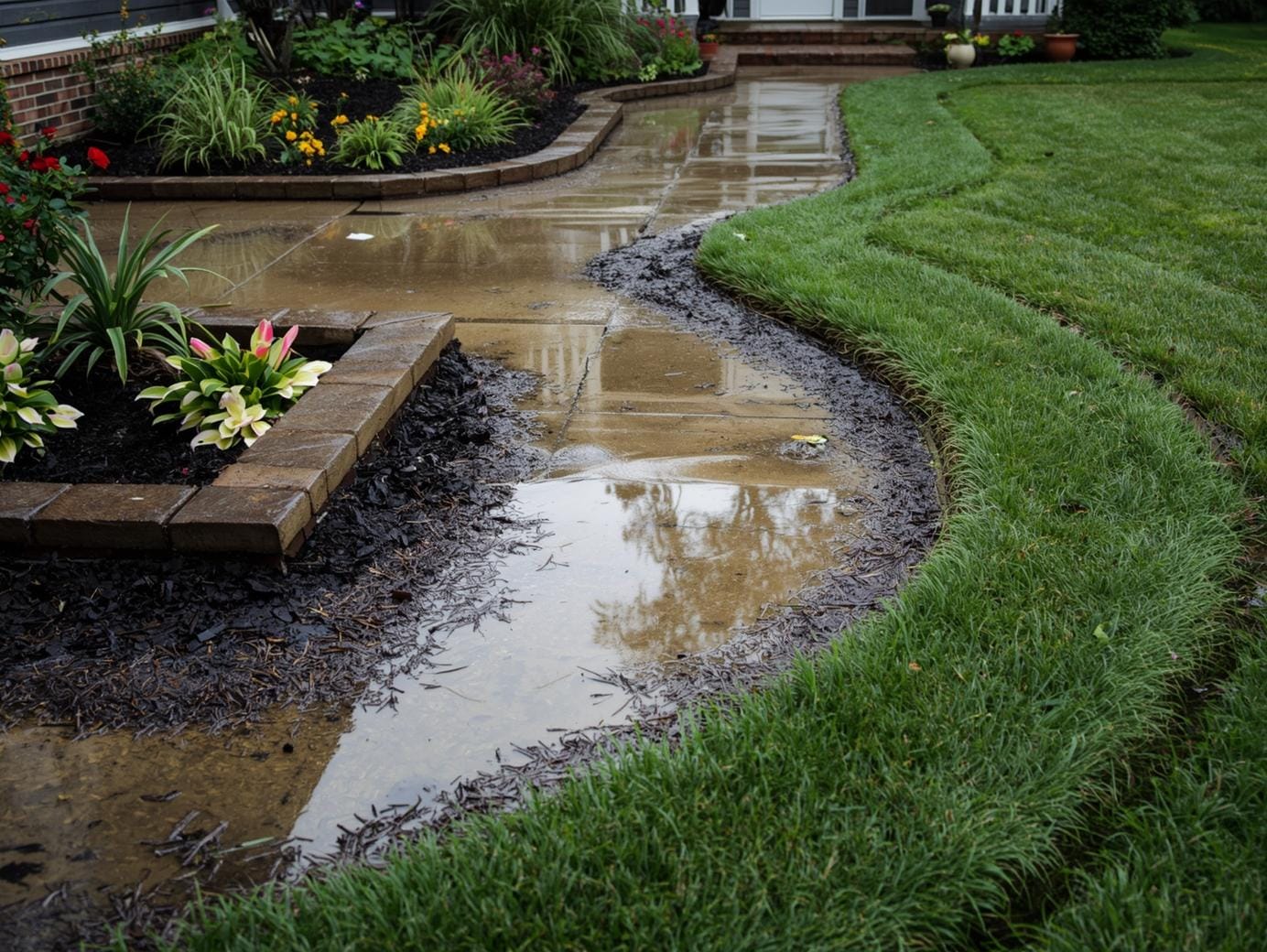
The Short Answer (Here’s the Risk)
Yes—rapid suburban development in Mt. Juliet and Lebanon has changed how water moves, and many newer homes now deal with yard ponding that didn’t exist when the first houses were built.
This isn’t bad luck. It’s a side effect of growth.
In ZIPs like 37122 and 37087, I regularly inspect homes where the house is fine—but the yard holds water long enough to create future foundation, crawlspace, and mold issues.
Why Growth Changes the Water Table (Quietly)
When large tracts are developed quickly, three things happen at once:
- Natural absorption areas disappear
- Hard surfaces (roofs, roads, driveways) multiply
- Stormwater gets redirected into detention ponds and shared drainage systems
In areas near Mt. Juliet, especially off corridors like Providence Parkway, water that once spread across fields now funnels toward fewer exit points.
The result?
Backyards that stay wet long after the rain stops.
The HOA Detention Pond Nobody Reads About
Here’s the part buyers almost always miss.
Many newer neighborhoods in Mt. Juliet and Lebanon rely on:
- HOA-managed detention ponds
- Shared underground drainage
- Easements that homeowners don’t control
Wes-ism:
If your backyard is the low point in a subdivision, you’re part of the drainage system whether you agreed to it or not.
That’s not just inconvenient — it can become a future assessment or repair issue if the system fails or needs upgrading.
What Yard Ponding Turns Into Over Time
Standing water isn’t just ugly.
Long-term effects include:
- Saturated soils against the foundation
- Increased crawlspace humidity
- Mosquito and pest issues
- Premature fence and deck rot
- Turf failure that never quite “takes”
And no — adding more sod rarely fixes it.
Lebanon Has an Extra Variable
In parts of Lebanon, you also get:
- Slightly different soil composition
- Older stormwater infrastructure tied into new developments
- Slower drainage after heavy rain events
That combination means ponding may not show up on a dry inspection day — but it shows up after the first real storm.
What We Look For During Inspections
Yard drainage isn’t a glance-and-go item.
We:
- Evaluate lot grading relative to neighboring homes
- Identify low points and flow paths
- Note proximity to detention ponds and inlets
- Look for signs of chronic saturation, not just puddles
- Flag conditions that suggest future correction, not just current inconvenience
This is about trajectory, not snapshots.
Why Builders and Sellers Downplay This
You’ll often hear:
“That’s normal after a big rain.”
Sometimes it is.
Sometimes it’s not.
If water remains 48–72 hours after rainfall, that’s no longer “normal” — it’s a drainage deficiency.
The Next Step (Before It Becomes Your Problem)
If you’re buying in a fast-growing subdivision:
- Don’t ignore yard ponding
- Don’t assume HOA systems are maintenance-free
- Don’t wait until landscaping fails to take it seriously
Our findings roll into your ISN-powered report, giving you:
- Clear documentation
- Photos of drainage conditions
- The ability to negotiate grading or drainage corrections before closing
Water problems don’t announce themselves early — they accumulate.
Bottom Line
In Mt. Juliet and Lebanon, growth didn’t just add houses.
It rewrote the drainage map.
The smart move is figuring out where your house sits on that map before you buy.