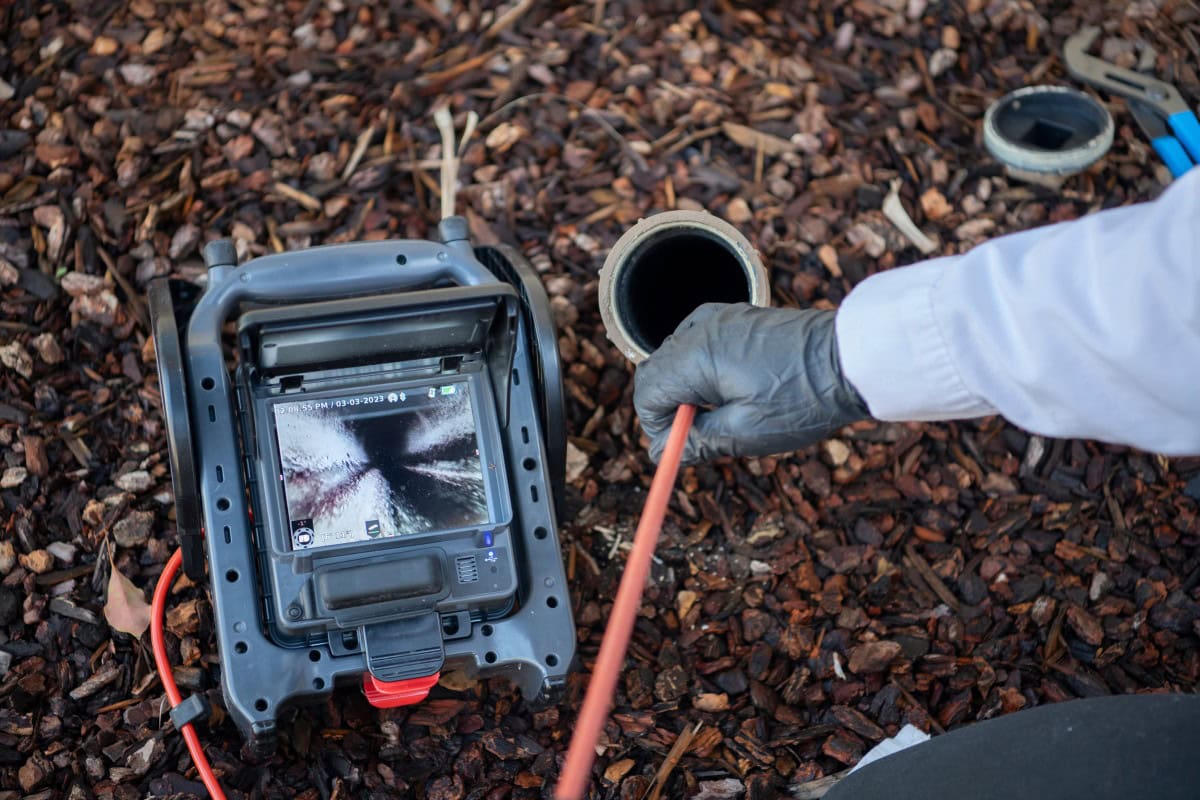
Sewer scope inspections are often overlooked during a home purchase, especially when everything inside the house appears to be draining properly. In Jackson, that assumption can be risky. The age of many homes, the prevalence of mature trees, and the type of sewer materials historically used in West Tennessee all contribute to conditions where sewer line issues can exist without obvious warning signs.
For homes in Jackson and nearby areas such as Medina, Humboldt, Milan, and Brownsville, sewer scoping is frequently recommended based on what inspectors routinely see underground.
How We Evaluate When a Sewer Scope Is Worth It
We do not recommend a sewer scope on every property for the same reason. Our call usually comes down to six practical factors: the home’s age, visible site conditions, the property’s drain history, uncertainty about pipe material, the likely difficulty of a future repair, and whether there are any signs that lower the urgency. In Jackson, older houses, mature trees, unknown sewer-line history, and slab construction tend to push the recommendation higher because buried defects are expensive to discover after closing.
In our inspections around West Tennessee, the strongest triggers are pretty consistent: an older home with original-looking plumbing, large trees near the probable sewer route, repeated slow-drain complaints from the seller, or signs that the line has been patched before. We also weigh the downside of being wrong. A missed roof issue is visible. A missed sewer problem may stay hidden until backups, excavation, or slab access are involved.
What lowers urgency? A newer home with known line material, no drain history, no significant tree pressure, and accessible repair conditions may not need the same level of concern. Even then, a scope can still be worthwhile when the buyer wants clearer risk information before the contingency period ends.
Older Sewer Materials Still in Service
Many homes in Jackson were built decades ago and still rely on original sewer laterals. These older lines were often constructed with materials that degrade over time.
Common materials found include:
- Clay tile pipe with multiple joints
- Cast iron that corrodes from the inside out
- Older fiber or transitional materials in some areas
These pipes can function for years while slowly deteriorating, making visual confirmation through scoping especially valuable.
Tree Roots Are a Frequent Factor
Jackson neighborhoods often include mature trees that predate modern sewer installations. Roots naturally seek moisture and can enter sewer lines through joints or small cracks.
Inspectors frequently find:
- Root intrusion that partially blocks flow
- Roots beginning at pipe joints rather than visible breaks
- Lines that still drain but are restricted
- Evidence of past cutting without permanent repair
Because root intrusion develops gradually, it may not cause backups until conditions worsen.
Functional Drains Don’t Guarantee a Healthy Line
One of the most common misconceptions is that if sinks and toilets drain, the sewer line must be in good condition. In reality, many sewer defects do not create immediate symptoms inside the house. A camera inspection looks at the inside condition of the buried line itself, not just whether wastewater eventually disappears from a fixture.
A proper scope can reveal root intrusion, separated joints, standing water in a belly, heavy scale buildup, offsets where one pipe section no longer aligns with the next, cracks, and signs of older patch repairs. Local providers also describe sewer cameras as a practical way to identify root intrusion and other hidden line problems without excavation, which is especially important in older systems where defects may develop slowly over time.
Why can those defects exist when fixtures still seem fine? Because household drains are a poor stress test. I have seen lines in Jackson pass a casual “everything drains” check even though the camera showed a partial root mass or a low spot already holding waste. Water can still move through a compromised line for months or years before the restriction becomes obvious. The U.S. Environmental Protection Agency has also noted that sewer systems can deteriorate from roots, cracks, debris, grease, and structural problems long before a complete failure occurs, as outlined in its sewer overflow overview.
For buyers, not every finding means immediate replacement. Minor scale, light root intrusion, or a small amount of standing water may point to monitoring, maintenance cleaning, or getting a plumber’s opinion on remaining service life. By contrast, separated sections, major offsets, recurring heavy roots, deep bellies that hold waste, or cracking with visible soil intrusion usually justify specialist follow-up before closing. Our rule of thumb is simple: if the defect changes flow, suggests structural movement, or hints that a prior repair did not hold, it deserves a plumbing contractor’s review rather than a wait-and-see approach.
Slab and Crawlspace Homes Increase Repair Complexity
Many Jackson homes are built on slabs or crawlspaces, both of which can make sewer repairs more disruptive if problems are discovered later.
A sewer scope before purchase helps buyers understand:
- Where the sewer line runs
- Whether repairs may involve excavation or slab access
- The likelihood of near-term maintenance
- Whether negotiation or planning is appropriate
Knowing this information before closing gives buyers options they won’t have after the sale.
Prior Repairs and Unknown Modifications
It’s not uncommon to find evidence that sewer lines have been worked on before, especially in older homes.
Sewer scopes may reveal:
- Mismatched pipe materials
- Poorly sealed transitions
- Temporary repairs that were never corrected
- Sections that were replaced without full documentation
These conditions are difficult to identify without a camera inspection.
When Sewer Scoping Is Strongly Recommended in Jackson
Some situations make a sewer camera inspection in Jackson, TN much easier to justify than others. The clearest example is a home purchase during the inspection contingency. If the house is older, the line material is unknown, large trees are close to the probable sewer route, or the seller mentions past drain trouble, ordering the scope before contingency deadlines expire gives the buyer time to evaluate defects before the deal becomes harder to renegotiate.
We especially recommend moving quickly in five situations: before closing on a home with limited sewer history, after recurring slow drains or backups, before buying an older property with original plumbing, after major tree-root activity near the yard or street side, and anytime prior repairs or material transitions are suspected. In Jackson, that timing matters because a buried line can look fine from inside the house while still carrying repair risk outside.
I have also found that borderline findings are easier to deal with when they surface early. During the contingency window, buyers can ask for further evaluation, request credits, negotiate repairs, or decide the risk is acceptable and budget for future work. After closing, the same information may still be useful, but the opportunity to negotiate is gone.
In practical terms, the inspection itself is usually not a long process. Local service descriptions commonly put a sewer camera inspection at about one to two hours depending on access, line length, and the condition of the pipe, and they note that the process can document obstructions, buildup, and damage while producing a report or video record. If defects are found, the next step is usually a licensed plumbing contractor who can quote cleaning, spot repair, relining, or replacement based on what the camera showed.
How Sewer Scope Findings Are Used
A sewer scope is most useful when the results are turned into a decision, not just filed away. Buyers typically receive documentation of visible conditions inside the line, which may include still images, a recorded video, a written summary, and notes identifying where a defect appears to be located. That record helps separate a vague concern from something a contractor can price.
When the scope shows a structural issue, a heavy blockage, unclear routing, or evidence that a previous repair may be failing, that is the point to bring in a plumbing contractor for further diagnosis and repair options.
In a transaction, those findings usually support one of three paths: negotiation, repair planning, or budgeting. A severe offset, recurring root intrusion, or standing water that suggests a significant belly may support a request for repairs or seller concessions. A moderate issue may become part of the buyer’s first-year maintenance budget. I have seen both outcomes in West Tennessee; the difference is usually whether the condition looks stable and maintainable or whether it points to a line that is already on borrowed time.
As for cost, a sewer scope or sewer camera inspection in Jackson, TN is usually an added service rather than part of a standard home inspection fee. A realistic expectation is often a low-hundreds-dollar range, with the total varying based on access, distance to the main line, whether the line can be entered cleanly, and whether a plumber rather than an inspector is performing the work. Local providers also frame the service as a fast diagnostic step that can avoid unnecessary digging while still documenting usable condition and recommended next steps. Buyers should confirm pricing in advance because difficult access, line cleaning needs, or a separate contractor visit can change the total.
Why Local Experience Matters
Sewer lines in Jackson and surrounding communities do not all age the same way, and local context changes how a finding should be interpreted. In our experience, West Tennessee homes with mature yards and older line materials are much more likely to show root entry at joints, scaling in cast iron, or mixed-material transitions from past repairs. Those patterns are not unusual by themselves, but they are easy to misread if you do not regularly inspect this housing stock.
For example, I often treat light scaling in an older cast-iron line differently from a separation or a deep belly. Light to moderate interior roughness may be typical aging that supports maintenance planning and a plumber consult if symptoms develop. A section that no longer aligns, repeatedly holds waste, or shows active root intrusion at multiple joints is a different conversation because it suggests the line may keep causing trouble even if it drains today.
Local conditions also matter when the finding is borderline. In some Jackson-area properties, a minor defect in a short, accessible run may be a budgeting issue more than a closing issue. In a slab home or a property with difficult excavation access, the same defect can deserve immediate specialist review because repair complexity changes the stakes. That is why we do not reduce sewer scopes to a simple pass-fail judgment; the useful question is what this specific finding means on this specific property.
Frequently Asked Questions
What can a sewer camera inspection reveal?
A sewer camera can show root intrusion, cracks, offsets, standing water, heavy buildup, separated joints, and signs of prior repairs. It can also help show whether the line is merely dirty, partially obstructed, or structurally damaged. That matters because the next step is different for each condition.
Do you need a sewer scope if drains seem normal?
Sometimes, yes. Normal fixture drainage only shows that water is moving at the moment; it does not confirm that the buried sewer line is structurally sound. We regularly see lines that still drain but already have roots, scaling, or bellies that could become a much bigger problem later.
How long does a sewer camera inspection take?
A typical inspection is often completed in about one to two hours, depending on access, line length, and the condition of the pipe. Extra time may be needed if the cleanout is hard to access or if buildup prevents a clear view. In a real-estate transaction, that is usually fast enough to fit inside the inspection period without much delay.
How much does a camera drain inspection cost?
In Jackson, it is commonly priced as an additional service in the low hundreds rather than a standard part of a home inspection. The exact amount depends on who performs it, how easy the line is to access, and whether cleaning or additional contractor follow-up is needed. Ask for the scope fee up front so you know whether video, written notes, or contractor recommendations are included.
What happens if the sewer scope finds a problem?
The first step is usually to determine whether the issue looks like maintenance, repair, or replacement. Minor buildup may call for cleaning and monitoring, while structural defects often justify a plumber’s estimate before closing. Buyers then use that information to negotiate, budget, or decide whether the risk fits the purchase.
Is a sewer scope most important for older homes?
Older homes usually have the strongest case because original materials, undocumented repairs, and tree-root pressure are more common. That said, newer homes are not automatically exempt. Unknown line history, recurring drain issues, or suspicious site conditions can still make the inspection worthwhile.