
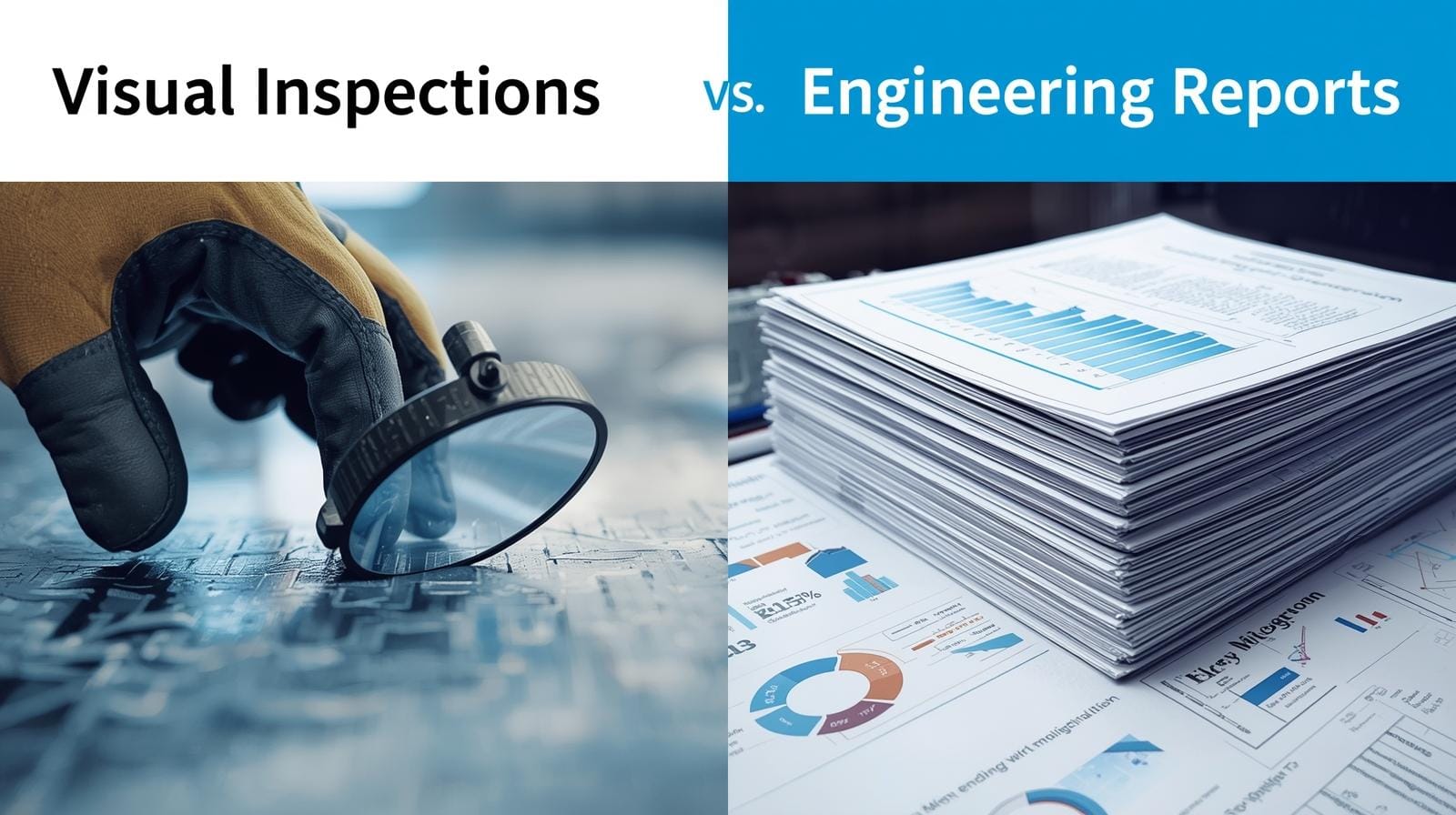
Home inspections and engineering reports are often mentioned together, especially when structural concerns arise during a real estate transaction. While both play important roles, they serve very different purposes. Understanding the distinction helps homeowners, buyers, and agents know what information each provides—and why one does not replace the other.
Across the Mid-South, confusion between inspection findings and engineering conclusions is common, particularly when visible conditions trigger lender or underwriting questions.
What a Visual Home Inspection Provides
A home inspection is a visual, non-invasive evaluation of accessible components of the property at the time of inspection. Inspectors identify observable conditions, document concerns, and explain how those conditions may affect the home’s performance.
A visual inspection focuses on:
- Readily accessible areas
- Visible signs of movement, damage, or deterioration
- Patterns that suggest abnormal conditions
- Risk indicators that may warrant further evaluation
Inspectors are trained to recognize when something appears outside normal expectations, but they do not perform calculations or provide design opinions.
What a Home Inspection Does Not Do
It is equally important to understand the limits of a home inspection. Inspectors do not:
- Perform structural analysis or calculations
- Certify structural adequacy
- Design or approve repairs
- Provide stamped reports or engineering opinions
When conditions exceed the scope of a visual inspection, further evaluation is recommended—not because failure is assumed, but because additional expertise is required.
What an Engineering Report Provides
An engineering report is prepared by a licensed professional engineer and involves analysis beyond visual observation. Engineers evaluate structural behavior using calculations, design standards, and professional judgment.
An engineering evaluation may include:
- Structural calculations
- Load path analysis
- Determination of structural adequacy
- Repair recommendations, when needed
- Formal documentation for lenders or owners
Engineering reports provide conclusions that inspectors are not licensed to offer.
How the Two Work Together
At Upchurch Inspection, structural concerns are addressed through a collaborative but clearly defined process.
- Inspectors identify and document visible conditions
- Field data, measurements, and observations are collected
- That information is provided to an independent engineering firm
- The engineer performs analysis and issues conclusions
Inspectors do not interpret or modify engineering opinions. All analysis and determinations come directly from the engineer.
Why Both Are Often Needed in Transactions
During real estate transactions in areas such as Memphis, Nashville, Little Rock, Cape Girardeau, and surrounding communities, lenders frequently require engineering documentation when visible structural indicators are present.
In these cases:
- The inspection identifies why further review is needed
- The engineering report satisfies underwriting requirements
- Each professional stays within their licensed scope
This two-step process protects all parties involved.
Why One Does Not Replace the Other
A home inspection cannot replace an engineering report, and an engineering report does not replace a full home inspection.
Inspections provide a broad overview of the home’s condition across multiple systems. Engineering reports focus narrowly on specific structural questions. Both are valuable, but they answer different questions.
Common Misunderstandings
A frequent misconception is that recommending an engineer means the inspector believes a serious problem exists. In reality, recommendations are often made to:
- Clarify uncertainty
- Document structural adequacy
- Satisfy lender requirements
- Avoid assumptions based on appearance alone
Engineering evaluations are often precautionary, not reactive.
Final Thoughts
Understanding the difference between a visual home inspection and an engineering report helps set realistic expectations and reduces confusion during the inspection process.
By clearly defining roles—inspectors identify and document conditions, engineers analyze and provide conclusions—homeowners and buyers receive accurate, professional guidance without crossing legal or professional boundaries.