Radon testing is often included during the home inspection period because it addresses a risk that cannot be identified visually. For buyers, it provides measurable information before closing. For sellers, it helps prevent last-minute surprises that can complicate negotiations.
Across the Mid-South, radon behaves differently depending on geology, soil composition, and construction methods. That regional variability is one of the main reasons radon testing remains relevant during real estate transactions—even in areas where average radon levels are considered low.
Why Radon Testing Matters During the Inspection Period
The inspection window is the only time buyers typically have contractual flexibility to evaluate environmental conditions like radon. Once a transaction closes, addressing radon becomes solely the homeowner’s responsibility.
Testing during this phase allows buyers to:
- Identify elevated radon levels before final commitment
- Factor mitigation into negotiations when necessary
- Avoid relying on assumptions based on location alone
Because radon is odorless and invisible, testing is the only way to know whether it is present at elevated levels.
Radon Levels Vary Widely Across the Mid-South
One common misconception is that radon is only a concern in certain “high-radon states.” In reality, radon potential can vary significantly from home to home, even within the same city.
Based on testing patterns and regional geology:
- Higher average radon levels are more commonly encountered in parts of Middle Tennessee, including the Nashville area, and portions of southeast Missouri, including areas around Cape Girardeau, where underlying rock formations contribute to increased radon potential.
- Lower average radon levels are more typical in parts of West Tennessee, North Mississippi, and areas around Memphis and Jackson (TN), though elevated results are still occasionally found in individual homes.
Importantly, “lower average” does not mean “no risk.” Homes in traditionally lower-radon areas can and do test above recommended action levels.
Why Nearby Homes Can Test Differently
Radon results are influenced by more than just geography. Two homes on the same street may produce very different readings due to differences in:
- Foundation type and condition
- Crawlspace versus slab construction
- Air sealing and insulation
- HVAC operation and pressure differences
This is why regional averages are only a general guide and never a substitute for testing.
How Radon Testing Is Performed During Transactions
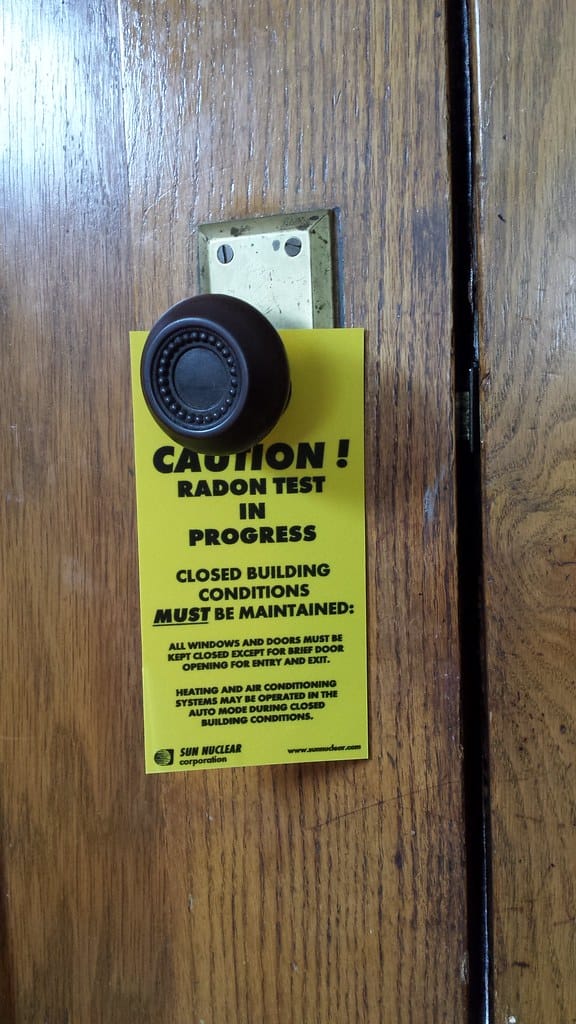
During real estate transactions, radon testing is typically conducted using a short-term test, lasting between two and seven days. The test is placed in the lowest livable level of the home and left undisturbed under controlled conditions.
Short-term testing is preferred during transactions because it provides results within the inspection contingency timeframe, allowing buyers to act on the information if needed.
How Elevated Results Are Usually Addressed
When a test identifies radon levels at or above recommended action thresholds, the situation is usually manageable. Common outcomes include:
- Seller-installed radon mitigation systems prior to closing
- Seller credits toward mitigation costs
- Post-closing mitigation agreements
Radon mitigation systems are well-established, effective, and commonly installed across the Mid-South, including in areas where radon is more frequently encountered.
The Inspector’s Role in Radon Testing
Inspectors do not determine whether a home should be purchased or install mitigation systems. Their role is to:
- Ensure testing is conducted properly
- Document conditions and results
- Explain findings in practical terms
- Recommend mitigation or further evaluation when appropriate
This independent role helps keep radon discussions factual and objective during negotiations.
Why Testing Still Makes Sense in Lower-Radon Areas
Even in regions with historically lower average radon levels—such as parts of West Tennessee, Mississippi, and Arkansas—individual homes may still test high due to construction or soil conditions.
Testing removes uncertainty and replaces assumptions with data, which is especially valuable when making a major financial decision.
Final Thoughts
Radon testing during a real estate transaction provides clarity at a critical moment. While some Mid-South areas, such as Middle Tennessee and southeast Missouri, tend to see higher average results, no location is entirely predictable.
Testing ensures buyers and sellers are working with facts, not generalizations, and allows radon concerns to be addressed early, clearly, and professionally—before closing, when solutions are easiest to implement.