Radon testing is the only reliable way to determine whether elevated radon levels are present in a home. Once testing is recommended, homeowners and buyers are often faced with an important question: Should the test be short-term or long-term?
Both methods serve a purpose, and understanding the difference helps ensure the right approach is used for the situation. Based on radon testing performed across the broader Mid-South—Tennessee, Arkansas, Missouri, Kentucky, and Mississippi—the choice often depends on timing, occupancy, and transaction needs.
What Is Short-Term Radon Testing?
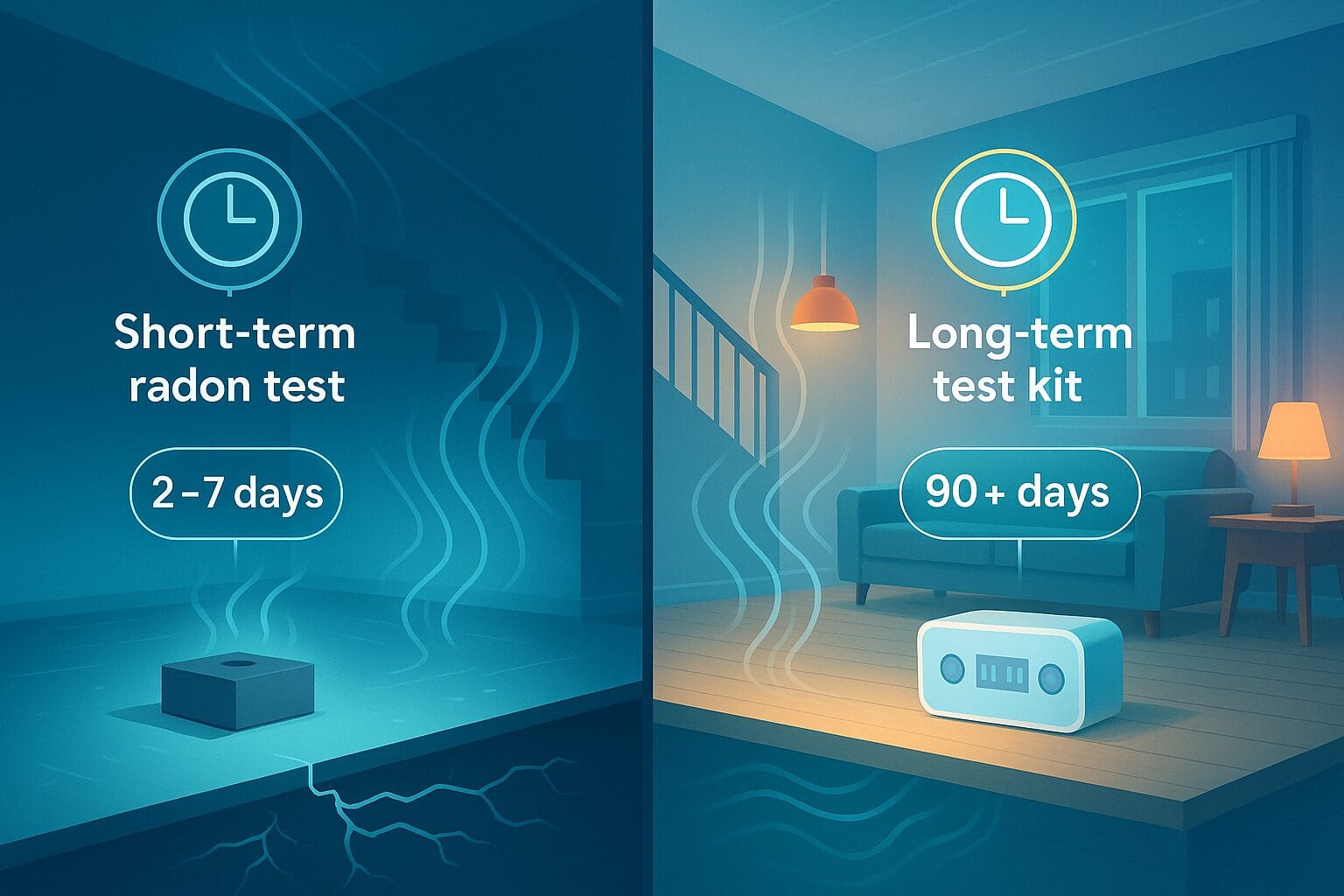
Short-term radon testing typically measures radon levels over a period of 2 to 7 days. This method is commonly used during real estate transactions because it provides timely results within the inspection contingency period.
Short-term tests are conducted under controlled conditions, often referred to as closed-house conditions, to help ensure consistency during sampling.
This type of testing answers the question:
“Is radon likely to be elevated in this home right now?”
When Short-Term Testing Is Most Appropriate
Short-term testing is most often recommended when:
- A home is under contract
- A buyer needs timely results
- Baseline data is required for negotiations
- Access to the property is limited
During inspections in areas such as Memphis, Jackson (TN), Nashville, Little Rock, Cape Girardeau, and Elizabethtown, short-term testing is the standard choice for buyers who need actionable information quickly.
What Is Long-Term Radon Testing?
Long-term radon testing measures radon levels over a period of 90 days to one year. Because radon levels can fluctuate due to weather, seasonal changes, and living conditions, long-term testing provides a more comprehensive average.
This method answers a broader question:
“What is the home’s typical radon exposure over time?”
Long-term testing is often performed by homeowners after moving in, rather than during a transaction.
When Long-Term Testing Makes Sense
Long-term testing may be recommended when:
- A homeowner wants a more accurate annual average
- Short-term results are borderline
- Additional confirmation is desired
- The home will be occupied long-term
Long-term testing is particularly useful in regions where seasonal humidity and temperature shifts influence indoor air dynamics.
Why Radon Levels Can Fluctuate
Radon concentrations can change due to:
- Weather patterns and barometric pressure
- Soil moisture and rainfall
- Heating and cooling system operation
- Natural ventilation and window use
Homes throughout the Mid-South experience seasonal variations that can impact radon levels, which is why longer testing periods may offer added clarity in non-transactional settings.
How Inspectors Use Testing Results
Inspectors do not determine health outcomes or design mitigation systems. Their role is to:
- Conduct or coordinate proper testing
- Ensure test conditions are documented
- Explain results in context
- Recommend next steps when elevated levels are found
When necessary, homeowners may be referred to qualified radon mitigation professionals for further evaluation or system installation.
Choosing the Right Testing Method
In most real estate transactions, short-term testing is the practical choice due to time constraints. For homeowners seeking long-term peace of mind, long-term testing provides a more representative picture of ongoing exposure.
The right option depends on the purpose of the test, not just the test itself.
Final Thoughts
Short-term and long-term radon testing serve different but complementary roles. Understanding how each method works allows homeowners and buyers to make informed decisions based on their specific needs.
For properties across Tennessee, Arkansas, Missouri, Kentucky, and Mississippi, selecting the appropriate testing method ensures radon concerns are addressed with clarity, accuracy, and confidence.