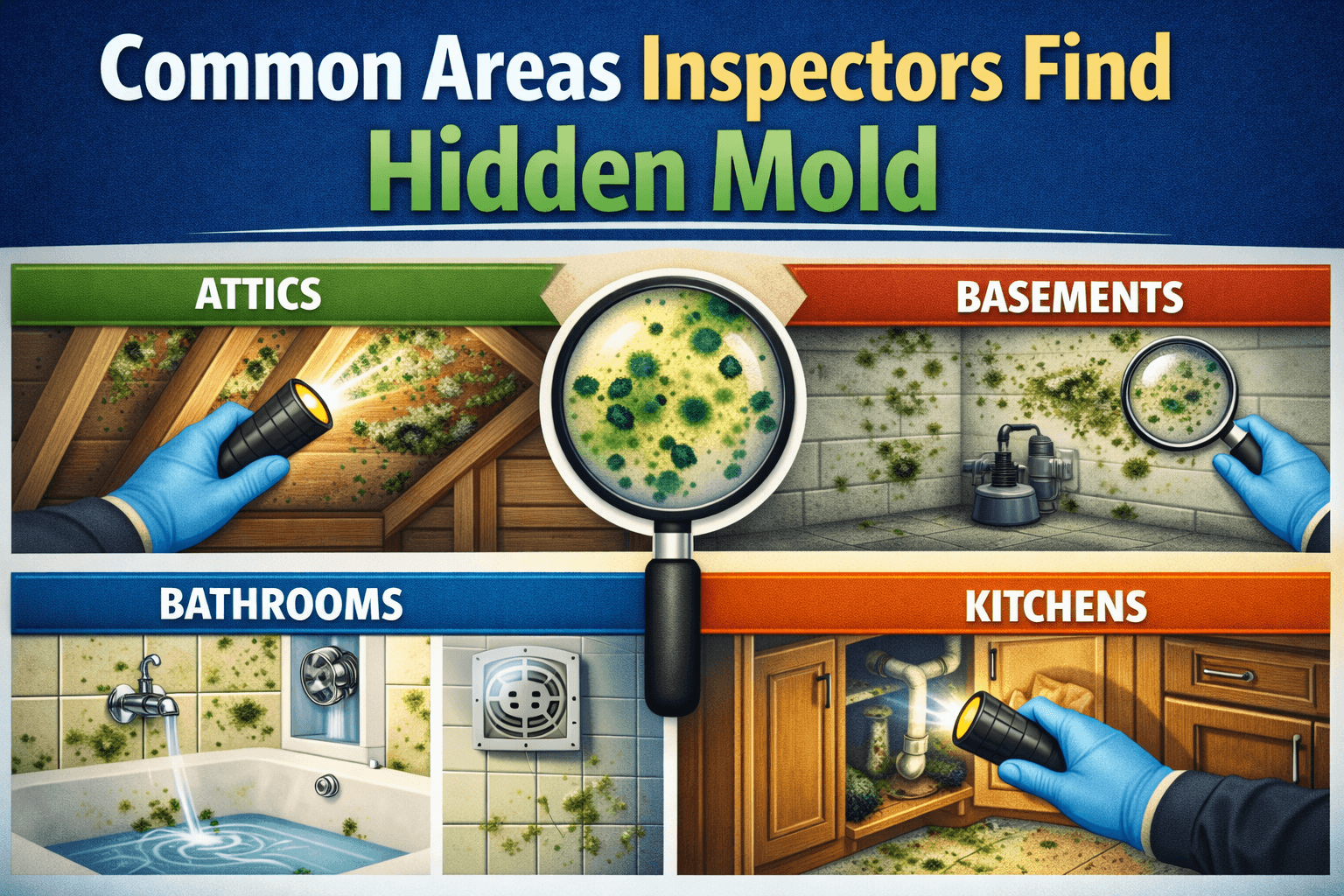
Mold issues are often associated with obvious problem areas, such as visibly damaged drywall or musty basements. In practice, however, some of the most significant mold concerns are found in hidden or overlooked areas of a home—places where moisture can persist unnoticed over time.
Based on inspections performed throughout West Tennessee, North Mississippi, Central Arkansas, Southeast Missouri, and surrounding Mid-South regions, certain patterns appear consistently, regardless of a home’s age or style.
Behind Walls and Ceilings
One of the most common locations for hidden mold is inside wall and ceiling cavities, typically caused by slow or intermittent leaks.
Common contributors include:
- Plumbing leaks behind bathrooms or kitchens
- Roof leaks that migrate along framing members
- Condensation forming on cold water lines
- Improperly sealed penetrations
Because these areas are concealed, mold growth may develop long before staining or odors become noticeable.
Crawlspaces and Basements
In the Mid-South, crawlspaces are a frequent source of moisture-related issues due to high humidity, seasonal groundwater, and soil moisture.
Inspectors often find hidden mold:
- On floor joists and subflooring
- On sill plates near foundation walls
- On insulation facing materials
- Around unsealed or damaged vapor barriers
Basements, particularly older homes in areas like Memphis, Jackson, and Cape Girardeau, can experience similar conditions when drainage or waterproofing is inadequate.
Attics and Roof Structures
Attics are another high-risk area, especially in homes with ventilation deficiencies.
Hidden mold commonly develops:
- On roof sheathing
- On attic framing members
- Around bathroom exhaust fans venting into the attic
- Near roof penetrations or flashing failures
Warm, moist air from the living space rising into a cooler attic environment creates ideal conditions for condensation and mold growth.
Bathrooms and Laundry Areas
Bathrooms and laundry rooms produce large amounts of moisture, and mold growth often develops out of direct sight.
Inspectors frequently find issues:
- Behind shower surrounds and tubs
- Under bathroom vanities
- Around toilet bases with past leaks
- Behind washing machines and utility sinks
Homes without adequate exhaust ventilation are particularly susceptible.
Under Flooring and Carpeting
Moisture intrusion beneath flooring materials can go unnoticed for extended periods.
Hidden mold may be present:
- Beneath carpeting in slab-on-grade homes
- Under laminate or vinyl flooring
- Around exterior doors and windows
- Near past plumbing leaks that were cosmetically repaired
These conditions are commonly identified during real estate inspections across Arkansas, Tennessee, and Missouri, especially in older housing stock.
Why These Areas Are Often Missed
Hidden mold is frequently overlooked because:
- The affected areas are not readily visible
- Previous repairs addressed symptoms but not moisture sources
- Occupants become accustomed to mild odors
- Cosmetic finishes conceal underlying damage
This is why visual inspections focus heavily on moisture indicators, not just visible mold.
How Inspectors Identify Hidden Mold Risks
Professional inspectors do not remove finishes or perform destructive testing. Instead, they rely on:
- Visual indicators such as staining or material deterioration
- Moisture measurements where accessible
- Evaluation of ventilation, drainage, and building design
- Thermal imaging to identify abnormal moisture patterns when appropriate
When conditions warrant, further evaluation or mold testing may be recommended.
Final Thoughts
Hidden mold is most often a byproduct of unresolved moisture issues in areas homeowners rarely see. Identifying these risk areas early—especially during a home purchase—can help prevent more extensive damage and costly remediation later.
Experience inspecting homes throughout the Mid-South allows inspectors to recognize regional building practices and moisture patterns that contribute to hidden mold concerns, providing clients with informed, practical guidance based on real-world conditions.