
Items Hitting Transition Points Together
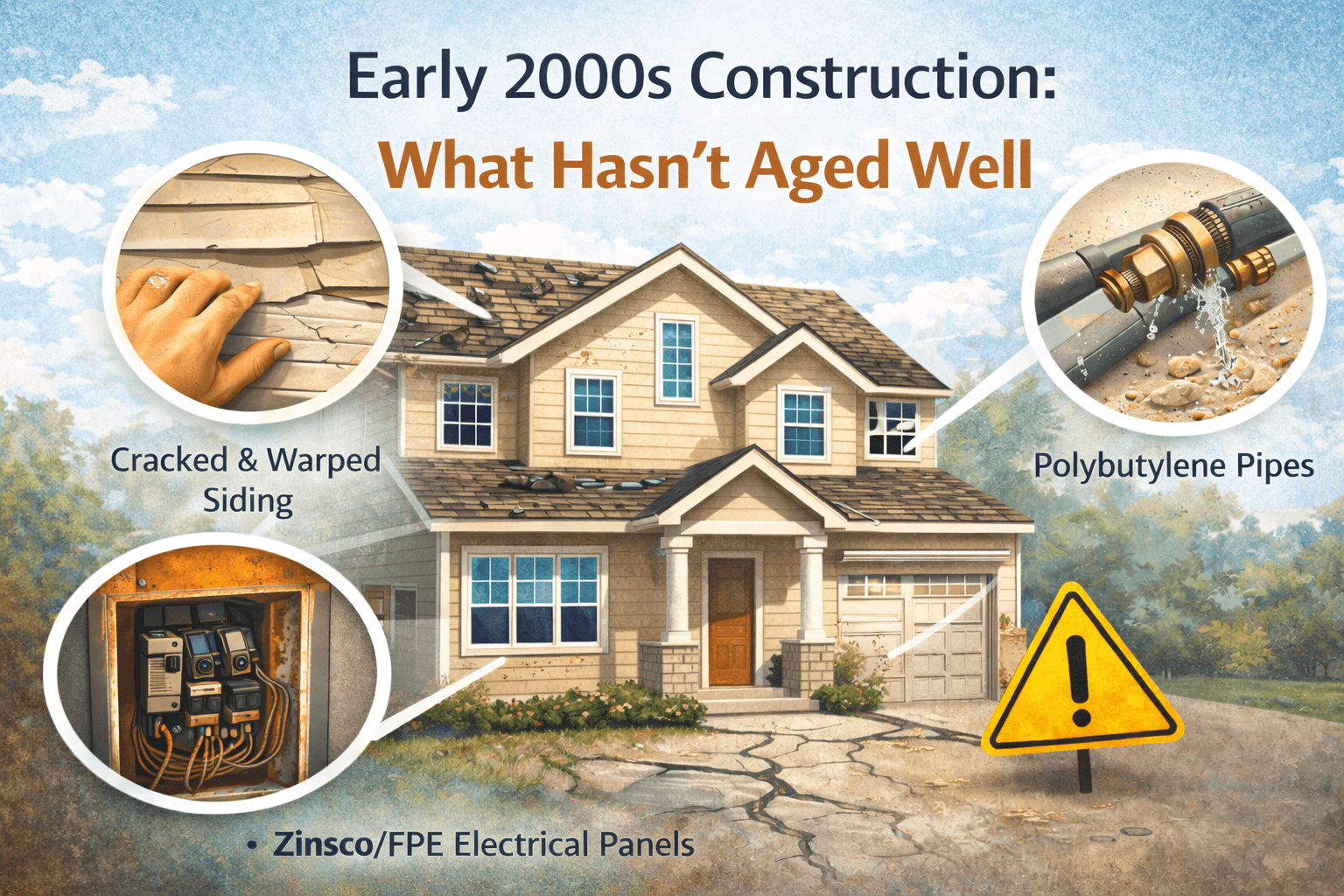
One of the defining features of early 2000s homes today is timing.
Many major systems—roofing, HVAC, water heaters, appliances—are now reaching the end of their expected service life around the same time. Individually, none of this is surprising. Collectively, it can be overwhelming.
Buyers often budget for one replacement and are caught off guard when several systems need attention within a few years of closing.
This isn’t poor construction. It’s synchronized aging.
Repairs That Follow the Path of Least Resistance
When repairs start happening in these homes, we often see a pattern: fixes that address symptoms instead of causes.
A moisture issue gets treated with new drywall. A ventilation problem gets covered with insulation. A drainage concern gets patched instead of redesigned.
During inspection, these homes often show evidence of repeated attention in the same areas. That repetition tells us the underlying issue hasn’t been fully resolved.
Why These Homes Confuse Buyers
Early 2000s homes live in a gray zone.
They’re not old enough for buyers to expect significant issues. They’re not new enough to be under builder warranty. They often look better than they perform.
That disconnect leads to frustration when problems arise shortly after move-in, even when the inspection flagged early warning signs.
How We Evaluate Early 2000s Homes at Upchurch Inspection
When we inspect homes from this period, we pay less attention to how polished they look and more attention to how they behave.
We focus on:
- Moisture patterns and airflow
- Drainage and grading performance
- System age alignment
- Repeated repair evidence
We spend time explaining how these homes are transitioning from “newer” to “established,” and what that means for ownership over the next decade.
Early 2000s homes aren’t risky by default. Many are excellent properties.
But they’re at a point where the original assumptions about performance are being tested. A good inspection doesn’t just look at how these homes were built—it looks at how they’re aging, and whether that aging makes sense for the way people actually live in them now.