Investing in or managing a commercial property requires more than just a cursory glance. A thorough, systematic evaluation is crucial to uncover hidden liabilities, forecast capital expenditures, and ensure the building is safe, compliant, and operationally sound. This guide provides a comprehensive commercial building inspection checklist, breaking down the 10 critical systems and areas every stakeholder—from buyers and brokers to owners and facility managers—must scrutinize. We’ll move beyond generic advice, offering actionable steps, common defects to watch for, and documentation priorities for each point on the list.
This checklist is structured to empower you during your due diligence process, detailing everything from structural integrity and HVAC performance to fire safety compliance and environmental hazards. By following this detailed framework, you can identify potential red flags early, negotiate more effectively, and plan for future maintenance and capital improvements with greater accuracy. A systematic inspection also helps in understanding the operational realities of a property, ensuring it aligns with its intended use and financial projections.
Using this structured approach, you can transform a standard walkthrough into an insightful due diligence process, protecting your investment and making informed decisions with confidence. This checklist serves as your roadmap for a detailed preliminary assessment. However, for a conclusive evaluation that often involves specialized equipment, the expertise of a certified commercial property inspector is indispensable. For a more comprehensive and efficient approach to due diligence, consider integrating modern drone inspection techniques, especially for large or hard-to-access areas like roofs and building envelopes.
1. Structural Integrity and Foundation: The Building’s Backbone
The structural system is the absolute cornerstone of any commercial property, providing the essential support for every other component. A comprehensive structural assessment, a key part of any commercial building inspection checklist, goes far beyond a simple visual scan. It involves evaluating the foundation, load-bearing walls, columns, beams, and floor and roof structures to ensure they can safely support the building’s current and intended loads.
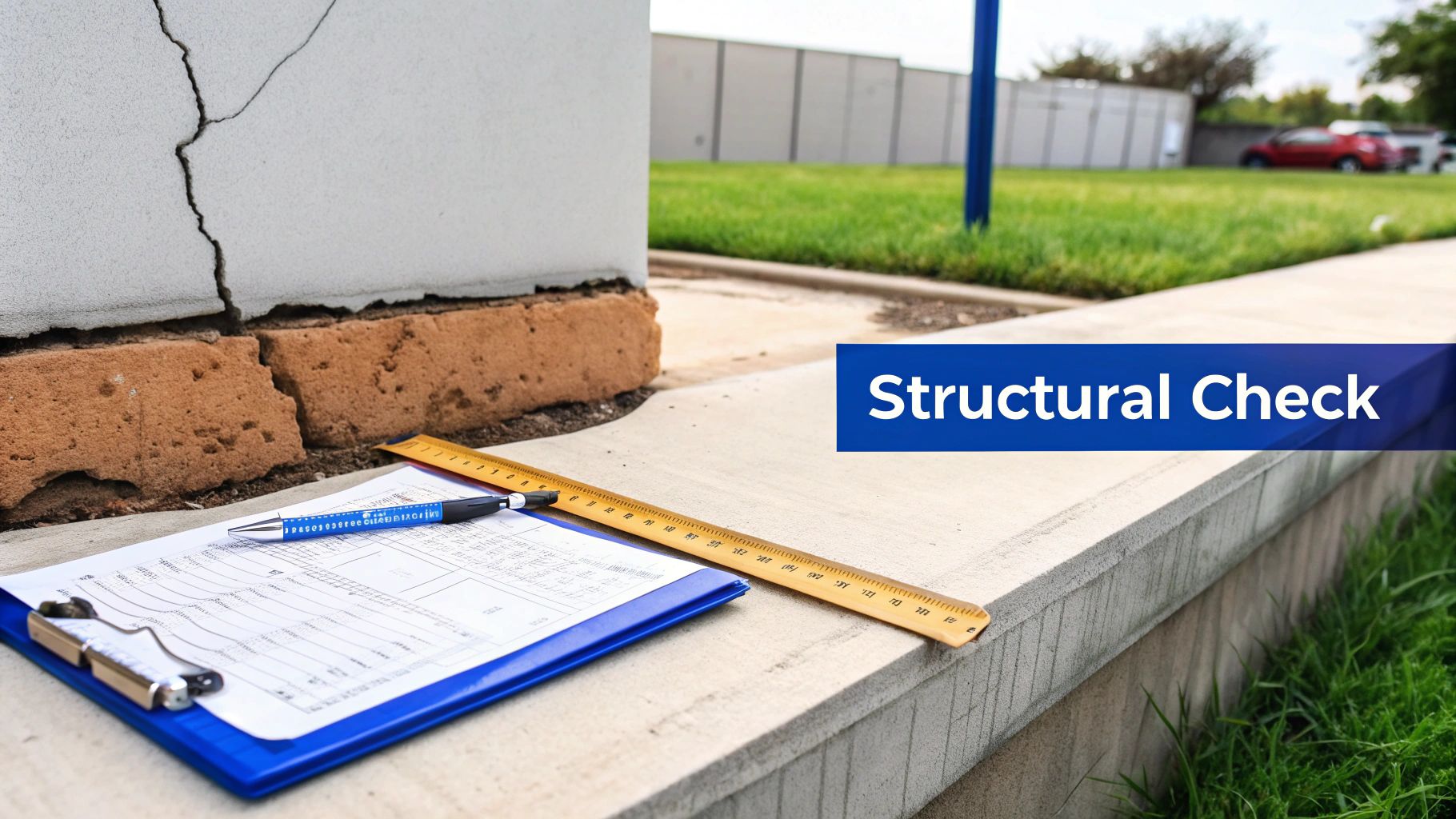
Neglecting this area can lead to catastrophic failures, exorbitant repair costs, and significant safety liabilities. A minor crack could be harmless cosmetic settling, or it could be a symptom of serious underlying issues like soil instability, hydrostatic pressure, or differential settlement. Understanding the difference is critical for any property stakeholder.
Key Inspection Points and Common Defects
When evaluating the structure, focus on these critical areas:
- Foundation: Look for significant cracks (especially horizontal or stairstep patterns in masonry), bowing or bulging walls, and signs of water intrusion in basements or crawlspaces.
- Load-Bearing Elements: Inspect visible columns and beams for deflection (sagging), corrosion on steel members, or insect damage in wood structures.
- Floors and Walls: Check for uneven or sloping floors, doors that stick or don’t latch properly, and cracks appearing over doorways and windows. These are often telltale signs of movement.
Actionable Tips for Stakeholders
To properly assess structural integrity, follow these steps:
- Document Everything: Use a ruler and high-resolution camera to document every crack or defect. Note its location, length, width, and direction. This creates a baseline for future monitoring.
- Consult Original Plans: If available, compare your findings with the building’s original architectural and structural plans. This can help identify unpermitted modifications that may have compromised the structure.
- Prioritize Professional Evaluation: While a visual check is a good start, any significant concerns warrant a specialist. Issues like wide cracks, visible sagging, or major water damage are red flags. In these scenarios, the next step is to hire a licensed structural engineer for a detailed analysis and remediation plan.
2. Roof and Drainage Systems: The Building’s First Line of Defense
The roof and its associated drainage systems serve as the primary shield against the elements, protecting the entire building asset from water intrusion and damage. A thorough roof evaluation, a mandatory component of any commercial building inspection checklist, involves more than just looking for leaks. It’s a comprehensive assessment of roofing materials, membrane condition, flashing, penetrations, and the functionality of gutters, downspouts, and drains.
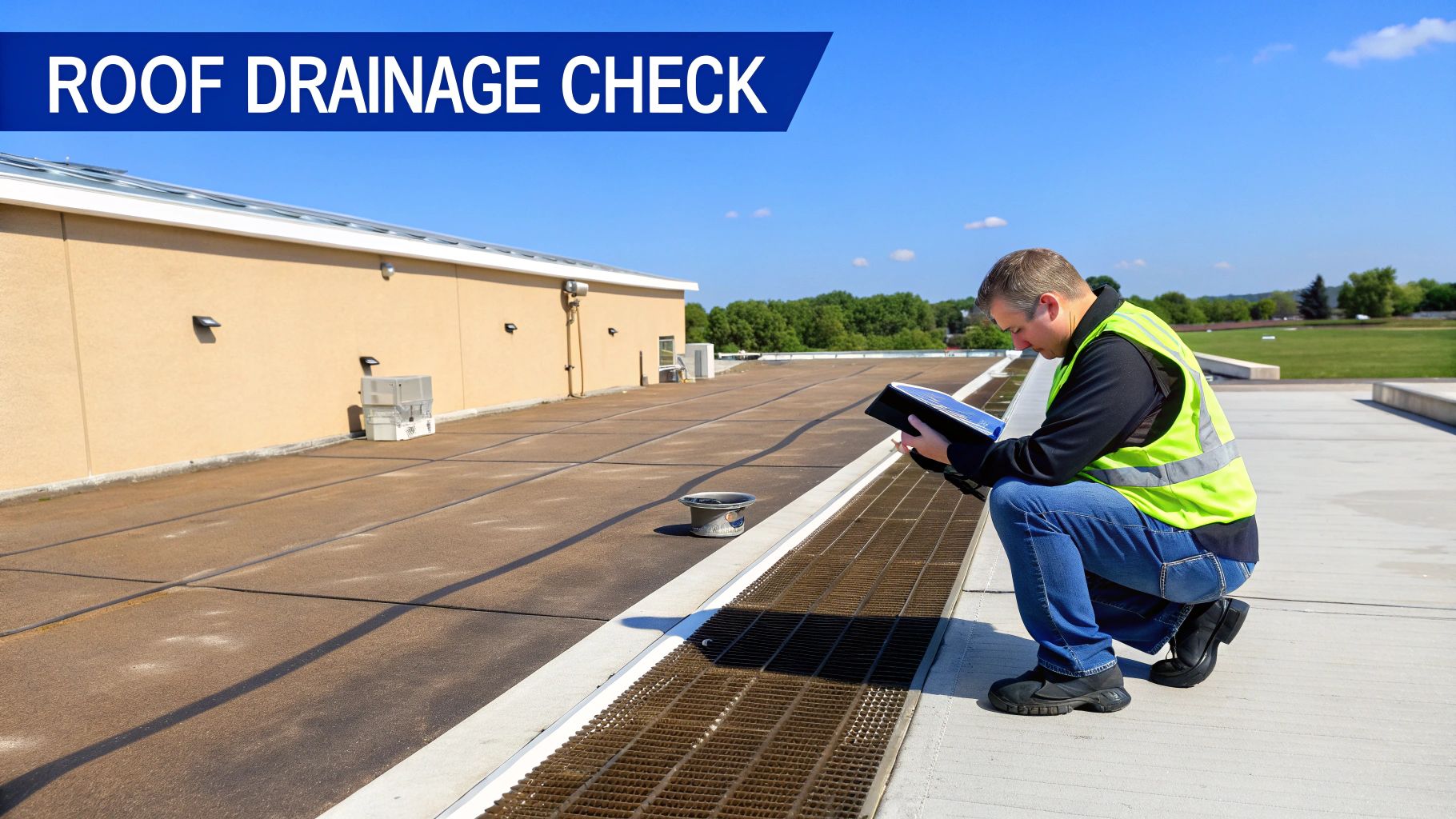
Failing to properly inspect and maintain the roof can lead to catastrophic consequences, including structural rot, interior mold growth, damaged inventory, and business interruption. A small area of ponding water might seem insignificant, but it could indicate a clogged drain or improper slope, leading to premature membrane failure and costly repairs. Identifying these issues early is key to asset preservation and risk management.
Key Inspection Points and Common Defects
When evaluating the roof and drainage systems, focus on these critical areas:
- Roof Surface: Look for blisters, cracks, or alligatoring in built-up roofs; open seams in single-ply membranes; and damaged or missing shingles or tiles. Note any areas of ponding water that persist more than 48 hours after rainfall.
- Flashings and Penetrations: Inspect the seals around HVAC units, vents, skylights, and parapet walls. Damaged or deteriorated flashing is one of the most common sources of leaks.
- Drainage System: Check gutters and downspouts for blockages, corrosion, or improper slope. Ensure roof drains are clear of debris and that scuppers are functioning correctly.
Actionable Tips for Stakeholders
To properly assess the roof’s condition, follow these steps:
- Document and Photograph: Take clear photos of the overall roof condition, as well as close-ups of any defects, penetrations, and drainage components. Note the type and approximate age of the roofing material.
- Check Maintenance Records: Review any available roofing warranties, repair invoices, and maintenance logs. This history provides valuable context on the roof’s performance and remaining service life.
- Prioritize Professional Evaluation: Due to the high risks and specialized knowledge required, a professional assessment is crucial. An inspector can identify subtle issues a layperson might miss. For a detailed analysis of your property’s roofing system, consider exploring commercial roof inspection services to ensure complete protection.
3. HVAC Systems and Mechanical Equipment
The heating, ventilation, and air conditioning (HVAC) system is the heart of a commercial building’s operational environment, directly impacting occupant comfort, air quality, and energy consumption. A thorough HVAC evaluation within a commercial building inspection checklist examines not just functionality but also efficiency, maintenance history, and the remaining useful life of major components like boilers, chillers, and air handling units.
These systems represent a significant portion of a property’s capital and operating expenses. An aging or poorly maintained unit can lead to frequent breakdowns, high utility bills, and unhappy tenants. Identifying potential failures before they occur is essential for budgeting and ensuring business continuity.
Key Inspection Points and Common Defects
When evaluating HVAC and mechanical systems, an inspector will focus on these critical areas:
- Equipment Condition: Check for visible signs of corrosion, refrigerant or water leaks, unusual noises during operation, and clogged filters or coils.
- System Performance: Verify that the system heats and cools effectively across all zones. Test thermostats and controls to ensure they respond accurately.
- Maintenance History: Look for service logs on or near the equipment. A lack of documented preventive maintenance is a major red flag, suggesting potential premature failure.
Actionable Tips for Stakeholders
To get a clear picture of the HVAC system’s health, stakeholders should:
- Request All Records: Ask the current owner for complete maintenance and service records, warranty information, and any original commissioning documents. This provides a clear history of the system’s upkeep.
- Schedule Smart: If possible, schedule the inspection during a season of peak demand (e.g., summer for AC, winter for heating) to test the system under a realistic load.
- Prioritize Professional Evaluation: HVAC systems are complex and often involve high-voltage electricity and pressurized refrigerants. If the initial visual inspection reveals performance issues or significant wear, it is crucial to hire a qualified commercial HVAC technician for a deeper, more technical assessment.
4. Electrical Systems and Safety: Powering Your Operations
The electrical system is the lifeblood of any modern commercial building, powering everything from lighting and HVAC to critical business equipment. A thorough electrical review, a mandatory component of a commercial building inspection checklist, assesses the entire infrastructure for safety, capacity, and compliance with National Electrical Code (NEC) standards. This evaluation covers service panels, wiring, conduits, outlets, lighting, and emergency power systems.

Ignoring electrical deficiencies is a significant gamble, posing severe fire hazards, equipment damage risks, and potential business interruptions. Issues like outdated aluminum wiring, overloaded circuits, or improper grounding are not just code violations; they are active threats to occupant safety and asset integrity. Identifying these problems early is crucial for any property owner, manager, or prospective buyer.
Key Inspection Points and Common Defects
When evaluating electrical systems, inspectors focus on these critical areas:
- Service Panels and Breakers: Look for signs of overheating like discoloration or melting, unlabeled or incorrectly labeled circuits, double-tapped breakers, and outdated fuse boxes.
- Wiring and Conduits: Inspect for exposed or damaged wiring, improper use of extension cords as permanent wiring, and signs of rodent damage to insulation. Outdated systems like knob-and-tube or old aluminum wiring are major red flags.
- Outlets and Lighting: Check for missing GFCI (Ground Fault Circuit Interrupter) protection in required areas like kitchens and bathrooms, test outlets for proper polarity and grounding, and ensure emergency exit lighting is functional.
Actionable Tips for Stakeholders
To properly assess the electrical system’s health, follow these steps:
- Document the Panel: Take high-resolution photographs of the electrical panel’s interior, capturing the breakers and wiring configuration. Verify that the panel legend is accurate and legible; a poorly labeled panel is a safety and maintenance nightmare.
- Test Safety Systems: Routinely test all GFCI outlets using their built-in test buttons. If the property has an emergency generator or backup power system, ensure it is tested under load according to a regular maintenance schedule.
- Prioritize Professional Evaluation: Electrical systems are complex and dangerous for the untrained. Any signs of trouble like flickering lights, frequently tripping breakers, or buzzing sounds from panels demand immediate attention. A licensed commercial electrician should be hired to perform a detailed load calculation and thermal imaging scan to uncover hidden dangers.
5. Plumbing and Water Systems: The Lifelines of Your Facility
The plumbing and water systems are the vital arteries and veins of a commercial building, delivering clean water, removing waste, and supporting critical operations from restrooms to fire suppression. A detailed plumbing assessment on your commercial building inspection checklist is essential to prevent costly water damage, ensure health and safety compliance, and maintain uninterrupted business activity. This goes beyond checking for drips; it’s a deep dive into the system’s overall health, capacity, and integrity.
Ignoring plumbing issues can lead to progressive damage like mold growth, structural decay, and health code violations. A slow leak can saturate building materials over time, while low water pressure can render a facility non-functional. Properly evaluating these systems, guided by standards from the Uniform Plumbing Code (UPC), protects the asset and its occupants.
Key Inspection Points and Common Defects
When evaluating plumbing and water systems, focus on these critical areas:
- Supply and Drainage: Look for active leaks, signs of past water damage (stains, warped materials), and corrosion or mineral buildup on pipes and fixtures. Check for slow drains, which may indicate a blockage in the main sewer line.
- Water Heaters and Boilers: Inspect for leaks, proper ventilation, and correct temperature pressure relief (TPR) valve installation. Verify the unit’s age and service history, as commercial water heaters have a finite lifespan.
- Fixtures and Valves: Test all faucets, toilets, and urinals for proper function, adequate pressure, and any signs of leaks. Locate and confirm the functionality of main water shut-off valves.
Actionable Tips for Stakeholders
To properly assess plumbing systems, follow these steps:
- Map and Document: Create a detailed map of all main water and gas shut-off valves. Take clear photos of all fixtures, water heaters, and any visible signs of corrosion or leaks to establish a baseline.
- Verify System Capacity: Ensure the current plumbing system, especially the water heater’s capacity and the number of fixtures, can support the building’s intended use. A system designed for a small office will fail in a busy restaurant.
- Prioritize Professional Evaluation: For issues like persistent low pressure, recurring clogs, or signs of a main line leak, it is crucial to hire a licensed commercial plumber. They can perform advanced diagnostics, like camera scope inspections of sewer lines, to identify and resolve underlying problems before they escalate.
6. Fire Safety and Life Safety Systems: Protecting Occupants and Assets
A building’s fire and life safety systems are non-negotiable components that protect human lives and property assets. Unlike structural elements that degrade over time, these systems must be fully operational at all times. A thorough review on any commercial building inspection checklist confirms that fire detection, alarm, suppression, and evacuation systems are not only present but also fully compliant with local codes and national standards like those from the NFPA.
Ensuring these systems are functional is a matter of legal compliance and risk management. A malfunctioning alarm or an expired fire extinguisher can lead to tragic outcomes, significant liability, and potentially void insurance coverage. Proactive inspection and maintenance are essential for every commercial property owner and manager.
Key Inspection Points and Common Defects
When evaluating fire and life safety systems, focus on these critical areas:
- Detection and Alarms: Test smoke detectors, heat sensors, and pull stations. Check that alarm bells and strobe lights are functional and audible/visible throughout the property.
- Suppression Systems: Inspect sprinkler heads for damage, corrosion, or obstruction. Verify that fire extinguishers are fully charged, properly located, and have up-to-date inspection tags.
- Egress and Evacuation: Ensure exit signs and emergency lighting are illuminated and have working battery backups. Confirm that all exit routes are clear, unlocked, and unobstructed.
Actionable Tips for Stakeholders
To properly assess fire and life safety readiness, follow these steps:
- Document All Systems: Create an inventory of all safety devices, including their locations, models, and last inspection dates. Photograph inspection tags on sprinkler risers, fire pumps, and extinguishers.
- Review Maintenance Logs: Ask for and review all service records and certifications from licensed fire safety contractors. This documentation is crucial for verifying compliance and identifying recurring issues.
- Prioritize Professional Certification: While visual checks are important, these complex systems require certified professionals for testing and maintenance. If logs are missing or systems appear neglected, immediately schedule an inspection with a qualified fire protection company. To further ensure the safety of occupants and assets within a commercial building, it’s crucial to consider effective workplace fire prevention tips as part of a comprehensive safety strategy.
7. Interior Finishes and Accessibility
The interior condition of a commercial property directly impacts its value, tenant satisfaction, and legal compliance. This part of the commercial building inspection checklist assesses everything from the aesthetic quality of finishes like flooring and paint to the critical, federally mandated requirements for accessibility. A comprehensive evaluation ensures the building is not only visually appealing and functional but also safe and inclusive for all occupants, including those with disabilities.
Neglecting this area can result in significant liability, costly retrofitting projects, and potential discrimination lawsuits under the Americans with Disabilities Act (ADA). What might seem like a minor issue, such as a heavy door or a steep ramp, can render a space unusable for some and create legal exposure for the property owner. This inspection is crucial for pre-leasing assessments, tenant improvements, and ensuring ongoing compliance.
Key Inspection Points and Common Defects
When evaluating interior elements and accessibility, focus on these critical areas:
- Interior Finishes: Look for worn or damaged flooring (tripping hazards), water stains on ceiling tiles (indicating leaks), peeling paint, and damaged wall coverings. These defects affect both aesthetics and safety.
- Accessible Routes: Verify that pathways to all public goods and services are at least 36 inches wide, free of obstructions, and have stable, slip-resistant surfaces.
- Restrooms and Signage: Check for ADA-compliant stalls, grab bars, sink and mirror heights, and proper signage with Braille and raised characters. Ensure door hardware is operable with a closed fist.
- Entrances and Doors: Inspect main entrances for accessible ramps, proper landing space, and compliant door threshold heights. Test door opening force to ensure it meets ADA standards.
Actionable Tips for Stakeholders
To properly assess interior conditions and accessibility, follow these steps:
- Document with Precision: Use a tape measure, digital level, and door pressure gauge to get accurate measurements. Photograph all non-compliant areas alongside the measurement tool for clear documentation.
- Reference ADA Standards: Compare your findings against the current 2010 ADA Standards for Accessible Design. Check specifics like ramp slope (1:12 maximum), parking space dimensions, and counter heights.
- Prioritize Professional Evaluation: While a basic check is useful, ADA compliance is complex and legally sensitive. Any identified barriers or uncertainties warrant hiring a Certified Access Specialist (CASp) or a qualified inspector who specializes in commercial property condition assessments and can provide a detailed report and remediation plan.
8. Building Envelope and Exterior Components: The Building’s First Defense
The building envelope, which includes exterior walls, windows, doors, and roofing, serves as the primary barrier between the interior environment and the outside elements. As a critical item on any commercial building inspection checklist, evaluating the envelope’s integrity is essential for preventing water intrusion, managing energy costs, and maintaining the property’s aesthetic and structural soundness. This system is the building’s protective skin.
A failure in any part of the envelope, such as deteriorated caulking or a cracked facade, can lead to widespread water damage, mold growth, and significant heat loss or gain, driving up utility expenses. A thorough inspection identifies these vulnerabilities early, allowing for proactive maintenance before minor issues escalate into costly, complex repairs that affect tenants and operations.
Key Inspection Points and Common Defects
When evaluating the building envelope and exterior, focus on these critical areas:
- Walls and Siding: Inspect for cracks in masonry or stucco, damaged or loose siding panels, and efflorescence (white, powdery deposits on masonry), which indicates moisture problems.
- Windows and Doors: Check for deteriorated or missing sealant (caulking), foggy or failed double-pane glass, and signs of water staining on interior sills. Test their operation to ensure they close and seal properly.
- Weatherproofing: Examine all joints, penetrations, and transitions. Failing control joints in concrete or brick and gaps around vents or pipes are common entry points for water.
Actionable Tips for Stakeholders
To properly assess the building envelope, follow these steps:
- Systematic Documentation: Walk the entire perimeter and photograph the exterior from multiple angles and distances. Use close-up shots to document all visible cracks, sealant failures, and areas of damage.
- Test Key Components: Where accessible, physically test the integrity of window and door seals. Note any drafts or visible light coming through the frames, which indicate a poor seal.
- Prioritize Professional Evaluation: While a visual check is a good first step, signs of widespread sealant failure, significant facade cracking, or interior water damage originating from the exterior are major red flags. In these cases, it’s time to engage a professional inspector for a detailed condition assessment and to outline a remediation plan.
9. Environmental Hazards and Contamination
Beyond visible structural or system flaws, a commercial property can harbor hidden dangers that pose significant health risks and financial liabilities. A thorough assessment of environmental hazards is a non-negotiable part of any modern commercial building inspection checklist. This involves identifying and evaluating materials like asbestos, lead-based paint, mold, radon gas, and other contaminants that can affect occupant health and trigger costly, legally mandated remediation.
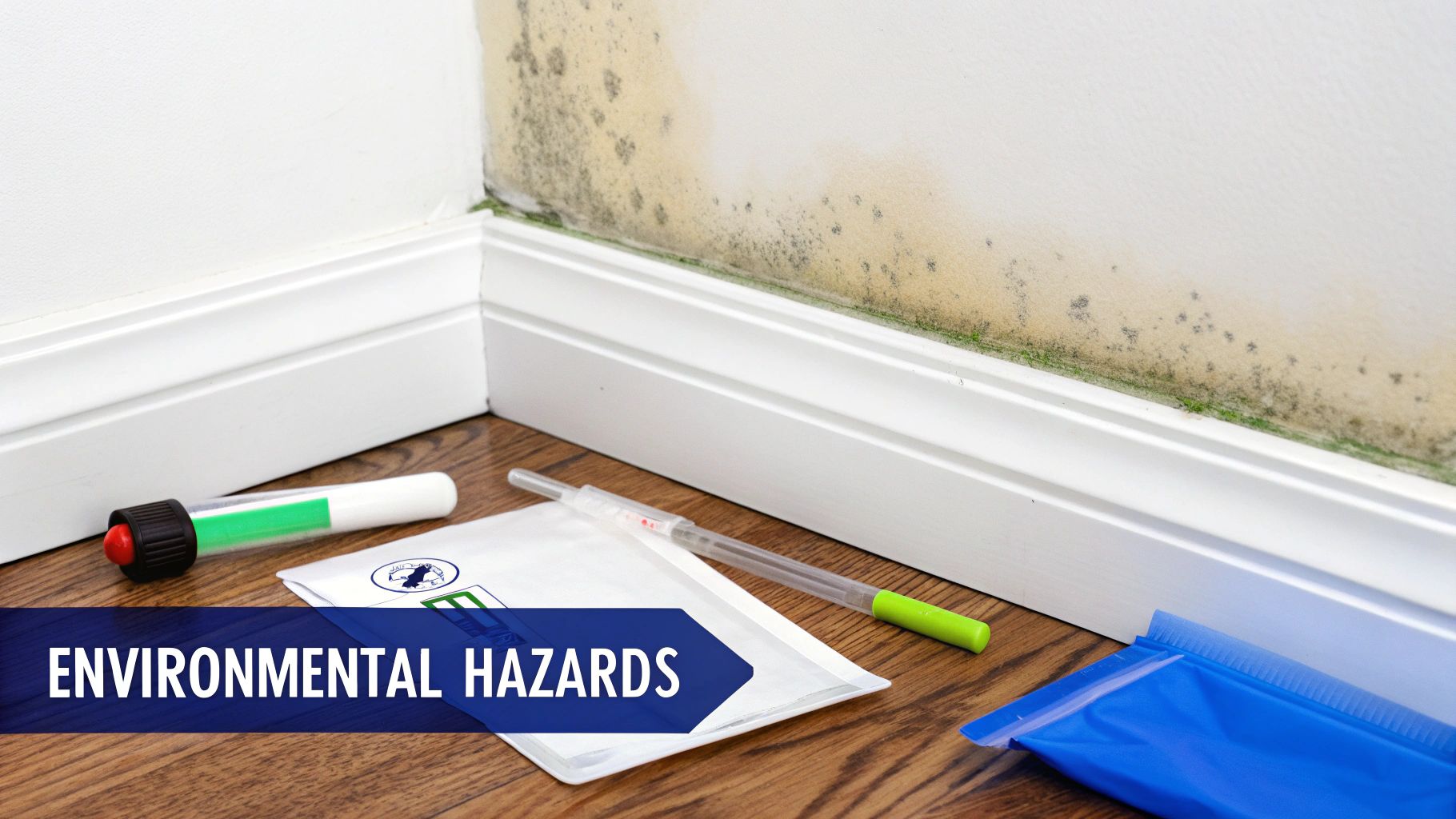
Ignoring these potential issues can lead to regulatory penalties, tenant lawsuits, and a drastic reduction in property value. The presence of mold from a slow leak, for instance, can cause serious respiratory problems, while aging materials like asbestos insulation or lead paint become hazardous when disturbed during renovations. Proactive identification is key to managing risk and ensuring a safe environment.
Key Inspection Points and Common Defects
When evaluating environmental risks, focus on these critical areas:
- Hazardous Materials: Look for friable (easily crumbled) asbestos in insulation, floor tiles, or ceiling panels, especially in older buildings. Check for peeling or chipping paint, which may contain lead.
- Biological Growth: Inspect areas with past or present water intrusion for visible mold or musty odors. Basements, crawlspaces, and areas around plumbing fixtures are common hotspots.
- Site Contamination: Assess the property’s history and surrounding area for potential soil or groundwater contamination from previous industrial use or leaking storage tanks.
Actionable Tips for Stakeholders
To properly address environmental concerns, follow these steps:
- Review Building Records: Examine construction documents and past renovation permits to identify the potential use of hazardous materials based on the building’s age and construction type.
- Document Suspect Areas: Photograph any water stains, visible mold, or deteriorating materials. Note the location and extent of the issue to provide clear information to specialists.
- Prioritize Professional Evaluation: A standard building inspection may note suspicions of environmental hazards, but confirmation requires specialized testing. Any signs of mold, potential asbestos, or concerns based on the property’s age or history are red flags. The next step is to hire a certified environmental professional (CEP) to conduct a Phase I Environmental Site Assessment (ESA) and perform necessary sampling and lab analysis.
10. Building Systems Documentation and Code Compliance
A building’s physical condition tells only part of its story; the rest is found in its paperwork. A thorough review of system documentation and code compliance is a critical, yet often overlooked, part of a commercial building inspection checklist. This involves scrutinizing maintenance logs, permits for past work, as-built drawings, warranties, and certifications to verify that the property adheres to all relevant regulations and has been properly maintained.
Missing permits for significant renovations or a lack of maintenance records for critical systems like HVAC or fire suppression can signal major liabilities. These gaps can lead to fines, mandated retrofits, or unexpected system failures. Ensuring all documentation is present and accurate provides a clear operational history and confirms the building’s legal standing.
Key Inspection Points and Common Defects
When evaluating documentation, focus on these critical areas:
- Permits and Certificates: Look for missing permits for major additions or system upgrades (e.g., electrical, plumbing, structural). Check for an expired Certificate of Occupancy or outdated fire safety certifications.
- Maintenance Records: A lack of consistent, detailed service logs for HVAC, elevators, or fire alarm systems is a significant red flag, suggesting potential deferred maintenance.
- As-Built Drawings: Compare the current layout and systems to the original or most recent plans. Discrepancies can indicate unpermitted and potentially unsafe modifications.
Actionable Tips for Stakeholders
To properly assess documentation and compliance, follow these steps:
- Request a Complete Document Package: During due diligence, formally request all as-built plans, permits, maintenance logs, warranties, and inspection reports from the current owner.
- Verify with Municipal Authorities: Cross-reference the provided permits with records at the local building department to ensure their authenticity and confirm no open violations exist.
- Organize for Future Reference: Create a comprehensive digital or physical binder with all collected documents. This becomes an invaluable asset for future management, maintenance, and potential sale of the property. For a deeper understanding of the standards governing these reviews, you can learn more about the commercial property inspection standards of practice.
10-Point Commercial Building Inspection Comparison
| Category | Implementation Complexity 🔄 | Resource Requirements ⚡ | Expected Outcomes 📊 | Ideal Use Cases | Key Advantages ⭐ / Tips 💡 |
|---|---|---|---|---|---|
| Structural Integrity and Foundation | High — licensed structural engineers; possible invasive tests 🔄 | High — specialized tools, lab/instrumentation, time ⚡ | Critical — safety assurance, repair scope, valuation impact 📊 | Pre-acquisition, post-disaster, major renovations | Prevents catastrophic failure; supports insurance/financing ⭐ / Document cracks, compare plans, hire licensed engineers 💡 |
| Roof and Drainage Systems | Medium — access/elevation, weather-dependent 🔄 | Medium — ladders/drones, moisture testing, seasonal timing ⚡ | High — reduces leaks/mold, extends roof life 📊 | Annual maintenance, post-storm, pre-lease | Prevents water damage and claims; prioritizes maintenance ⭐ / Inspect in dry weather; test drains; photo penetrations 💡 |
| HVAC Systems and Mechanical Equipment | Medium–High — complex systems, certified techs 🔄 | High — diagnostic equipment, service records, seasonal tests ⚡ | High — efficiency gains, reliability, better IAQ 📊 | Energy audits, pre-purchase, preventive maintenance | Identifies upgrade opportunities; avoids failures ⭐ / Request maintenance records; test thermostats; check ducts 💡 |
| Electrical Systems and Safety | High — licensed electricians; possible power disruption 🔄 | Medium–High — meters, panel access, testing time ⚡ | Critical — hazard identification, capacity verification 📊 | Acquisition inspections, post-renovation, insurance audits | Reveals fire/electrocution risks; ensures compliance ⭐ / Verify labeling; test emergency circuits; photograph panels 💡 |
| Plumbing and Water Systems | Medium — hidden piping, access to crawlspaces 🔄 | Medium — pressure tests, water quality labs, time ⚡ | High — prevents leaks, ensures water/fire system readiness 📊 | Lease renewals, water-damage audits, health compliance | Prevents water waste/damage; improves safety ⭐ / Test fixtures and heaters; document shut-off valves 💡 |
| Fire Safety and Life Safety Systems | High — specialized testing; may disrupt operations 🔄 | High — certified testers, system activation, documentation ⚡ | Critical — occupant safety, liability reduction 📊 | Mandatory inspections, insurance certification, pre-occupancy | Ensures life-safety compliance; lowers liability ⭐ / Schedule with authorities; keep certification records; train staff 💡 |
| Interior Finishes and Accessibility | Low–Medium — measurements and code knowledge 🔄 | Low — tape, camera, measurement tools, code references ⚡ | Medium — tenant satisfaction, documented ADA status 📊 | Tenant improvements, ADA audits, pre-leasing | Identifies accessibility barriers and cosmetic repairs ⭐ / Verify 2010 ADA standards; measure accessible routes 💡 |
| Building Envelope and Exterior Components | Medium — weather-dependent; elevated access 🔄 | Medium — scaffolding/drones, material expertise ⚡ | High — prevents water intrusion; improves curb appeal 📊 | Facade assessments, parking lot maintenance, restoration planning | Protects envelope; extends material life ⭐ / Photograph multiple angles; note sealant failures 💡 |
| Environmental Hazards and Contamination | High — certified environmental inspectors; regulatory tests 🔄 | High — sampling kits, lab analysis, possible closures ⚡ | Critical — identifies health risks and remediation needs 📊 | Pre-acquisition assessments, mold remediation, regulatory compliance | Detects serious health/legal risks; defines remediation scope ⭐ / Hire CEPs; document samples; follow EPA/state guidelines 💡 |
| Building Systems Documentation & Code Compliance | Medium — time-intensive review; code interpretation 🔄 | Low–Medium — records access, legal/code expertise ⚡ | High — legal protection, compliance, better valuation 📊 | Due diligence, historic restoration, financing preparation | Clarifies compliance gaps; supports maintenance planning ⭐ / Request full records; cross-reference permits and codes 💡 |
From Checklist to Confident Decisions: Your Next Steps
Navigating the intricacies of a commercial property can feel overwhelming, but this detailed commercial building inspection checklist provides you with a powerful road map. By systematically working through the ten core areas, from the foundational structure to the complexities of environmental compliance, you have built a preliminary understanding of the property’s condition. You are now equipped to look beyond the surface, ask more intelligent questions, and identify potential red flags that others might miss.
This checklist is designed to transform abstract concerns into tangible points of inquiry. You’ve learned not just to look at the roof, but to specifically check for ponding water, compromised flashings, and the age of the membrane. You know not just to test the HVAC, but to listen for unusual noises, check for refrigerant leaks, and inquire about the preventive maintenance history. This initial diligence is an invaluable first step in risk mitigation, setting the stage for a successful transaction or a well-managed asset.
The Bridge from Self-Assessment to Professional Verification
While this guide empowers you with critical knowledge, it’s crucial to recognize its role as a precursor to a professional evaluation. A self-guided tour using this commercial building inspection checklist is an exceptional tool for initial due diligence, but it cannot replace the diagnostic expertise of a certified commercial property inspector. The nuanced interdependencies between building systems, such as how roof drainage issues can lead to foundational compromise or how an outdated electrical panel can limit future tenant improvements, require a professional’s holistic perspective.
A certified inspector brings several non-negotiable assets to the table:
- Specialized Tools: They utilize equipment like infrared thermal imagers to detect hidden moisture intrusion, moisture meters to quantify water damage, and circuit analyzers to identify electrical hazards that are invisible to the naked eye.
- Code and Standards Expertise: Professionals are versed in current building codes, local amendments, and the ASTM E2018-15 Standard Guide for Property Condition Assessments, ensuring the evaluation is comprehensive and defensible.
- Unbiased, Third-Party Reporting: An inspector provides an objective, unemotional assessment of the property’s condition. This detailed, photo-documented report becomes a critical tool for negotiating repairs, adjusting purchase prices, or planning for future capital expenditures.
Key Insight: The goal of a professional inspection is not to pass or fail a building. It is to provide a clear, detailed, and impartial snapshot of its current condition, empowering you to make informed financial decisions with complete confidence.
Turning Your Checklist into Actionable Intelligence
You’ve done the preliminary work. The next logical step is to validate your findings and uncover what lies beneath the surface. Engaging a professional transforms your notes and observations into a definitive, actionable strategy. They will take the items you’ve flagged, investigate them further, and place them within the larger context of the building’s overall health and performance.
This professional report serves as your ultimate guide for moving forward. For a buyer, it’s the foundation for confident negotiations. For a seller, it provides an opportunity to address issues proactively. For a property manager, it becomes the blueprint for a strategic maintenance and capital improvement plan. The value derived from a professional inspection far outweighs its cost, protecting your investment from unforeseen expenses and future liabilities. By transitioning from this checklist to a professional assessment, you are not just buying a report; you are investing in certainty and securing the long-term value of your commercial asset.
Ready to take the next step and secure your investment with a professional evaluation? The team at Upchurch Inspection specializes in providing CCPIA-certified commercial property inspections throughout Memphis and West Tennessee, turning the items on this commercial building inspection checklist into a comprehensive, easy-to-understand report. Visit Upchurch Inspection to schedule your inspection and move forward with confidence.