I’m going to say this upfront, because it saves time:
Most barn-to-home conversions look better on Instagram than they perform in real life.
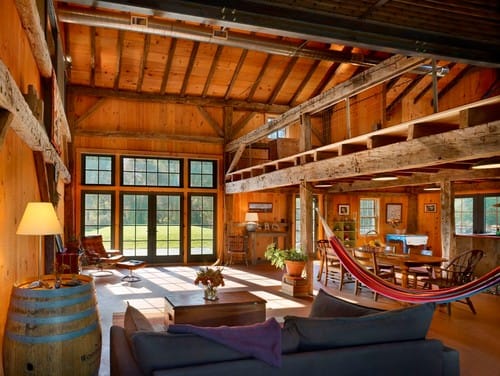
I get the appeal. Exposed beams. Tall ceilings. Metal siding. Open space. The problem is barns were never meant to be lived in, and houses were never meant to be barns. When you mash the two together without respecting physics, you end up with a structure that fights you on comfort, moisture, energy bills, and durability.
I inspect these all over West Tennessee, and the pattern is always the same: somebody nailed residential finishes onto a commercial agricultural shell and hoped insulation would do the rest.
Hope is not a building science strategy.
Barns Are Designed to Breathe — Houses Are Not
A barn’s entire job is airflow.
Livestock creates heat and moisture. Hay needs to dry. Equipment needs ventilation. So barns are intentionally leaky. Gaps, open framing, ridge vents, wall seams—it’s all by design.
Then someone decides to turn that into a living space and does the worst possible thing:
they seal it halfway.
That’s when problems start.
Thermal Bridging: The Problem Nobody Wants to Fix
If I had to pick the number one technical failure in barn conversions, it’s thermal bridging.
Metal buildings are basically giant heat conductors. Steel framing transfers exterior temperature straight into the structure. If you don’t address that properly, you get:
- Hot interiors in summer
- Cold interiors in winter
- Condensation on framing
- Mold behind finishes
- Insulation that never performs as advertised
Spray foam alone doesn’t magically fix this if it’s installed incorrectly or without proper breaks.
Condensation Is the Silent Killer in These Builds
Here’s what I see constantly:
- Interior finishes look great
- Walls feel solid
- No obvious leaks
- But moisture is condensing inside wall cavities
Why? Because warm, moist indoor air hits cold metal surfaces. That moisture has nowhere to go.
You don’t need a roof leak to rot a barn conversion. You just need temperature difference and trapped humidity.
Ventilation Is Usually an Afterthought
Barn conversions often have:
- Big open spaces
- High ceilings
- Minimal mechanical ventilation
People rely on:
- Mini-splits
- Ceiling fans
- “It’ll circulate”
Circulation is not ventilation.
Without proper air exchange, humidity builds up, especially in West Tennessee. That leads to:
- Musty smells
- Surface condensation
- Mold growth
- Discomfort that never quite goes away
HVAC Reality Check
Barns weren’t designed for ductwork.
So what happens?
- Long duct runs
- Poor return placement
- Undersized systems
- Uneven temperatures
I’ve inspected barn homes where one end of the building was ten degrees hotter than the other. That’s not charm. That’s bad design.
And yes—metal buildings magnify every HVAC mistake.
Insulation: More Isn’t Always Better
Another hard truth: stuffing insulation everywhere doesn’t fix poor design.
Common mistakes:
- Insulating without controlling vapor
- Mixing insulation types incorrectly
- Blocking necessary airflow paths
- Creating condensation traps
Insulation needs to work with ventilation, not against it.
Plumbing and Electrical Shortcuts Are Common
Barn conversions often start as DIY projects or budget builds. That shows up fast in the systems.
I regularly find:
- Plumbing lines run in exterior walls with no freeze protection
- Electrical wiring surface-mounted or improvised
- Panels undersized for residential load
- No thought given to future expansion
Just because it works today doesn’t mean it’ll work safely long-term.
Foundations Are Often “Good Enough” — Until They Aren’t
Many barns sit on:
- Shallow slabs
- Pier systems
- Footings never designed for residential load
Once you add:
- Interior walls
- Heavy finishes
- Plumbing fixtures
- Appliances
The load profile changes. And the foundation doesn’t always keep up.
Cracks, movement, and settlement show up years later, not immediately.
Comfort Is Where Most Owners Get Disillusioned
This is the part nobody posts about.
Owners tell me:
- “It’s hard to keep comfortable”
- “Our energy bills are insane”
- “It always feels damp”
- “It smells weird when it rains”
That’s not bad luck. That’s building science ignored.
What I’m Looking For During These Inspections
When I inspect barn-to-home conversions, I’m focused on:
- How insulation was installed
- Where vapor barriers exist (or don’t)
- Ventilation strategy
- HVAC layout and sizing
- Condensation risk points
- Structural support changes
I’m not judging style. I’m judging whether the structure wants to be a house.
When Barn Conversions Actually Work
They can work—but only when:
- Thermal breaks are properly installed
- Moisture is controlled intentionally
- Ventilation is designed, not guessed
- Systems are sized for reality
- The foundation is evaluated honestly
Those builds cost more up front. But they don’t punish you every season.
Final Thoughts
Barn-to-home conversions aren’t bad ideas. They’re just unforgiving ones.
If you don’t respect thermal bridging, moisture behavior, and ventilation, the building will remind you every summer and every winter that it was never meant to live like this.
Pinterest shows the first year.
Inspections see year five.
Protecting your West Tennessee investment starts with a forensic eye. View our West Tennessee Service Area to see a full list of towns we serve.