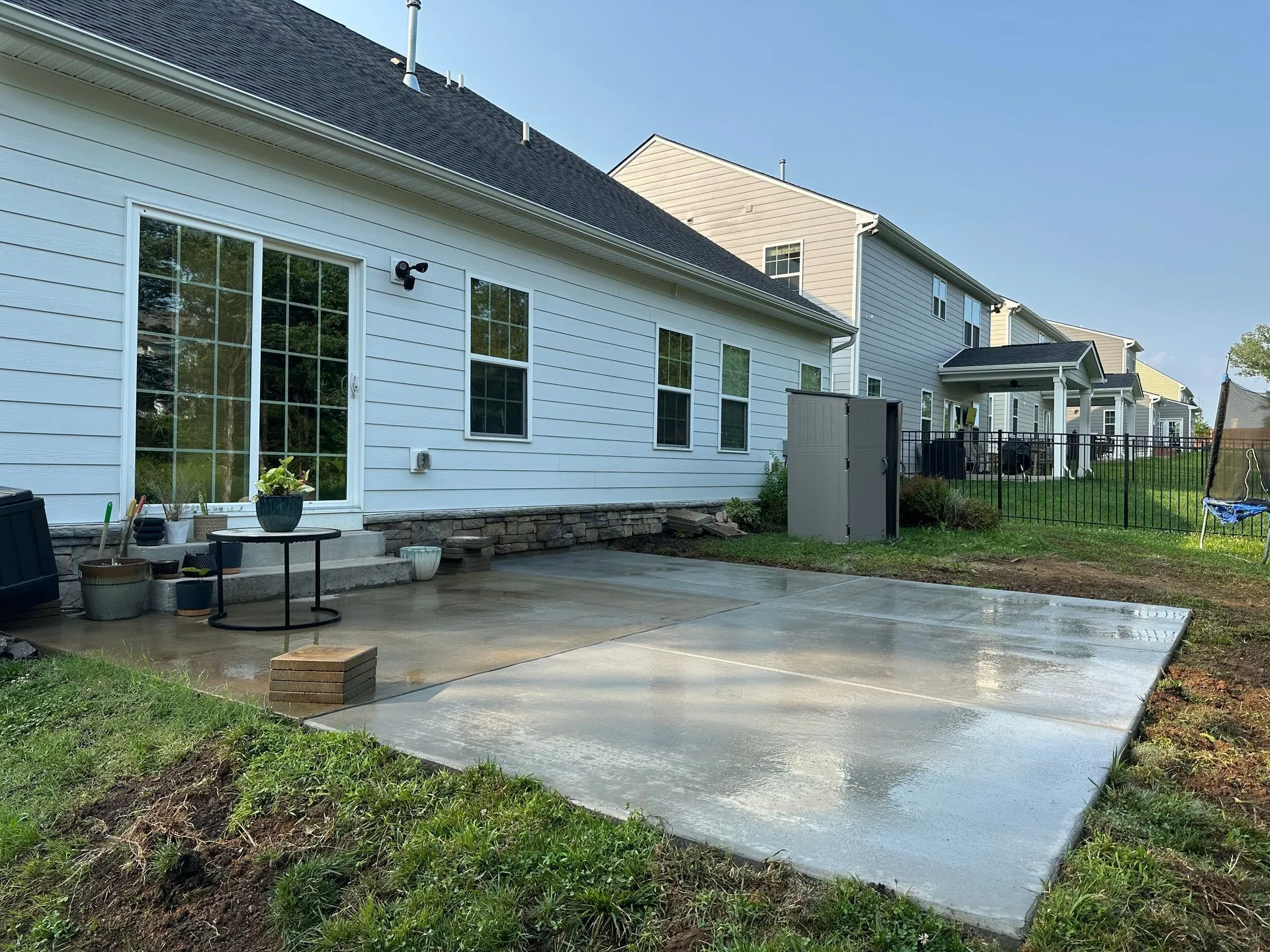
Here’s the part builders don’t like talking about in Wilson County: a lot of houses here aren’t really built on soil. They’re built on rock with a thin skin of dirt on top. Two feet. Sometimes less. And when you pour a slab on that and call it a day, the foundation is only as forgiving as the limestone underneath it — which is to say, not very.
If you’ve noticed slabs cracking all over Mt. Juliet, this isn’t bad luck. It’s geology meeting speed.
“Good Solid Rock” Is Not the Flex People Think It Is
I hear this line all the time: “At least it’s on rock.” That sounds comforting until you understand what that actually means for slab construction.
Rock doesn’t compress like soil. It doesn’t settle evenly. And it sure as hell doesn’t forgive shortcuts. When a slab sits partly on rock and partly on fill, you don’t get uniform support — you get differential settlement, even if the word “settlement” feels wrong when nothing is really settling.
What’s happening instead is stress concentration. The slab is bending between hard points.
Shale Layering Is the Real Problem
Wilson County isn’t just limestone. It’s layered. Limestone shelves interbedded with shale seams that behave very differently when moisture enters the picture.
Shale absorbs water, softens, and weakens. Limestone doesn’t. When moisture migrates through these layers, support conditions change under parts of the slab while others stay rigid.
That’s when cracks show up:
- Diagonal cracks radiating from corners
- Long straight cracks that mirror rock seams
- Interior cracks that don’t match exterior movement
These aren’t cosmetic. They’re stress maps.
Why Slabs Crack Even When Drainage “Looks Fine”
This is where people get mad at the inspector. The yard slopes away. Gutters are clean. Downspouts are extended. And yet, the slab is still cracking.
Here’s the reality: drainage can be adequate and still feed moisture into rock seams. Water doesn’t need to pool to be a problem. It just needs a path. Once it finds one, it follows gravity along the rock, not the surface.
Surface fixes don’t always control subsurface moisture — and slabs feel the difference first.
Fill Dirt Is Doing the Heavy Lifting
Most slabs here are poured after builders blast or cut rock, then backfill to reach grade. That fill dirt is compacted, but it’s still fill. Over time, it responds to moisture differently than the native rock it’s sitting next to.
So now you’ve got:
- One part of the slab bearing on rock
- Another part bearing on compacted fill
- Moisture changing conditions unevenly
That slab doesn’t move as one piece. It flexes. Concrete hates flexing.
“Pinning” to Rock Isn’t a Magic Fix
Some builders try to anchor slabs into rock with pins or dowels. In theory, that helps. In reality, it often just transfers stress somewhere else.
When you restrain movement at one point, the slab relieves stress at another. That’s why I see cracks pop up several feet away from pinned areas. The force didn’t disappear. It relocated.
Tile Floors Tell the Truth Fastest
Drywall cracks can lie. Tile doesn’t.
In Wilson County slab homes, tile failures are often the first real indicator that something structural is happening. Grout cracks, tile tenting, and hollow-sounding sections usually line up perfectly with slab cracks underneath.
Once tile starts popping, repairs get expensive fast — and cosmetic fixes don’t last.
Garage Slabs Are the Canary
If you want to know how a slab house is really doing, look at the garage. Garage slabs crack before living spaces because they’re thinner, less finished, and often poured separately.
Wide cracks, vertical displacement, or repeated patching in garages are a dead giveaway that the soil–rock relationship under the house isn’t behaving.
Why This Keeps Happening in Mt. Juliet
Mt. Juliet exploded fast. Lots were graded aggressively. Rock was cut quickly. Slabs were poured on tight schedules. There wasn’t time — or incentive — to over-engineer foundations for long-term movement.
That doesn’t mean the houses are garbage. It means the margin for error was thin, and time has started collecting on it.
What Buyers Misunderstand About Slab Cracks
Not every crack means failure. But repeated cracks, widening cracks, or cracks that keep coming back after repair mean the slab is still under stress.
Concrete doesn’t crack once and stop. It cracks where it’s weakest — and keeps cracking until forces balance out.
Why Inspections Need to Be Blunt Here
This is where I stop sugarcoating things. If a slab is cracking in Wilson County, the cause isn’t mystery. It’s rock, moisture, and construction meeting reality.
Ignoring it doesn’t make it cheaper later. Painting over it doesn’t stabilize anything. And pretending it’s “normal” doesn’t change the physics.
For buyers evaluating slab-on-grade homes throughout Middle Tennessee, understanding local geology matters more than builder promises.
https://upchurchinspection.com/our-service-areas/home-inspections-in-middle-tennessee/
And for folks buying anywhere near the Mt. Juliet market orbiting Nashville, slab cracks aren’t a cosmetic issue here. They’re a geological one.
In Wilson County, the rock isn’t the problem.
It’s pretending the rock doesn’t matter.