
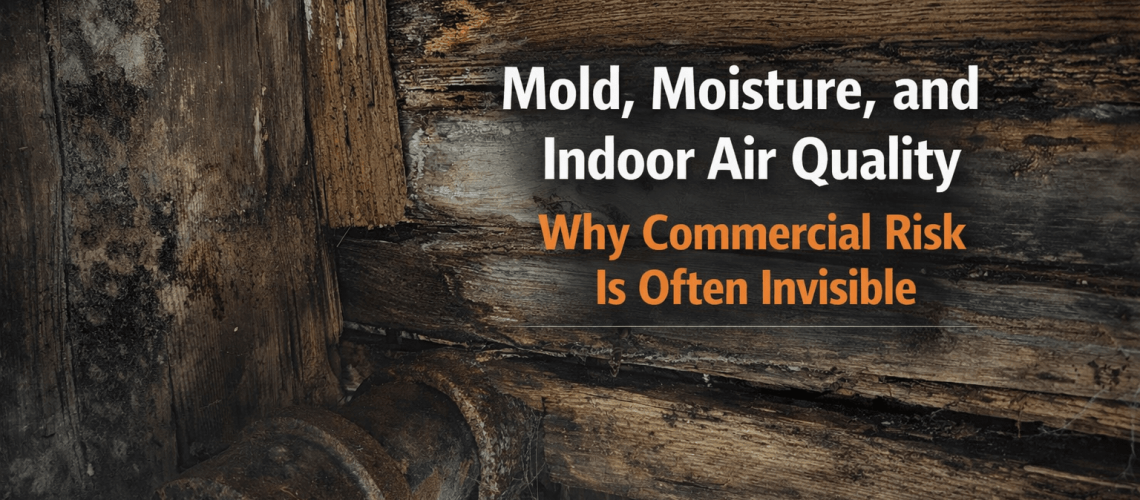
In commercial buildings, mold and air quality issues rarely announce themselves the way buyers expect. There’s usually no dramatic odor, no obvious discoloration, no single “problem room.” Instead, issues develop quietly—behind finishes, above ceilings, inside wall cavities, or within HVAC systems that appear to be functioning normally.
At Upchurch Inspection, mold, moisture, and indoor air quality concerns are approached as building performance issues, not just environmental ones. These risks don’t exist in isolation. They’re symptoms of how the building manages water, air, and time.
Moisture Is the Root Cause Buyers Miss First
Mold is almost never the starting problem. Moisture is.
In commercial properties, moisture enters buildings in predictable ways:
- Roof drainage that no longer moves water efficiently
- Exterior wall assemblies that were never detailed for modern exposure
- Condensation caused by oversized or poorly balanced HVAC systems
- Plumbing systems with slow, repeated leaks rather than failures
- Site drainage directing water toward foundations over years
Inspectors focus first on how moisture moves through the building, not whether mold is currently visible. A dry building with poor moisture control is still a future mold problem.
Commercial Mold Rarely Looks Like “Mold”
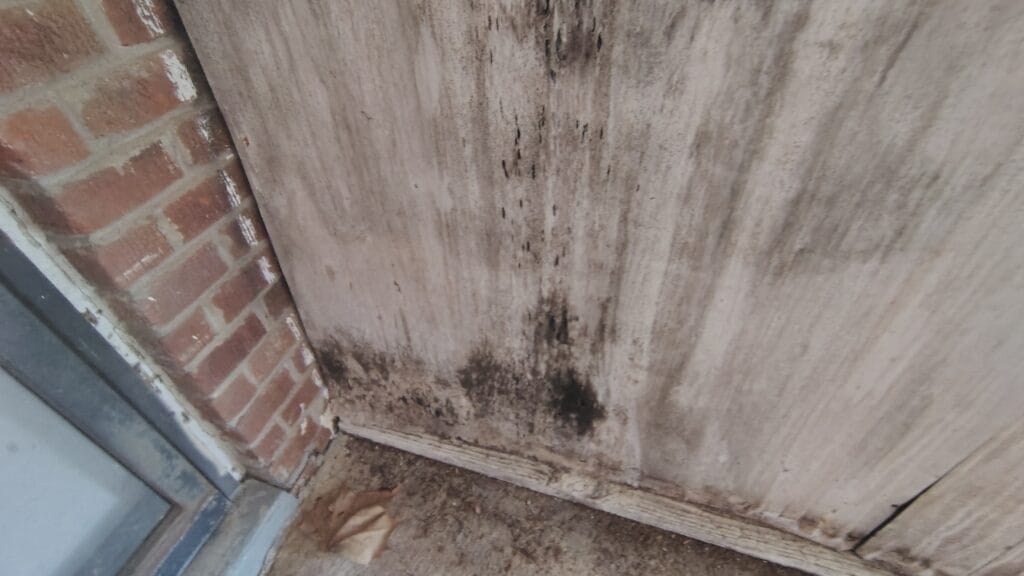
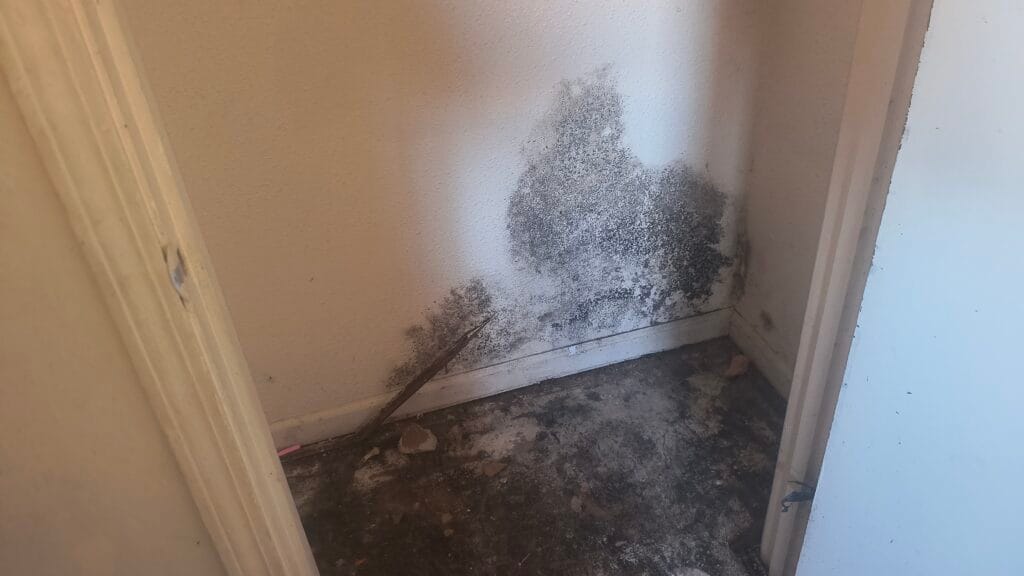
One of the reasons buyers underestimate risk is because commercial mold doesn’t usually present as obvious growth.
Inspectors are more likely to encounter:
- Repeated ceiling tile replacement
- Persistent staining without active leaks
- Musty odors that come and go seasonally
- Warped materials that have dried repeatedly
- HVAC components showing corrosion or biofilm
These signs don’t confirm contamination, but they strongly suggest chronic moisture exposure, which is far more important to identify early.
HVAC Systems Are the Delivery Mechanism
In commercial buildings, HVAC systems don’t just condition air—they distribute whatever is in that air.
Inspectors pay close attention to:
- Condensation management inside air handlers
- Drain pan condition and slope
- Insulation integrity within ductwork
- Evidence of microbial growth at diffusers
- Filtration adequacy relative to building use
A localized moisture issue becomes a building-wide air quality concern once the HVAC system is involved. That’s why mold and IAQ risks are often operational, not just environmental.
Air Quality Complaints Are Often Misdiagnosed
Commercial air quality issues frequently present as vague complaints:
- Headaches
- Fatigue
- Odors
- Discomfort without obvious cause
- Uneven temperature or humidity
Inspectors know these complaints are often dismissed as subjective—but patterns matter.
When multiple occupants report similar issues, inspectors look beyond finishes and focus on:
- Humidity control
- Fresh air delivery
- Return air pathways
- Pressure relationships between spaces
- Areas where moisture may be trapped but unseen
Air quality problems are rarely about a single defect. They’re about system behavior over time.
Specialized Mold and Moisture Testing Has a Purpose
Not every building needs mold testing. But some buildings absolutely do.
Specialized testing becomes appropriate when:
- Moisture indicators appear repeatedly
- Past remediation lacks documentation
- Occupant sensitivity raises liability concerns
- HVAC systems show signs of internal moisture
- The building’s use demands higher air quality reliability
Testing isn’t about proving a building is “bad.” It’s about clarifying exposure pathways and reducing uncertainty where consequences are high.
Why Commercial Buyers Get Surprised After Closing
Mold and air quality issues are among the most expensive surprises commercial owners face—not because remediation is always massive, but because discovery often happens late.
Buyers are often caught off guard when:
- Tenant complaints escalate post-closing
- HVAC systems require unexpected cleaning or modification
- Moisture problems resurface after cosmetic repairs
- Environmental consultants uncover issues during renovations
Inspections aim to identify conditions that allow these surprises to exist, not just visible contamination.
Regional Climate Makes This Risk Non-Optional
In regions like West Tennessee, Middle Tennessee, Arkansas, Missouri, and Kentucky, humidity is not an occasional concern—it’s a constant pressure.
Inspectors factor in:
- Seasonal humidity swings
- Building pressurization challenges
- Crawlspaces, basements, and slab-on-grade behavior
- Roof and wall assemblies common to the region
- Older construction not designed for modern moisture loads
What works in a dry climate often fails quietly, repeatedly, and expensively in the Mid-South.
How Experienced Buyers Use Moisture and IAQ Findings
Seasoned buyers don’t overreact to mold-related findings. They contextualize them.
They want to know:
- Is moisture episodic or systemic?
- Can it be controlled without major reconstruction?
- Is the HVAC system part of the problem or the solution?
- How will this affect tenants and operations?
- What does long-term control actually cost?
Inspection findings guide those answers long before remediation becomes urgent.
The Practical Reality
Mold, moisture, and air quality risks in commercial buildings are rarely dramatic—and that’s what makes them dangerous.
They grow slowly, spread quietly, and surface when disruption is least welcome. Inspections that focus only on what’s visible miss the point.
Inspectors who understand these risks don’t chase symptoms. They trace moisture, evaluate air movement, and assess how the building behaves under real environmental pressure.
That’s what protects buyers from the problems that don’t show up on day one—but always show up eventually.