
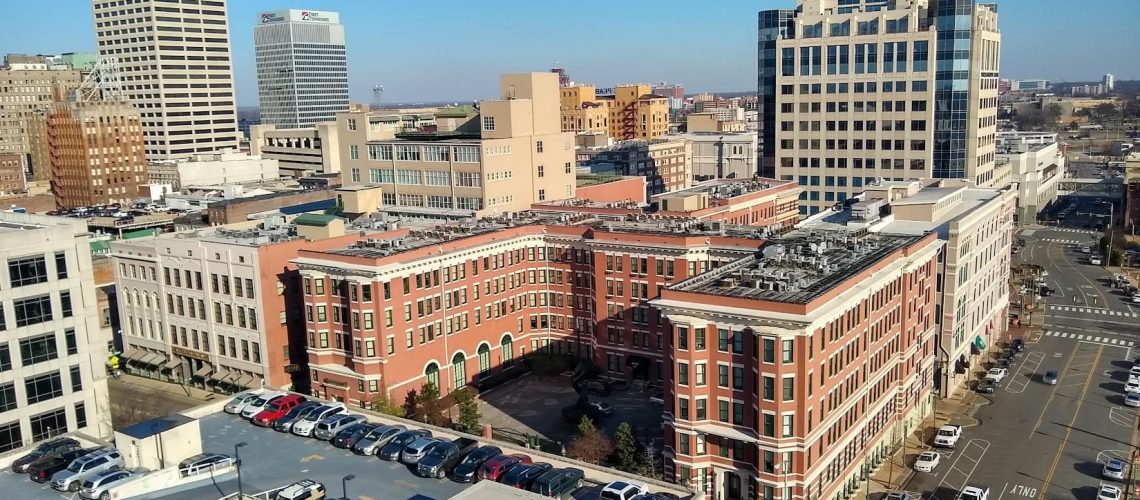
Mixed-use buildings are often marketed as the best of both worlds. Retail or office on the ground floor, residential above, steady foot traffic, diversified income streams. On paper, they look resilient.
From an inspection standpoint, mixed-use properties are where risk compounds, because the building is being asked to perform incompatible functions at the same time.
At Upchurch Inspection, mixed-use inspections are treated as a separate category entirely—not a residential inspection plus a commercial inspection, but a building where system conflicts matter more than individual conditions.



Mixed-Use Buildings Carry Conflicting Design Assumptions
Most mixed-use buildings were not originally designed with equal priority given to every occupancy type. One use almost always drove the original design, with the other layered in later.
Inspectors pay close attention to:
- Which occupancy dictated the original structure
- How later conversions altered load paths and system demands
- Whether shared systems were ever truly re-engineered
- Where compromises were made to accommodate coexistence
A building that technically serves both residential and commercial occupants may be doing so under constant internal tension.
Shared Systems Are the Primary Risk Drivers
The most common inspection issues in mixed-use properties stem from systems that serve incompatible needs simultaneously.
Inspectors focus heavily on:
- Shared electrical services supporting both tenant and residential loads
- HVAC systems trying to balance comfort with commercial runtime
- Plumbing systems dealing with residential waste and commercial discharge
- Fire separation between occupancies
- Noise and vibration transfer through structure
Problems here rarely show up as single defects. They show up as ongoing friction—complaints, repairs, workarounds, and tenant dissatisfaction.
Fire and Life-Safety Exposure Is More Complex Than Buyers Expect
Mixed-use properties bring multiple occupancy classifications under one roof, and that complexity matters.
Inspectors evaluate:
- Fire separation between residential and commercial areas
- Penetrations created during build-outs
- Stairwell and egress routing consistency
- Alarm and detection coverage across occupancies
- Whether upgrades were applied uniformly or selectively
Life-safety issues in mixed-use buildings are rarely dramatic—but they carry outsized liability because they affect people with very different expectations of safety and privacy.
Mechanical Systems Are Often Over-Compromised
Comfort expectations for residential occupants are very different from operational needs of commercial tenants.
Inspectors look for:
- Residential units affected by commercial HVAC cycling
- Inadequate zoning or controls
- Mechanical rooms modified repeatedly to solve comfort complaints
- Systems operating outside their original design assumptions
- Deferred upgrades due to cost or disruption concerns
A system that “sort of works” for everyone often works well for no one.
Sound, Smell, and Vibration Become Structural Issues
Mixed-use buildings introduce risks that don’t always show up as traditional defects.
Inspectors pay attention to:
- Structure-borne noise transfer
- Vibration from commercial equipment
- Odor migration between spaces
- Improvised mitigation attempts
- Evidence of repeated tenant complaints
These issues are rarely solved with cosmetic fixes. They reflect how the building handles—or fails to handle—conflicting uses.
Residential Areas Often Hide Deferred Commercial Stress
Residential units may appear clean and well-maintained while the building is quietly absorbing stress elsewhere.
Inspectors watch for:
- Settlement patterns tied to commercial loads
- Structural modifications beneath residential floors
- Plumbing issues migrating vertically
- Moisture intrusion tied to ground-floor use
- Repairs made reactively to avoid resident disruption
What feels like a residential problem often has a commercial root cause.
Why Mixed-Use Buyers Get Surprised After Closing
Mixed-use properties often perform “well enough” during ownership transitions. Problems don’t spike immediately. They emerge as tenants change, occupancy increases, or systems finally reach their limits.
Buyers are often surprised by:
- Upgrade costs triggered by tenant changes
- Conflicts between residential expectations and commercial reality
- Life-safety upgrades forced by inspections or incidents
- Capital expenditures that benefit one use but disrupt the other
Inspections aim to surface those fault lines early—before ownership is locked in.
How Experienced Buyers Use Mixed-Use Inspection Findings
Seasoned mixed-use investors don’t look for a perfect building. They look for alignment.
They want to know:
- Which systems are most strained
- Where compromises are already visible
- How adaptable the building really is
- What ownership will need to manage proactively
Inspection findings become a roadmap, not a verdict.
The Practical Reality
Mixed-use property inspections aren’t about identifying more problems. They’re about understanding where different uses collide and what that collision costs over time.
These buildings can be strong investments—but only when buyers understand the structural, mechanical, and operational tension built into them.
Inspectors who understand mixed-use properties don’t just document conditions. They explain how coexistence shapes risk—and how ownership can plan around it intelligently.