
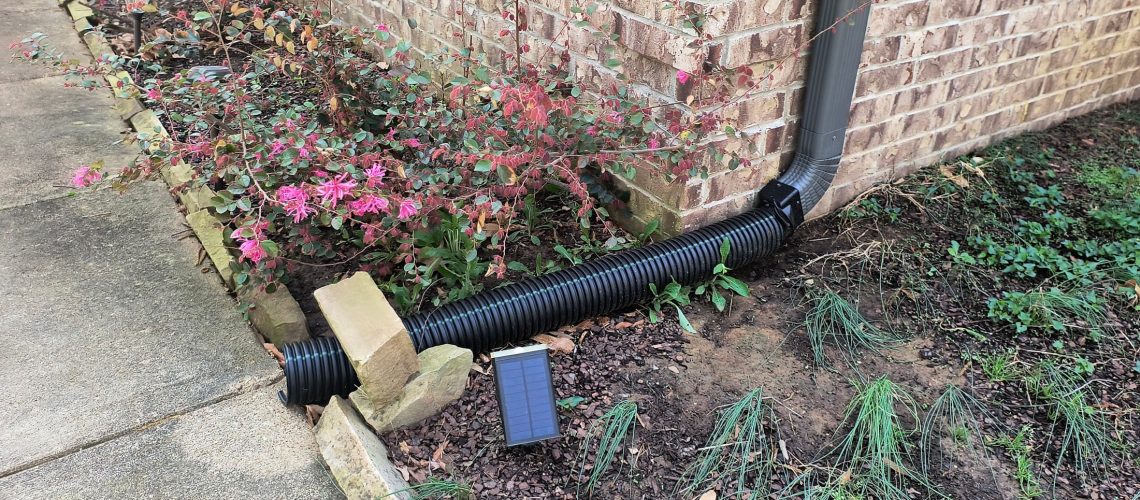
If I had to pick the most overlooked, underpriced, high-impact fix I see during inspections, this would be it.
Downspout extensions.
Not waterproofing systems.
Not French drains.
Not foundation piers.
Plastic tubes that cost less than dinner.
Why Water Is the Real Enemy
Foundations don’t fail because they’re weak. They fail because water keeps showing up where it doesn’t belong.
When roof runoff dumps right at the base of the house, it:
- Softens soil
- Increases hydrostatic pressure
- Encourages settlement
- Feeds crawlspace moisture
- Finds its way into basements
Gravity does the rest.
What I See All the Time
I walk the perimeter and find:
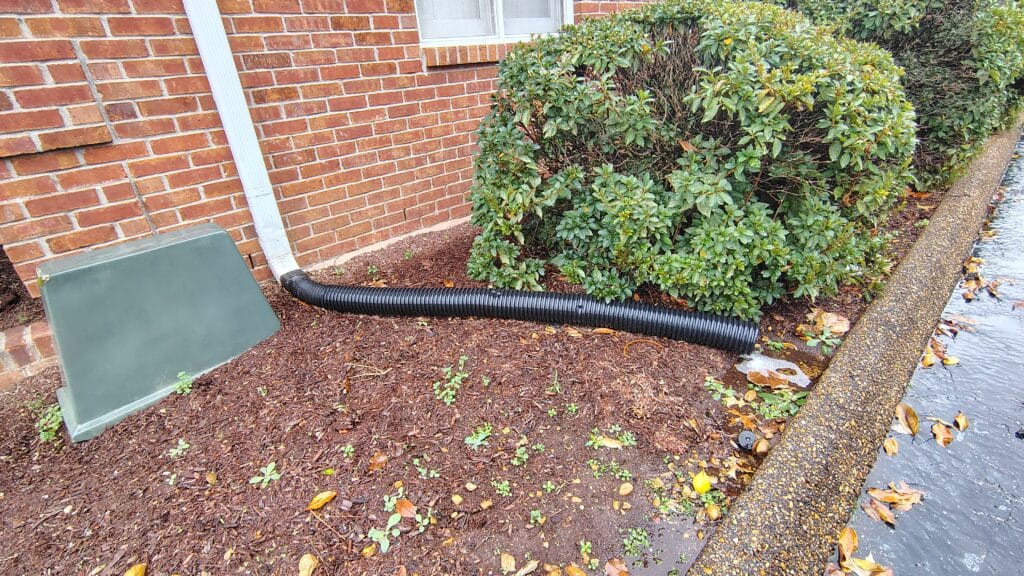
- Downspouts ending six inches from the foundation
- Elbows dumping straight into mulch
- Extensions removed “temporarily”
- Downspouts aimed at low spots
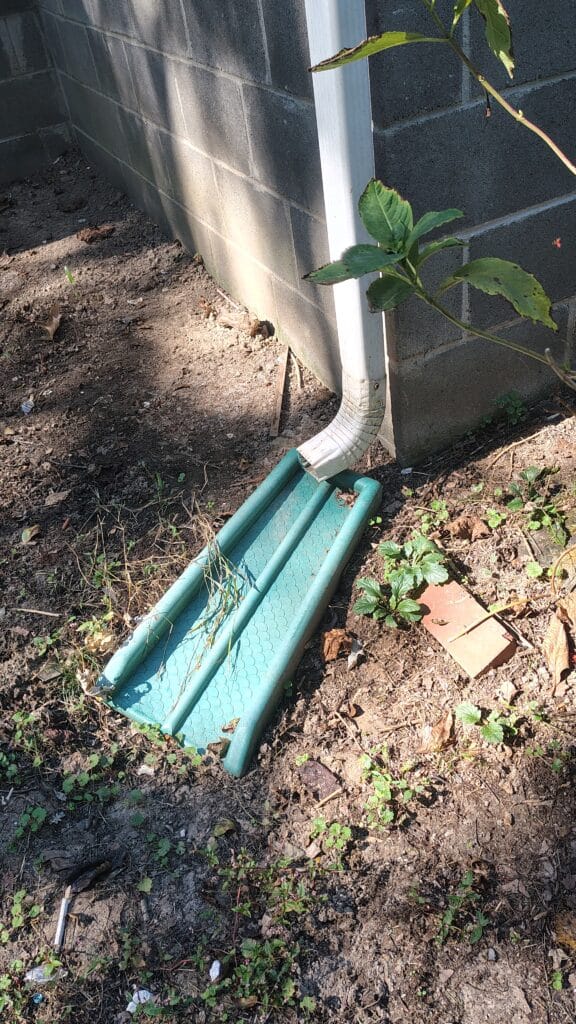
- Splash blocks doing absolutely nothing
Everything looks intentional. None of it is effective.
A Real Inspection Where a $20 Fix Mattered
I inspected a home near Ripley where the buyer was worried about a small crack in the crawlspace wall.
The crack was real — but it wasn’t the root problem.
Every downspout on that side of the house discharged right at the foundation. No extensions. No grading away. Just years of roof water soaking the same soil.
That foundation didn’t need structural work. It needed the water moved away.
Why Distance Matters More Than People Think
It’s not enough to “get water off the house.”
You need to move it away.
Generally, extensions should:
- Carry water several feet from the foundation
- Discharge onto ground that slopes away
- Avoid dumping near footings or crawlspace vents
Water dropped at the base just circles back.
Clay Soils Make This Worse
In large parts of the Mid-South, especially around Jackson and Bolivar, clay soils expand when wet and shrink when dry.
That movement:
- Pushes on foundations
- Pulls away during dry spells
- Repeats the cycle year after year
Roof runoff accelerates the whole process.
Crawlspaces Tell the Truth
I can usually tell how downspouts are handled before I even go outside.
Inside the crawlspace, I’ll see:
- Damp soil near perimeter walls
- Efflorescence on masonry
- Rusting piers
- Elevated humidity
- Localized settlement
Then I walk out and find the downspouts dumping right there.
The house connects the dots for you.
Why Splash Blocks Aren’t Enough
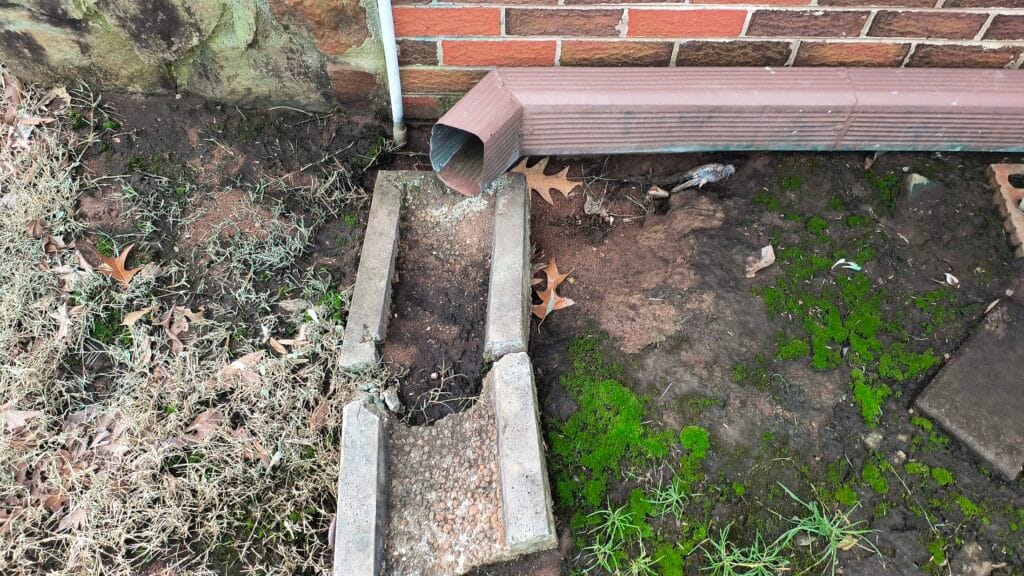
Splash blocks look helpful. Sometimes they are.
But most of the time:
- They’re too short
- They sink into soil
- They get buried in mulch
- They still leave water close to the foundation
They’re better than nothing — but barely.
What I Actually Look For
When I evaluate drainage, I’m checking:
- Where each downspout terminates
- Whether extensions are present and intact
- Ground slope at discharge points
- Signs of erosion or pooling
- Consistency around the house
One good extension doesn’t fix five bad ones.
What Buyers Should Understand
Downspout extensions won’t fix every foundation issue.
But they will:
- Reduce moisture
- Slow settlement
- Improve crawlspace conditions
- Buy time
- Prevent problems from getting worse
For the cost, there’s nothing else that delivers more return.
The Inspector’s Bottom Line
Most foundation problems don’t start underground. They start on the roof.
If you let water fall straight down and soak the soil next to your house, you’re asking the foundation to fight a battle it can’t win.
Moving that water away is cheap. Ignoring it is not.
That’s why I always look down — and then follow the downspouts.