
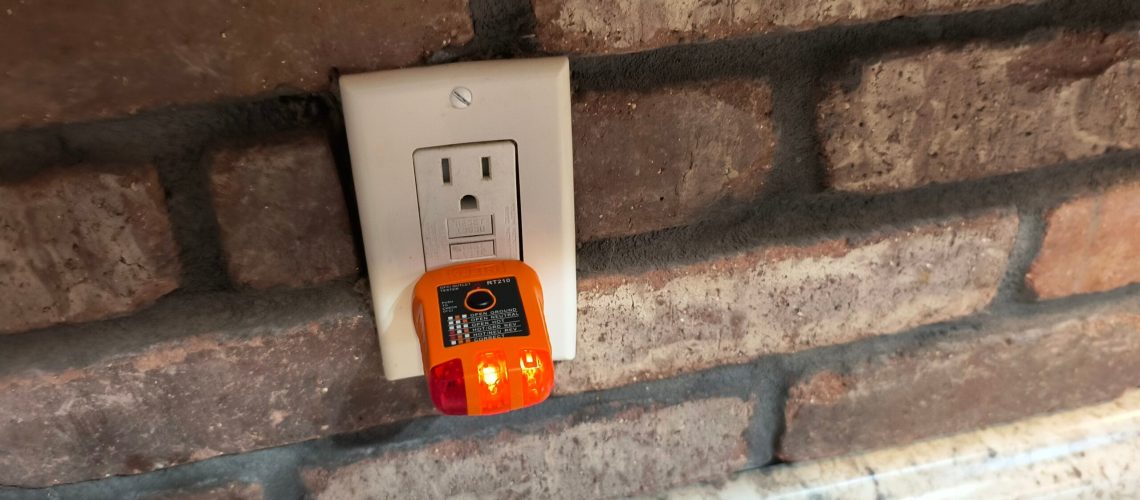
Exterior Power Is a Different Animal
Exterior outlets live a harder life than anything inside the house. Heat, cold, rain, bugs, lawn equipment—you name it. That’s why they’re required to be GFCI-protected. And that’s also why they’re one of the most common nuisance-trip complaints I hear from homeowners.
When someone tells me, “The outlet outside doesn’t work,” nine times out of ten it does work—it’s just tripped, failed, or protecting a problem upstream.
What GFCI Is Actually Doing
A GFCI isn’t measuring load. It’s measuring imbalance. If the current going out doesn’t match the current coming back, it trips. That imbalance can be caused by moisture, damaged cords, poor connections, or internal failure of the device itself.
Exterior outlets are especially sensitive because even a small amount of moisture intrusion can create leakage to ground. Morning dew inside a cracked cover is sometimes all it takes.
I’ve tested outlets that tripped instantly with nothing plugged in. That’s not “too many lights.” That’s a compromised device doing exactly what it was designed to do.
Common Exterior Problems I See in the Field
Here’s the short list of repeat offenders:
- Missing or broken in-use covers
- Standard covers installed where weatherproof covers are required
- GFCIs mounted upside down and filled with water
- Exterior outlets tied downstream of the garage or bathroom GFCIs
- Backstabbed wiring that’s loosened over time
I’ve also found exterior outlets protected by a GFCI inside the garage that nobody remembers exists. Homeowner resets the outdoor outlet for years, never realizing the control is twenty feet away behind a freezer.
On a house we inspected in Bartlett, the “dead” patio outlet traced back to a tripped garage GFCI feeding half the exterior circuit. The outlet wasn’t bad—the layout was.

Holiday Lights Expose Weak Links
Christmas lights get blamed unfairly. Most modern LED strings draw very little current. What they do expose is compromised wiring, moisture intrusion, and worn-out GFCIs.
Extension cords with cracked insulation, plugs sitting in wet soil, and overloaded daisy chains all introduce leakage. The GFCI sees that imbalance and trips. That’s not failure—that’s protection.
When a GFCI won’t reset even after unplugging everything, it’s usually done. They don’t last forever, especially outdoors. Ten years is a good run. Some don’t make it five.
What I Check During an Inspection
I’m not just pressing the test button and moving on.
I’m looking at:
- Proper weather-resistant (WR) rated devices
- In-use covers that actually seal
- Secure mounting and intact boxes
- Proper polarity and grounding
- Whether the outlet resets cleanly under load
If an exterior GFCI won’t reset, won’t trip, or trips inconsistently, it gets called out. Exterior power isn’t optional—it’s a safety system.
The Bigger Picture
A tripping GFCI is telling you something. Sometimes it’s warning you about a bad cord. Sometimes it’s telling you water is getting where it shouldn’t. Sometimes it’s just tired.
Ignoring it—or worse, replacing it with a standard outlet to “fix the problem”—is how people get shocked standing barefoot on wet concrete.
Outside electricity demands respect. When the outlet trips, it’s not being annoying. It’s doing its job.