
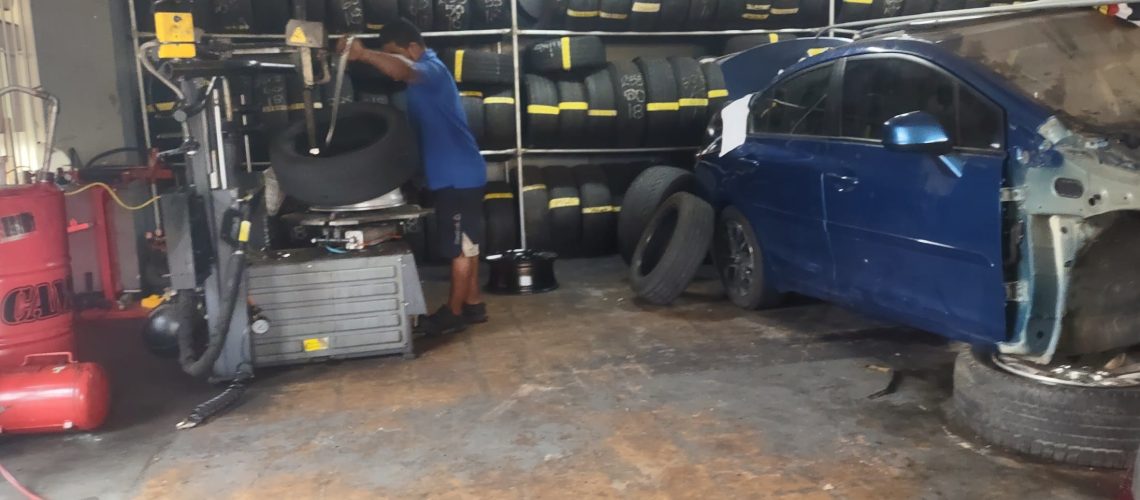
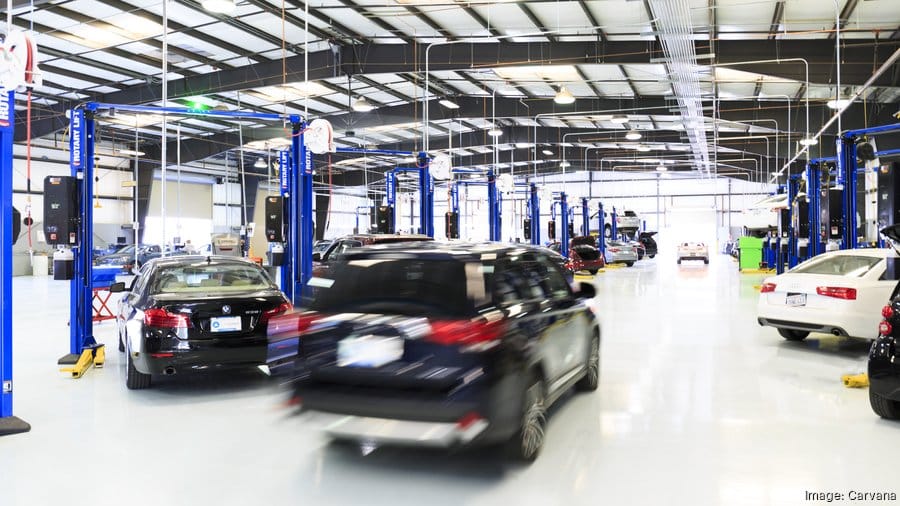
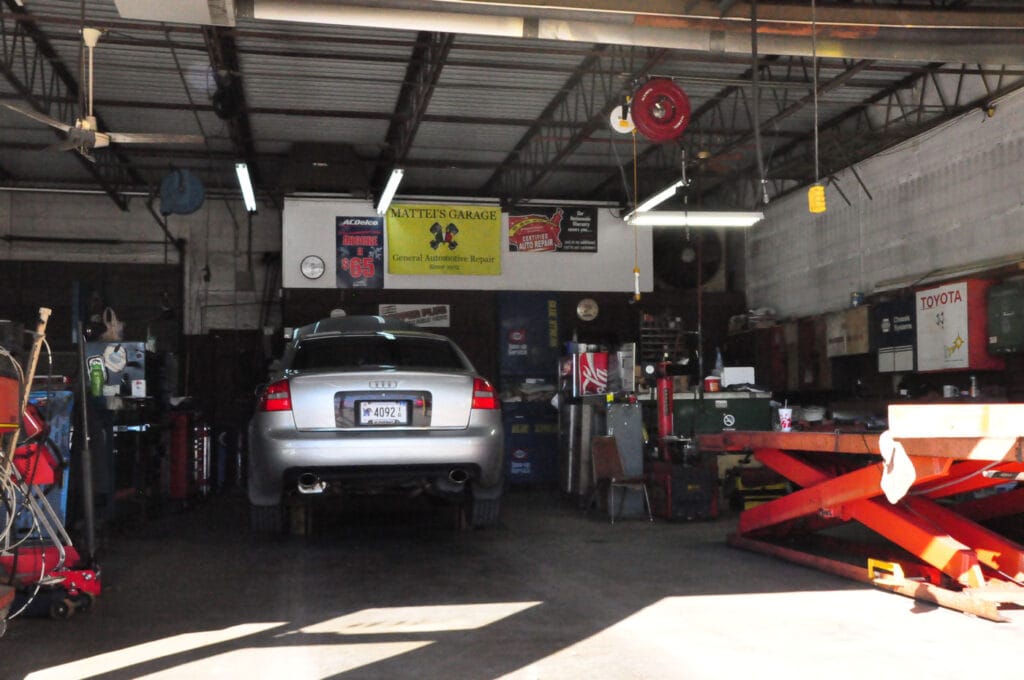
Auto repair and service buildings are some of the most deceptively risky commercial properties in the Mid-South. They often look straightforward—open bays, concrete floors, overhead doors, basic offices—but the way these buildings are used places continuous stress on structure, slabs, drainage, ventilation, and environmental controls.
At Upchurch Inspection, inspections of auto service facilities in markets like Memphis and West Tennessee, Little Rock and Central Arkansas, Jonesboro, Cape Girardeau, Nashville, and Central Kentucky tend to surface the same reality: these buildings are rarely evaluated based on what they’ve endured.
These Buildings Are Used Harder Than They Look
Auto service facilities experience constant point loads, vibration, chemical exposure, and vehicle traffic. Lifts cycle daily. Equipment is anchored and re-anchored. Fluids spill. Exhaust accumulates. None of that shows up in marketing photos.
Inspectors approach these properties assuming:
- Floors have been stressed beyond typical design assumptions
- Structural elements may have been modified to accommodate equipment
- Repairs were made for speed, not longevity
- Ventilation and drainage were adapted incrementally
The inspection isn’t about whether the building still functions—it’s about how much tolerance it has left.
Slabs and Foundations Carry the First Warning Signs
Concrete slabs in auto service buildings tell a very honest story.
Inspectors pay close attention to:
- Cracking patterns around lifts and equipment pads
- Evidence of slab cutting or trenching for utilities
- Differential settlement near bay doors
- Patch repairs that suggest repeated movement
- Oil saturation that compromises surface integrity
In regions like West Tennessee and Central Arkansas, where soils are moisture-sensitive, slab movement often accelerates once drainage is compromised. A slab that still “works” may already be limiting future use.
Structural Modifications Are Common—and Often Poorly Documented
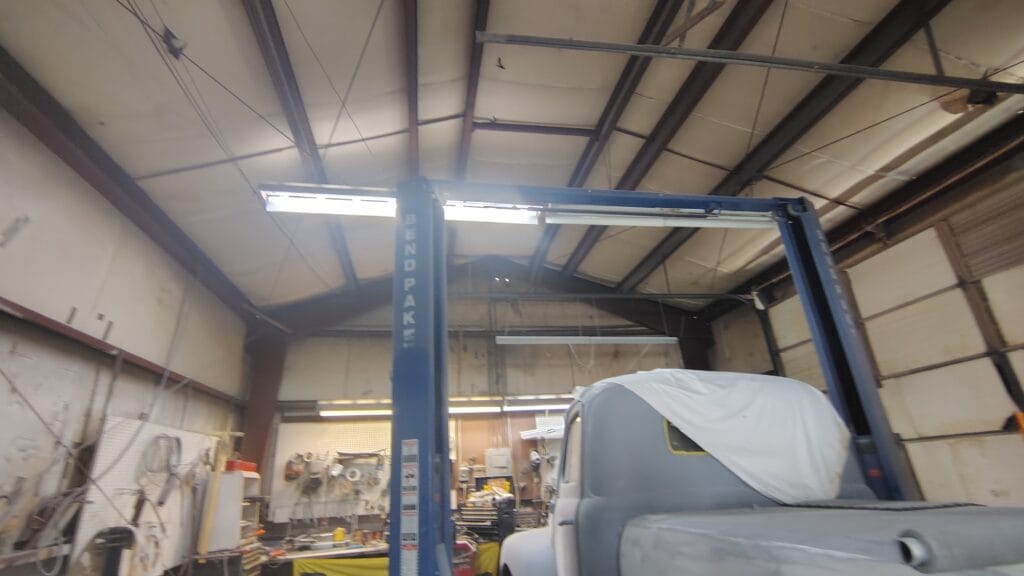
Auto service facilities are frequently altered to accommodate changing business needs. Mezzanines are added. Walls are removed. Roof penetrations multiply.
Inspectors look for:
- Added steel framing or columns
- Field welding that doesn’t match original construction
- Roof structure modified for exhaust or equipment
- Bay door enlargements affecting load paths
- Structural elements altered without visible engineering oversight
These changes don’t automatically mean failure—but they absolutely change risk. Buyers who assume original structural capacity still applies are often wrong.
Ventilation and Exhaust Systems Are a Major Liability Driver
In auto service buildings, ventilation isn’t a comfort feature—it’s a safety system.
Inspectors evaluate:
- Exhaust capture at service bays
- Routing and termination of exhaust systems
- Make-up air provisions
- Evidence of improvised ventilation fixes
- Interaction between ventilation and HVAC systems
In older buildings throughout Memphis, Cape Girardeau, and Louisville, inspectors often see systems that were “good enough” years ago but no longer align with modern expectations or equipment density.
Environmental Exposure Is Often Embedded, Not Obvious
Auto service buildings carry inherent environmental risk. Even when operations are clean, history matters.
Inspectors watch for:
- Staining and residue indicating long-term fluid exposure
- Floor drains tied into questionable systems
- Evidence of past containment or cleanup
- Improvised waste handling areas
- Areas where repairs prioritized appearance over control
Environmental concerns don’t need to be catastrophic to be costly. Uncertainty alone can affect financing, insurance, and resale.
Roof Systems Absorb More Abuse Than Buyers Expect
Auto service roofs do more than keep water out.
Inspectors evaluate:
- Penetrations for exhaust, compressors, and equipment
- Damage from rooftop servicing
- Ponding tied to site drainage and building layout
- Repeated patching around mechanical additions
- Evidence of vibration transfer into roof structure
In buildings with long operational histories, roofs often reflect decades of adaptation without holistic planning.
Electrical Capacity Limits Future Flexibility
Auto service facilities tend to grow electrically over time. New lifts, diagnostic equipment, air compressors, and EV-related upgrades all add load.
Inspectors assess:
- Electrical service sizing relative to current and future use
- Panel capacity and condition
- Outdoor equipment exposure
- Incremental additions without service upgrades
- Safety concerns tied to high-demand equipment
A facility that meets today’s needs may quietly block tomorrow’s business model.
Drainage and Water Control Affect Everything Else
Water management is especially critical in auto service buildings, where liquids are part of daily operations.
Inspectors pay close attention to:
- Exterior grading near bay doors
- Interior drainage performance
- Evidence of water intrusion mixed with contaminants
- Repairs made to manage symptoms rather than flow
- Interaction between site drainage and slab behavior
In humid Mid-South climates, poor drainage accelerates deterioration and multiplies maintenance costs.
Why Buyers Get Surprised After Closing
Auto service properties often stay operational despite mounting issues. Problems are managed, not solved. That gives buyers a false sense of stability.
After closing, owners are often surprised by:
- Slab repairs triggered by equipment changes
- Ventilation upgrades required for safety or compliance
- Roof failures around long-standing penetrations
- Environmental questions raised during refinancing
- Electrical limitations blocking expansion
Inspections are meant to surface these trajectories early—not after ownership locks in.
How Experienced Buyers Use Auto Service Inspection Findings
Seasoned buyers don’t expect auto service buildings to be pristine. They expect them to be understood.
They want clarity on:
- How hard the building has been used
- Where structural tolerance is thinning
- Which systems are most stressed
- What upgrades are unavoidable versus optional
- How regional conditions affect longevity
Inspection findings become tools for pricing, planning, and risk allocation—not reasons to walk away blindly.
The Practical Reality
Auto repair and service buildings quietly absorb more punishment than most commercial properties. Their risks don’t show up as dramatic failures—they show up as cumulative stress.
Inspectors who understand these facilities don’t just document defects. They interpret how use, modification, and regional conditions intersect to shape long-term exposure.
That understanding is what protects buyers in a category where small oversights compound quickly—and expensively.